

What to Wear Over a Formal Dress
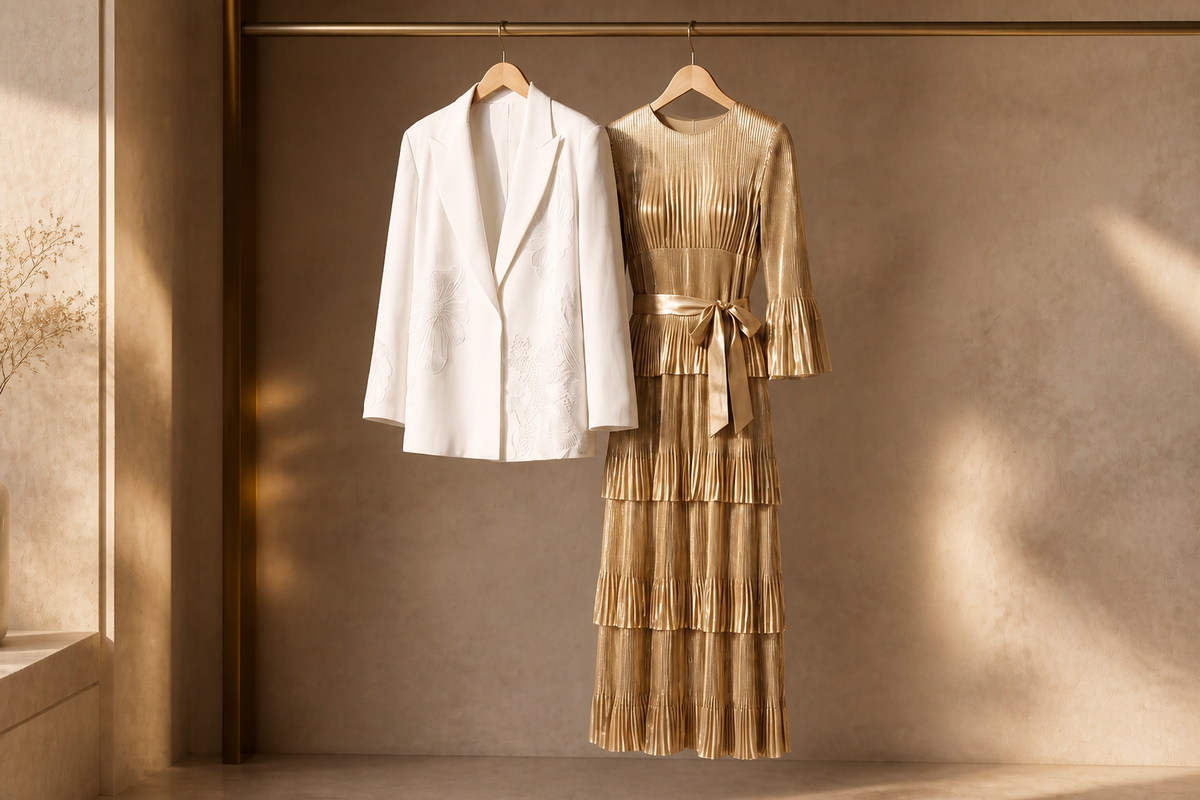
What you wear over a formal dress should provide the necessary coverage without making the outfit look casual or hiding the dress’s most important details. Shawls, wraps, boleros, cropped jackets, tailored blazers, and evening coats can all work, but the best option depends on the dress code, season, venue, neckline, and silhouette.
Start with the invitation. A relaxed wrap may suit a semi-formal wedding, while a black-tie gown usually needs a more refined layer, such as an evening coat, velvet jacket, or elegant stole. The outer layer should look like an intentional part of the outfit rather than something added only for warmth.
Choose an Outer Layer That Matches the Dress Code
Wear a Shawl or Wrap for Lightweight Coverage
A shawl is one of the easiest layers to wear over a formal dress because it adapts to different necklines and silhouettes. It can cover the shoulders during a ceremony and then be removed without affecting the rest of the outfit.
Suitable materials include:
- Silk or silk-look fabric
- Chiffon
- Fine wool
- Velvet
- Lace
- Soft metallic fabric
Choose a lightweight wrap for spring and summer events. Fine wool, cashmere, or velvet provides more warmth during fall and winter.
A shawl should be large enough to remain secure without constant adjustment. Avoid oversized scarves with bulky fringe or casual patterns, as they may make an evening dress look less polished.

Choose a Bolero or Cropped Jacket to Preserve the Silhouette
A bolero or cropped jacket ends near the waist, allowing the shape of the dress to remain visible. This makes it especially useful with A-line, fit-and-flare, empire-waist, and full-skirted dresses.
The jacket should finish close to a natural seam or waistline. If it ends across the widest part of the skirt, it can interrupt the proportions of the outfit.
Match the structure to the dress. A soft lace bolero suits a romantic chiffon gown, while a clean satin or velvet jacket works with a more structured evening dress. Avoid casual cropped denim or utility jackets unless the event specifically allows creative or informal styling.
Add a Tailored Blazer for Modern Formal Events
A blazer can work over a formal dress when it is sharply tailored and made from an evening-appropriate fabric. This combination is particularly suitable for corporate dinners, gallery openings, cocktail receptions, and modern city weddings.
Look for:
- A defined shoulder
- A clean lapel
- Minimal hardware
- A fitted or gently shaped waist
- Satin, velvet, crepe, or polished wool
- A length that complements the dress
An everyday office blazer may appear too businesslike, especially over an embellished gown. Choose a refined design without casual patch pockets, rolled sleeves, or oversized buttons.
For less ceremonial events, the Rich Radiqs guide to cocktail attire for women explains how to balance formal and party-ready elements.

Select an Evening Coat for Cold Weather
An evening coat provides the most reliable protection in cold conditions. It should be long enough to work with the dress and roomy enough to close without crushing the bodice or skirt.
Good options include:
- A full-length wool coat
- A tailored wrap coat
- A velvet evening coat
- A structured cape
- A refined faux-fur coat or stole
For floor-length gowns, a long coat generally creates the cleanest line. A short coat can also work, but it may divide the outfit abruptly or leave most of the skirt exposed.
Avoid casual parkas, sports jackets, and heavily quilted coats at highly formal events when possible. If severe weather makes practical outerwear necessary, wear it for transportation and use the venue’s coat check upon arrival.
The Rich Radiqs guide to styling a maxi dress for winter offers more guidance on formal layers and cold-weather footwear.

Match the Layer to the Formal Dress
Consider the Dress Length and Silhouette
The outer layer should support the dress’s proportions.
A cropped jacket works well with an A-line or fit-and-flare dress because it keeps the waist visible. A long, straight coat complements column and slip dresses. A softly draped wrap can sit over a fitted gown without changing its silhouette.
Very full ball gowns require additional room through the coat’s lower section. Trying to force a voluminous skirt underneath a narrow coat can wrinkle the fabric and damage embellishments.
Before the event, try sitting, walking, and raising your arms while wearing both pieces. The coat or jacket should not pull the dress upward or restrict movement.
Coordinate With the Neckline and Sleeves
Consider how much of the dress’s upper section should remain visible.
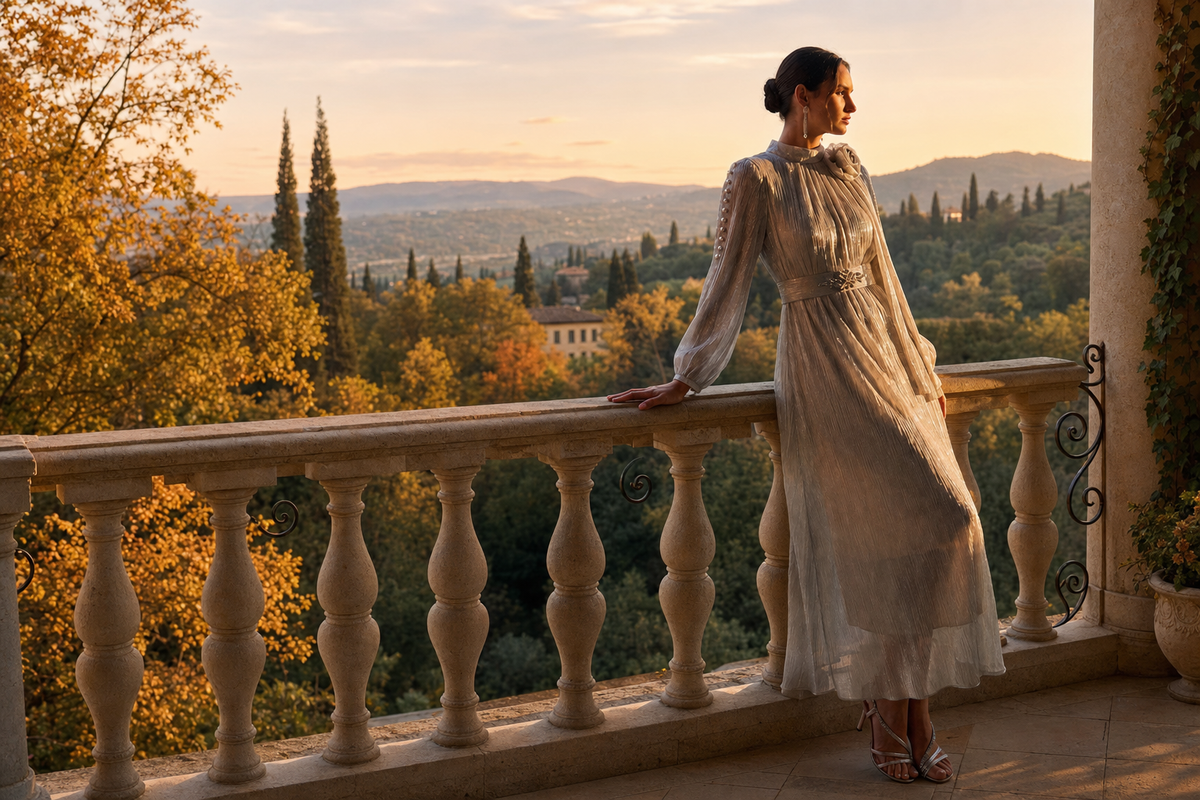
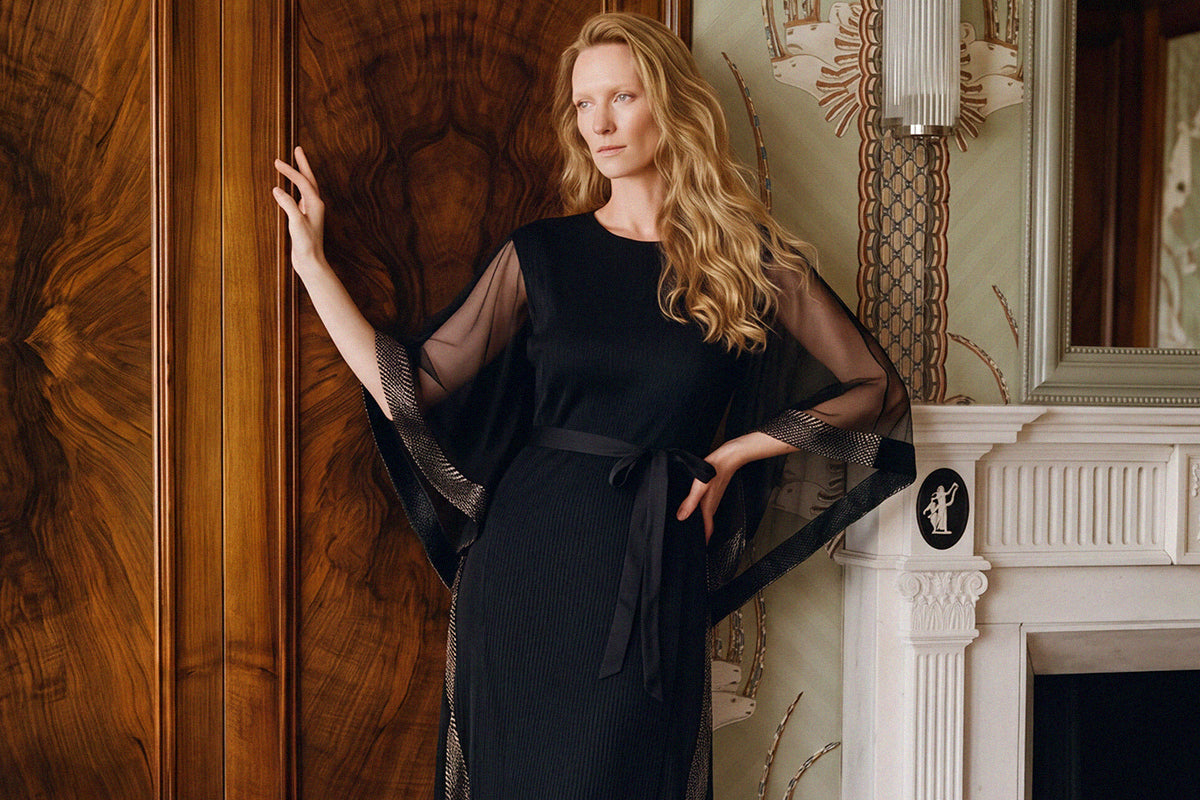
A strapless or sleeveless dress can work with a shawl, bolero, cape, or fitted jacket. High necklines often look best with collarless layers or coats that do not compete with the dress. Dresses with statement sleeves need outerwear with sufficiently wide armholes and sleeves.
Avoid pushing puff sleeves, ruffles, or structured shoulders into a tight jacket. Doing so may flatten their shape or cause permanent creasing.
If you are styling a full-length gown, the Rich Radiqs guide to what defines an evening gown can help you evaluate its length, structure, and required formality.
Balance Embellishments, Texture, and Color
An embellished dress usually works best with a simple outer layer. A plain velvet coat or smooth wrap allows embroidery, beads, or sequins to remain the focus.
A minimalist dress can support a more decorative layer, such as a textured cape, metallic wrap, or subtly embellished jacket. However, avoid combining several competing surfaces in one outfit.
Your layer does not have to match the dress exactly. Consider these combinations:
- Black with jewel tones or metallics
- Navy with silver, pale blue, or champagne
- Cream with soft pastels
- Burgundy with blush, black, or gold
- Tonal shades from the same color family
If you choose contrast, repeat the secondary color in a small accessory such as the bag, earrings, or shoes.
Avoid Covering Important Dress Details
Identify the visual focus of the dress before choosing a layer. It may be an embroidered neckline, open back, sculptural sleeve, defined waist, or embellished bodice.
If the back is the main feature, select a wrap that can be removed easily for photographs and the reception. If the waist is important, avoid long, shapeless cardigans. If the sleeves are highly detailed, consider a cape or generously cut coat rather than a narrow jacket.
The layer should protect the dress during arrival and departure while allowing its defining features to remain visible inside the venue.
Choose the Right Layer for the Season and Venue
Use Chiffon, Silk, or Lace Layers in Warm Weather
Summer events may still require shoulder coverage for religious venues, formal ceremonies, or air-conditioned reception spaces.
A chiffon wrap provides coverage without adding much weight. Silk or satin creates a smoother, dressier finish, while lace can complement a romantic dress if the patterns do not compete.
Light layers should remain breathable and easy to carry. Test them against the dress under natural and indoor lighting, especially when either fabric is sheer.
Choose Velvet, Wool, or Faux Fur for Winter Events
Velvet creates a rich evening texture and works particularly well for holiday parties, galas, and winter weddings. Fine wool offers greater warmth and can still look formal when the coat has a clean silhouette.
Faux fur can provide warmth and visual drama, but proportion matters. A short stole may balance a fitted gown, while an oversized coat can overwhelm a petite wearer or a delicately detailed dress.
For additional cold-weather inspiration, explore the Rich Radiqs guide to long-sleeve formal dresses.
Prepare for Outdoor Ceremonies and Air-Conditioned Venues
Consider the entire schedule rather than only the main reception. You may need to stand outside, travel between venues, walk from parking, or remain in a strongly air-conditioned room.
Check the forecast and bring a layer that provides realistic protection. A thin chiffon wrap may look elegant but will not be sufficient for a cold outdoor ceremony.
If conditions are uncertain, use two layers: a decorative wrap inside and a warmer formal coat for transportation. The coat can be checked at the venue.
Complete the Formal Outfit
Coordinate the Layer With Your Shoes and Bag
The coat, shoes, and bag do not need to be identical, but they should share a consistent level of formality.
A velvet jacket may coordinate with suede or satin shoes. A metallic wrap can connect with a silver or gold clutch. A minimalist wool coat works well with a structured evening bag.
Avoid carrying a large everyday tote simply because the outerwear has pockets. A compact clutch or small structured bag usually creates a cleaner formal outfit.
Keep Jewelry Visible and Proportionate
Choose jewelry after deciding how the layer will sit around the neckline.
Statement earrings work well with shawls, high-neck dresses, and collarless jackets. A necklace may become hidden or tangled under a coat with wide lapels. Bracelets can catch on lace, chiffon, and open-weave wraps.
If the dress and outer layer both contain embellishments, limit the jewelry. The Rich Radiqs guide to accessorizing evening dresses explains how to coordinate jewelry, shoes, bags, and outerwear around one visual focus.
Check the Complete Outfit Before the Event
Try everything together several days before the event. Check the outfit while standing, sitting, and walking.
Confirm that:
- The jacket closes without pulling
- The dress sleeves fit comfortably underneath
- The hem does not catch on the coat
- The outer layer does not shed fibers onto the dress
- Jewelry does not snag delicate fabric
- The bag and shoes match the overall formality
- You can remove the layer without disturbing your hair
The Emily Post dress-code guide can help you confirm whether the complete outfit matches the formality stated on the invitation.
Also check the care labels before steaming or pressing the dress and outerwear. The U.S. Federal Trade Commission explains that garment labels provide regular care instructions and warnings about potentially damaging treatments in its care-labeling guidance.
Conclusion
The best layer over a formal dress is one that matches the dress code, protects you from the weather, and preserves the dress’s silhouette. Shawls and wraps provide flexible coverage, boleros emphasize the waist, tailored blazers create a modern look, and evening coats offer reliable warmth.
Coordinate the layer with the neckline, sleeves, length, fabric, and embellishments of the dress. Try the complete outfit before the event so the outerwear feels like an intentional part of the look.
For more formalwear options, browse the Rich Radiqs evening and special-occasion collection.


اترك تعليقًا
This site is protected by hCaptcha and the hCaptcha Privacy Policy and Terms of Service apply.