


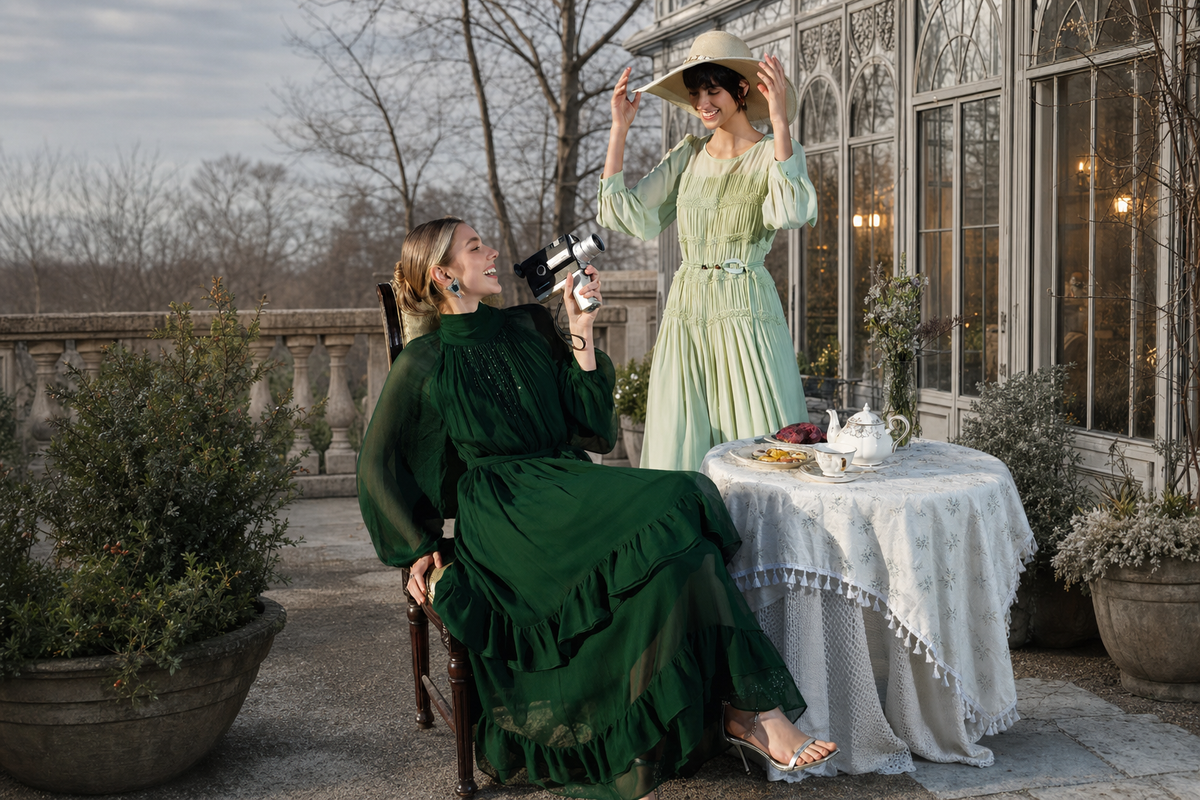
How to Style a Maxi Dress for Winter
To style a maxi dress for winter, choose a long-sleeve or substantial design, add fitted base layers, and complete the outfit with boots and a coat that complements the dress length. Tights, thermal leggings, scarves, and gloves can provide additional warmth without hiding the dress’s shape.
A maxi dress does not need to be stored away when temperatures fall. With thoughtful fabric choices, balanced layers, practical footwear, and seasonal accessories, it can work for casual days, office outfits, dinners, and winter weddings.
Choose the Right Maxi Dress for Cold Weather
Some maxi dresses are naturally easier to wear during winter. Fabric weight, coverage, color, lining, and skirt construction all affect how warm and practical an outfit feels.
Select Warm and Substantial Fabrics
Choose fabrics with enough weight to retain their shape beneath coats and knitwear. Velvet, jacquard, wool blends, heavier crepe, and lined satin can all work for cold-weather outfits.
Lightweight chiffon or silk dresses can still be worn, but they usually require a warm base layer and suitable outerwear. A lined dress provides additional insulation and helps prevent tights from showing through the fabric.
Explore the Rich Radiqs maxi dress collection to compare flowing, printed, embroidered, and occasion-ready designs.
Consider Long Sleeves and Higher Necklines
Long sleeves reduce the number of visible layers you need. Three-quarter sleeves can also work when paired with a long coat and gloves.
Higher necklines offer additional coverage and make it easier to wear a thin thermal layer underneath. If the dress has a V-neck or open neckline, add a fitted turtleneck underneath or use a scarf for extra warmth.
Make sure the base layer lies smoothly beneath the dress. Thick seams or loose fabric may create visible lines around the bodice and sleeves.
Choose Winter Colors and Seasonal Prints
Deep shades such as burgundy, navy, forest green, chocolate, charcoal, and black are natural choices for winter. Jewel tones can make a maxi dress feel richer and more appropriate for evening events.
Lighter colors can also work. Cream, icy blue, soft gray, and muted metallics create an elegant winter palette when paired with darker boots or outerwear.
You do not need to avoid floral prints. Look for darker backgrounds, deeper colors, or larger botanical patterns rather than prints that feel strongly associated with summer.
Layer a Maxi Dress Without Hiding Its Shape

Winter styling requires warmth, but excessive layering can hide the proportions that make a maxi dress attractive.
Cold-weather specialists generally recommend using several purposeful layers instead of relying on one extremely bulky garment. A typical system includes a base layer, an insulating middle layer, and protective outerwear. This cold-weather layering guide from the Associated Press explains how the layers work together to retain warmth and manage moisture.
Wear a Fitted Base Layer Under the Dress
A thin thermal top, fitted turtleneck, or long-sleeve bodysuit can add warmth without substantially changing the dress silhouette.
Choose a base layer that matches the dress or creates intentional contrast. Black, cream, navy, and other neutral shades are generally the easiest to coordinate.
A fitted turtleneck works particularly well under sleeveless dresses and open necklines. Make sure the layer does not bunch around the waist, shoulders, or cuffs.
Add a Sweater or Cardigan Over the Dress
A sweater can make a maxi dress look like a long skirt while providing additional warmth. Cropped knitwear maintains the waistline, while a longer sweater produces a more relaxed silhouette.
You can place a belt over a lightweight sweater to define the waist. This works best when the knitwear is thin enough to sit smoothly beneath the belt.
A fitted cardigan complements flowing or printed dresses. If the dress is embroidered or embellished, choose knitwear with a simple surface that will not compete with—or catch on—the decorative details.
Define the Waist With a Belt
A belt can restore shape when a cardigan, sweater, or coat adds volume. Position it at the natural waist unless the dress has a deliberately raised or lowered waistline.
Thin belts create subtle definition, while wider belts make a stronger visual statement. Choose simple leather, suede, or fabric designs when the dress already has embroidery or embellishment.
Do not tighten a belt excessively over sequins, beads, or delicate materials. Pressure and friction may damage the fabric or decorations.
Choose a Coat That Complements the Dress Length
The easiest outerwear options include:
- A long coat that finishes close to the dress hem
- A cropped jacket that ends near the waist
- A tailored coat that finishes above the skirt’s fullest point
- A structured wrap coat that follows the body line
Long wool coats create a streamlined silhouette, while cropped jackets highlight the waist and work well with fuller skirts. You can compare different structured and embellished options in the Rich Radiqs jackets collection.
Avoid coats that finish at an awkward point in the middle of a voluminous skirt. This can divide the outfit and make the lower body appear unnecessarily heavy.
Choose Winter Shoes for a Maxi Dress
Winter shoes must provide warmth and stability while keeping the dress hem away from wet or dirty surfaces.
Pair Ankle Boots With Relaxed Maxi Dresses
Ankle boots work well with casual printed, knitted, and flowing maxi dresses. Choose a streamlined design so the boots do not create excessive volume around the lower leg.
Black, brown, taupe, and burgundy boots coordinate with many winter colors. A pointed or almond-shaped toe can help maintain a long visual line beneath the skirt.
If the dress has a side slit, the boots will become more visible and should coordinate with the coat and accessories.
Wear Knee-High Boots for Extra Warmth
Knee-high boots provide greater protection from cold weather and can be worn beneath a maxi dress without interrupting its silhouette.
They work particularly well with dresses made from thicker materials or skirts with enough room to move. Avoid wide boot shafts beneath a narrow skirt because they may create visible bumps.
Choose flat leather or suede boots for daytime wear and fitted heeled boots for more polished occasions.
Choose Heeled Boots for Formal Winter Events
Heeled ankle boots, fitted knee-high boots, and closed-toe pumps can complement formal winter maxi dresses.
A block heel provides stability on outdoor surfaces, while a slimmer heel works well for indoor dinners and receptions. Metallic or jewel-toned shoes can coordinate with embroidery, sequins, and beaded details.
Browse the Rich Radiqs event dress collection for occasion styles that can be paired with refined winter footwear.
Make Sure the Hem Does Not Drag
Try the dress on with the exact shoes you intend to wear. A hem that works with high heels may drag when worn with flat boots.
The skirt should fall close to the ground without becoming trapped beneath the heel. Walk, sit, and climb several steps to test the length.
During rain or snow, choose a dress that sits slightly above the ground. A wet hem can become stained, damaged, and uncomfortable.

Add Warm Winter Accessories
Accessories provide additional warmth and help a maxi dress feel intentionally styled for winter.
Style the Dress With Tights or Thermal Leggings
Tights are practical beneath maxi dresses even when they remain mostly hidden. Choose opaque tights for everyday warmth or sheer black tights for a formal appearance.
Thermal leggings provide greater insulation beneath a full skirt. Check that their waistband and seams do not show through the dress.
If the dress has a high slit, choose tights that coordinate with the boots because more of the leg will be visible.
Add a Scarf, Gloves, and Structured Bag
A wool or cashmere scarf adds warmth without requiring another full layer. Choose a solid color when the dress already has a bold print or embellishment.
Leather or suede gloves work naturally with structured coats. For formal occasions, carry a compact clutch or small structured handbag instead of an oversized everyday bag.
Coordinate the hardware on the bag, belt, and jewelry. The finishes do not need to match exactly, but they should belong to a similar color family.
Use Jewelry to Complete a Formal Look
For a simple maxi dress, earrings, a necklace, or a decorative bracelet can add interest. For embroidered, beaded, or sequined styles, limit the jewelry so the outfit does not feel crowded.
Statement earrings work well with high necklines and swept-back hair. A simple necklace complements an open neckline, while a bracelet may be sufficient when the bodice already has decorative details.
For more examples of changing a long dress through footwear, bags, jewelry, and layers, see the Rich Radiqs guide on how to style a maxi dress for different occasions.
Style a Winter Maxi Dress for Different Occasions
The same maxi dress can feel casual, professional, or formal depending on the layers and accessories worn with it.
Create a Casual Everyday Outfit
For a relaxed winter outfit, combine a printed or flowing maxi dress with:
- A fitted thermal layer
- A cropped sweater or cardigan
- Flat ankle boots
- An oversized scarf
- A practical crossbody bag
Add a long wool coat when spending more time outdoors. Keep the colors coordinated so the outfit feels intentional despite the additional layers.
Dress for the Office or a Winter Dinner
For the office, choose a maxi dress with a controlled skirt, restrained print, and moderate neckline. Add a tailored blazer or structured coat and finish with ankle boots or closed-toe heels.
For dinner, replace the office bag with a smaller structured style and add polished jewelry. A deeper color, smoother fabric, or subtle embellishment can help the outfit transition into evening.
Avoid excessively casual knitwear if the venue requires a more refined appearance.
Style a Maxi Dress for a Winter Wedding
For a winter wedding, choose a lined dress in velvet, jacquard, satin, heavier crepe, or another refined fabric. Jewel tones, metallic details, and darker florals are particularly suitable for the season.
Add a formal coat, elegant wrap, or faux-fur stole if it suits the dress code. Closed-toe heels and streamlined dress boots offer more warmth than open sandals.
Before choosing the outfit, check the invitation. The Emily Post attire guide explains the differences between casual, festive, formal, black-tie, and other common dress codes.
Once you understand the required formality, browse the Rich Radiqs wedding guest dress collection for styles suited to weddings and seasonal celebrations.
Avoid Common Winter Maxi-Dress Styling Mistakes
Winter maxi-dress outfits often become unbalanced because the layers are too bulky or the complete proportions have not been considered.
Avoid Too Many Bulky Layers
A thick sweater, oversized coat, large scarf, and heavy boots can overwhelm a flowing dress when worn together.
Balance fitted and relaxed pieces. For example, wear a thin base layer beneath the dress and add one substantial outer layer. Alternatively, combine a cropped sweater with a streamlined coat.
Remove unnecessary layers indoors so the dress remains visible.
Balance Heavy Boots With the Dress Silhouette
Chunky boots can work with casual maxi dresses, but they may look disconnected from chiffon, lace, or formal embellishments.
Match the visual weight of the shoes to the dress. Flowing and refined dresses generally suit streamlined boots, while velvet, wool blends, and heavier fabrics can support more substantial footwear.
The skirt should have enough width to move freely over the boots.
Coordinate Fabrics, Colors, and Proportions
Winter outfits contain more pieces, making coordination especially important. Use a limited palette and repeat one or two colors across the dress, coat, shoes, and accessories.
Combine textures selectively. Velvet, wool, leather, and satin can work together, but too many highly textured materials may compete.
Evaluate the entire outfit in a full-length mirror. Check the coat length, dress hem, footwear, and waist definition rather than assessing every item separately.

Conclusion
A maxi dress can be a practical and elegant part of a winter wardrobe. Choose a substantial or lined design, add fitted layers, and complete the outfit with boots, tights, and a coat that supports the dress silhouette.
Keep the proportions balanced and make sure the hem remains clear of wet ground. With thoughtful layering, the same maxi dress can work for everyday wear, office outfits, dinners, and winter weddings.


Leave a comment
This site is protected by hCaptcha and the hCaptcha Privacy Policy and Terms of Service apply.