


How to Style a Maxi Dress for Fall
A maxi dress can transition into fall when the outfit accounts for cooler temperatures, heavier footwear, and the visual weight of additional layers. Instead of covering the entire dress with an oversized coat, build the outfit around its waistline, hem position, neckline, and existing decorative details.
The most practical formula is a maxi dress, a proportionate outer layer, season-appropriate shoes, and one or two accessories that reinforce the color palette.
Choose a Maxi Dress That Works for Fall Weather
Start With Seasonal Colors and Prints
Fall styling does not require limiting your wardrobe to brown and black. Burgundy, rust, forest green, navy, plum, camel, and muted gold all work naturally during the season, but summer colors can also remain wearable when paired with deeper accessories.
A pale floral dress, for example, can feel more appropriate for fall with a chocolate-brown jacket and boots. A brightly printed dress can be grounded with a solid navy blazer or dark leather bag.
When exploring Rich Radiqs maxi dresses, look at the dominant color and the smaller accent colors separately. The dominant shade can guide your jacket, while a less prominent color in the print can be repeated through shoes, earrings, or a bag.
Consider Fabric Weight, Coverage, and Movement
A dress does not need to be made from a heavy fabric to work in fall. What matters is whether the complete outfit provides enough coverage for the actual temperature.
Long sleeves, a higher neckline, or a lined skirt may reduce the number of additional layers you need. A lightweight sleeveless dress usually requires more support from a cardigan, jacket, or warm base layer.
Also consider how the fabric behaves beneath outerwear. Voluminous sleeves may bunch inside a fitted blazer, while beads, sequins, or raised embroidery can catch against rough jacket linings. Avoid placing a tight layer directly over delicate surface decoration.
Adapt Summer Maxi Dresses for Cooler Days
A summer maxi dress can stay in rotation when its color and construction work with fall layers. Begin with removable pieces so the outfit can respond to changing temperatures throughout the day.
A fitted long-sleeve top can sometimes be worn beneath a sleeveless dress, provided it lies smoothly around the neckline and armholes. Alternatively, add a cardigan or jacket over the dress without changing its original silhouette.
The Floral Printed Adjustable-Cuffs Shirt Dress offers a useful example of a dress with adjustable cuffs and an included waist tie. Its product page identifies it as a medium-weight, long-length design, although shoppers should still evaluate its specific measurements and fabric details before choosing it for their climate.
Layer a Maxi Dress Without Hiding Its Shape
Add a Cropped Jacket for Balanced Proportions
A cropped jacket finishes close to the waist and allows more of the maxi skirt to remain visible. This can work particularly well with dresses that have a defined waistline, a full skirt, or a prominent belt.
The jacket does not need to meet the waist seam exactly. However, a hem that ends near the narrowest part of the dress usually creates a clearer break between the upper layer and the long skirt.
For a casual outfit, consider denim, suede-effect, or softly structured jackets. For an evening look, a short tailored jacket can preserve the dress’s formal character.
Wear a Blazer for a More Polished Outfit
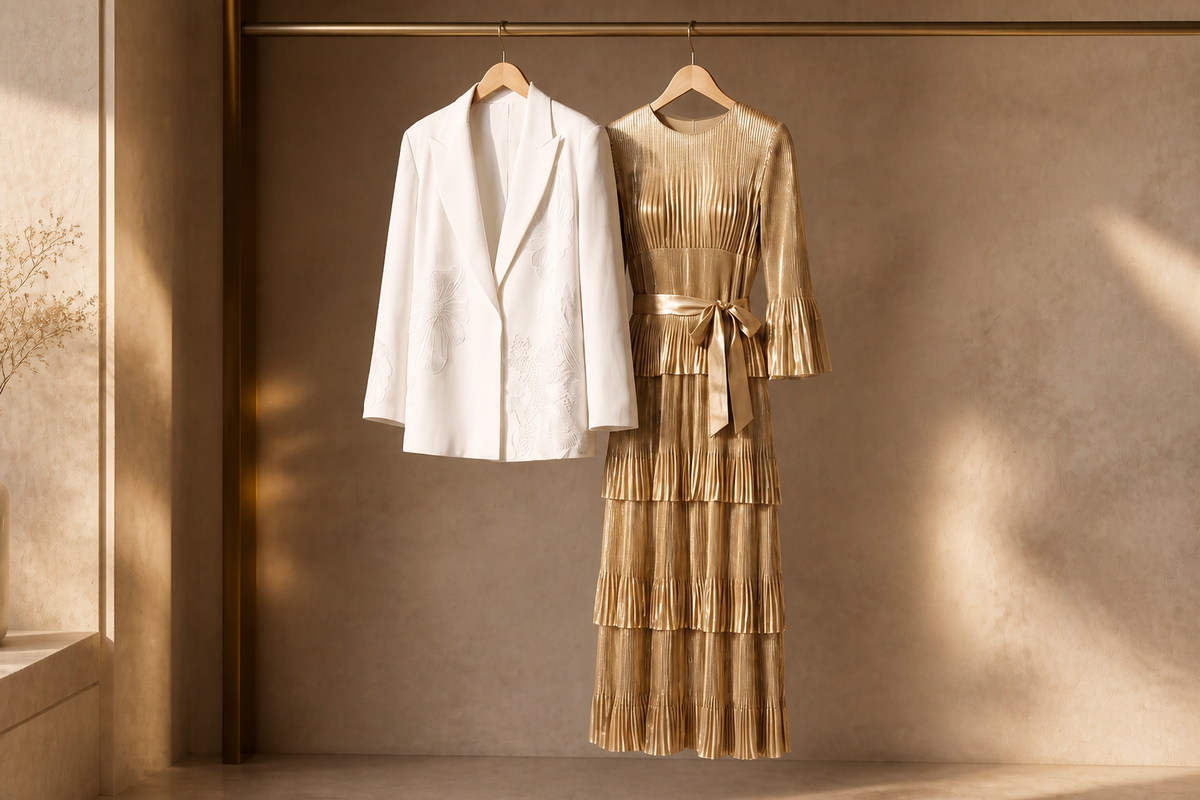
A blazer can make a maxi dress appropriate for work, lunch, or a more polished daytime event. The most versatile blazer length usually finishes above the widest part of the skirt rather than competing with it.
A softly fitted blazer complements a streamlined maxi dress, while a straighter blazer can create contrast with a fluid skirt. If both pieces are oversized, the outfit may feel bulky, especially when combined with heavy boots.
Leave the blazer open when you want the dress’s waistline to remain visible. Button it only if the blazer closes comfortably without pulling across the dress or compressing decorative details.
Use a Cardigan for Soft Everyday Layering
Cardigans create a more relaxed effect than tailored jackets. A waist-length cardigan works well with fitted and flared dresses, while a longer cardigan can complement a relatively straight maxi silhouette.
Avoid allowing the cardigan and dress to end at almost the same point unless you specifically want a continuous column of fabric. A clear difference between the two hemlines usually makes the layers easier to read.
For colder conditions, functional layering matters more than appearance alone. The National Weather Service recommends multiple loose-fitting layers in extreme cold. Although an ordinary fall day may be much milder, the same principle supports an adaptable outfit: several removable layers are often more useful than one restrictive piece.

Select Fall Shoes That Suit the Dress Length
Pair Ankle Boots With Casual Maxi Dresses
Ankle boots are one of the easiest ways to give a maxi dress a fall-oriented finish. Sleek boots work well with straighter dresses, while boots with a stronger sole can add contrast to floral or flowing designs.
Pay attention to where the boot shaft meets the hem. An ankle-length dress may reveal a narrow section of leg, tights, or the full boot. A floor-length dress may cover most of the boot, making the toe shape and heel more visually important than the shaft.
Walk in the complete outfit before leaving home. The hem should not become caught beneath the boot heel or repeatedly brush against wet ground.
Choose Heeled Boots for Longer Hems
Heeled boots can create additional space between a long hem and the floor, but they should not be used to compensate for a dress that is dangerously long.
Test the dress with the exact boots you plan to wear. A change in heel height can noticeably alter the hem position, and a dress fitted with heels may become difficult to manage when worn with flats.
The shoes should also suit the amount of walking required. Utah State University Extension notes that cold-weather footwear should support movement and may need suitable traction when surfaces are wet. This is especially relevant for outdoor fall events, where smooth fashion soles may be less practical than they appear indoors. Read its cold-weather activity guidance.
Wear Loafers or Flats With Ankle-Length Styles
Loafers, ballet flats, and low-profile shoes work most easily with maxi dresses that finish around the ankle. Because more of the shoe remains visible, its color and shape become a noticeable part of the outfit.
A pointed or almond-shaped toe can give the outfit a more polished direction, while a rounded loafer feels relaxed and practical. Add tights or socks only when they work with both the shoe opening and the dress length; visible fabric bunching around the ankle can interrupt an otherwise clean line.
Complete the Outfit With Fall Accessories

Add a Belt Only When It Works With the Waistline
A belt can define the waist, but it is not necessary for every maxi dress. Dresses with an elastic waist, raised waist seam, intricate embellishment, or deliberately loose shape may not benefit from an additional belt.
When the dress includes a removable tie, try the outfit both with and without it. Without the tie, the dress may layer more smoothly beneath a cardigan. With the tie, it may work better under an open cropped jacket.
Before ordering, use the individual product measurements rather than assuming that a familiar size will place the waist correctly. The Rich Radiqs size guide advises consulting each product’s own size chart.
Coordinate Bags and Jewelry With the Dress Details
Accessories should respond to the actual dress rather than to a general fall formula. If the dress already has sequins, embroidery, beading, or a detailed print, repeat one small color or finish instead of introducing several competing elements.
A plain leather bag can ground an embellished dress. A textured clutch can add interest to a solid dress. Gold-toned jewelry often works with camel, rust, olive, and warm floral prints, while silver-toned pieces can reinforce navy, gray, icy blue, or cool green.
These are coordination routes, not strict rules. The scale and placement of the dress details matter more than the season alone.
Use Scarves and Tights When the Temperature Drops
A scarf adds warmth near an open neckline, but its texture should not rub against beading or delicate embroidery. Smooth scarves are usually easier to manage with decorated dresses, while heavier knitted scarves suit simpler fabrics.
Tights can improve comfort beneath ankle-length or slit maxi dresses. Match them to the shoes when you want a continuous lower line, or use a contrasting color when the rest of the outfit is restrained.
For severely cold, wet, or windy weather, a maxi dress may require thermal layers and protective outerwear that takes priority over the dress’s visible proportions.
Style a Fall Maxi Dress for Different Occasions

Create a Relaxed Daytime Outfit
For an everyday fall outfit, combine a printed maxi dress with an uncomplicated cardigan or denim jacket and ankle boots. Keep the bag practical and the jewelry restrained.
The dress should remain comfortable while sitting, walking, and wearing the chosen outer layer. If the jacket restricts the sleeves or the boots catch the hem, change those pieces instead of accepting an outfit that is difficult to wear.
The Rich Radiqs everyday dress collection can help you compare silhouettes before deciding which styles will transition most easily into casual fall outfits.
Dress for Work or a Polished Lunch
For work or a polished lunch, begin with a maxi dress that offers suitable coverage for the setting. Add a blazer, structured bag, and refined boots or loafers.
Keep the dress’s movement in mind when choosing a coat. A narrow coat over a full skirt may cause the fabric to bunch, while a more accommodating outer layer allows the skirt to fall naturally.
If the dress is brightly printed, choose a jacket in one of its quieter colors. With a solid maxi dress, the blazer or accessories can introduce pattern and texture.
Transition the Maxi Dress Into an Evening Look
To move a fall maxi dress from day to evening, replace the practical daytime layer with a shorter tailored jacket, dressier wrap, or streamlined coat. Change casual boots to refined heeled boots or another event-appropriate shoe.
A dress with prominent embellishment may need only simple earrings and a compact bag. A plain dress leaves more room for a statement necklace, metallic clutch, or decorative shoes.
Review the location and dress code before adding accessories. An outdoor dinner requires different layers from an indoor reception, even when both events take place on the same fall evening.
Conclusion
Styling a maxi dress for fall is mainly a matter of controlling proportion, temperature, and footwear. Use the dress’s waistline and skirt volume to determine jacket length, then evaluate the hem with the exact shoes you intend to wear.
Build warmth through removable layers, coordinate accessories with the dress’s existing details, and let the setting determine how polished or practical the final outfit should be. If you are unsure about the size, fabric, or layering potential of a Rich Radiqs dress, contact Rich Radiqs customer service before ordering.


اترك تعليقًا
This site is protected by hCaptcha and the hCaptcha Privacy Policy and Terms of Service apply.