


What Jacket to Wear With a Formal Dress?
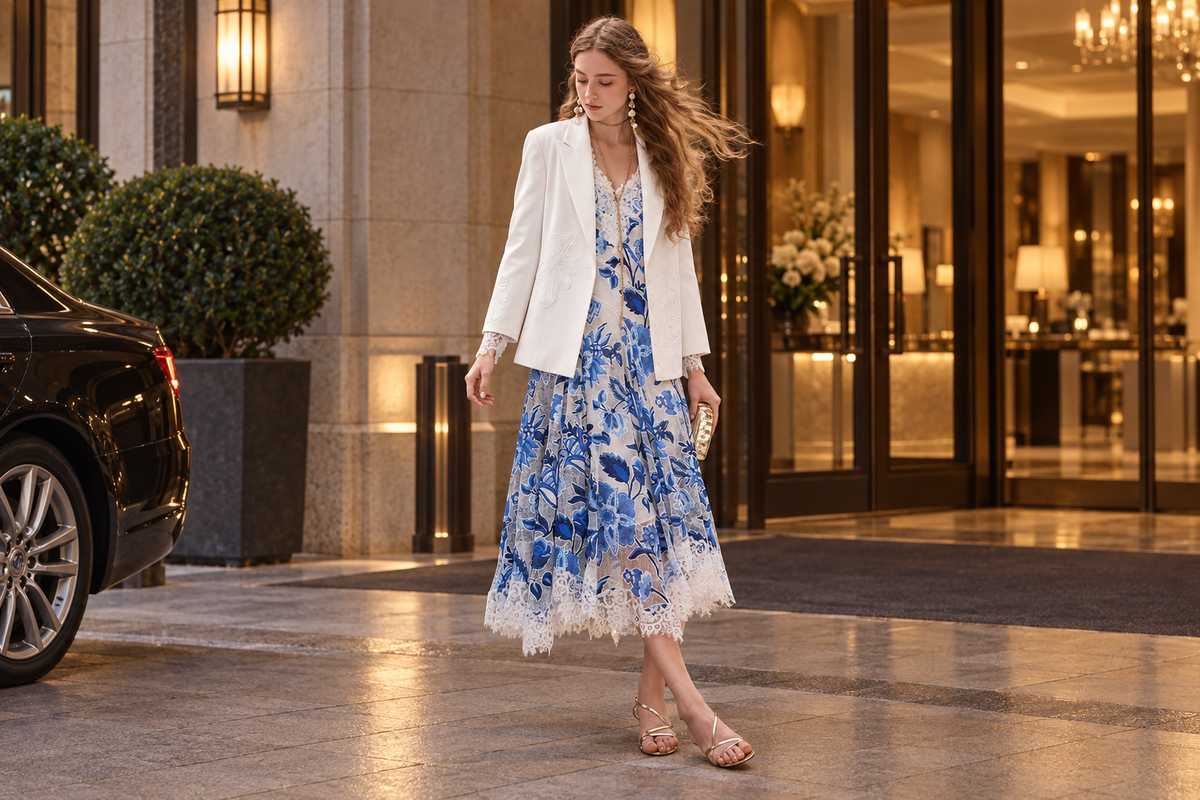
The best jacket to wear with a formal dress is one that matches the dress code, follows the proportions of the dress, and provides the amount of warmth you actually need. Cropped jackets and boleros work well with defined waists and full skirts, tailored blazers suit streamlined dresses, and long evening coats complement floor-length gowns.
Before selecting a jacket, look at the dress’s neckline, sleeves, waist placement, hemline, fabric, and embellishment. The jacket should support those features rather than hide or compete with them.
Choose a Jacket That Matches the Dress Silhouette
Pair a Cropped Jacket or Bolero With a Full-Skirted Dress
A cropped jacket or bolero usually works well with an A-line, fit-and-flare, or full-skirted formal dress. Because the jacket ends near the waist, it preserves the transition between the fitted bodice and wider skirt.
This combination is especially useful when the dress has:
- A clearly defined natural waist
- A fitted bodice
- A pleated or flared skirt
- Decorative details concentrated below the waist
- A midi or ankle-length hem
The jacket does not need to end at the exact waist seam, but it should not cut across the fullest part of the skirt. A jacket that finishes several inches below the waist may interrupt the intended silhouette and cause the fabric to bunch underneath it.
Boleros provide shoulder and upper-arm coverage without concealing much of the dress. They can work for ceremonies, formal dinners, weddings, and religious venues where additional coverage is appropriate.
If you are comparing boleros with shawls, capes, and coats, the guide to what to wear over a formal dress explains when each type of layer works.
Wear a Tailored Blazer With a Streamlined Midi Dress
A refined blazer can work with a column, sheath, slip-style, or relatively narrow midi dress. The clean lines of the jacket echo the controlled shape of the dress and can make the combination appropriate for formal work events, dinners, receptions, or black-tie optional occasions.
Look for a blazer with:
- A defined shoulder line
- A smooth, close fit through the body
- Refined buttons or a concealed fastening
- Minimal pocket bulk
- Enough room in the sleeves and armholes for the dress underneath
A single-breasted jacket is generally easier to combine with a dress than a heavily structured double-breasted design. Wear it open when closing it would crush the bodice, distort the waist, or pull across decorative details.
The blazer’s fabric matters as much as its shape. Velvet, satin, jacquard, crepe, and finely finished wool can look appropriate for eveningwear when their color and texture coordinate with the dress. An ordinary office blazer may look too businesslike if it has practical patch pockets, casual buttons, or a boxy fit.
Browse the current Rich Radiqs women’s jackets collection to compare cropped, tailored, textured, and embellished structures. Review the individual product details before pairing a jacket with a specific dress.

Select a Long Evening Coat for a Floor-Length Gown
A long evening coat creates the most continuous line over a floor-length or ankle-length gown. It is particularly suitable when the jacket must provide real warmth during travel, outdoor photographs, or the arrival and departure portions of an evening event.
The coat can end around the knee, below the knee, or near the dress hem. A longer design generally looks more harmonious with a gown because it covers most of the dress rather than dividing it into several horizontal sections.
Make sure the coat has enough room for the gown’s skirt and sleeves. A narrow coat can compress a full skirt, while tight armholes may wrinkle or damage statement sleeves. Try the coat over the complete outfit and practice sitting, raising your arms, and walking before the event.
For a formal look, favor a clean closure, controlled volume, and a fabric that does not look noticeably more casual than the dress. If the coat will be checked at the venue, it still needs to complement the outfit during arrival rather than functioning as a completely unrelated practical layer.
Match the Jacket to the Dress Code and Season
Choose Refined Fabrics for Black-Tie and Formal Events
Begin with the invitation. “Formal,” “black tie,” and “white tie” do not describe the same level of dress, and the venue may also have specific expectations concerning shoulder coverage or outdoor attire.
The Emily Post dress-code guide provides a useful overview of common invitation language. For more traditional ceremonial events, the Livery Committee’s formal protocol and etiquette guidance notes that women’s black-tie options can include an evening suit consisting of a jacket with a dress, skirt, or trousers.
For black-tie and highly formal occasions, suitable jacket options may include:
- A velvet cropped jacket
- A restrained embellished jacket
- A satin or jacquard bolero
- A tailored evening blazer
- A long formal coat
- A dress-and-jacket set designed as one outfit
The jacket does not have to match the dress exactly. It does, however, need to belong to a similar level of formality. A casual cotton utility jacket will usually appear disconnected from a polished evening gown.
If you are still determining how formal the main garment is, review the distinction between a long dress and an evening gown before selecting the outer layer.
Wear Lightweight Jackets for Spring and Summer Occasions
For warm-weather formal events, the jacket may be needed only for an air-conditioned venue, evening temperature change, or modesty during part of the occasion.
A lightweight cropped jacket, unlined blazer, sheer structured layer, or short evening jacket can add coverage without overwhelming the dress. The exact material should suit the event and the dress fabric; avoid assuming that every sheer or lightweight jacket will remain cool in humid conditions.
A summer jacket should allow air to circulate and should not press heavily against embroidery, sequins, dimensional flowers, or ruffles. If the dress has elaborate sleeves, check that the jacket’s armholes and sleeve circumference provide sufficient room.
Color can help the layer feel lighter. Soft neutrals, metallic tones, tonal pastels, and colors drawn from the dress print can work well. Black is still possible, but a heavy black jacket may create more contrast and visual weight than a pale summer dress needs.
Add Structured Warmth for Fall and Winter Events
Cold-weather formal dressing requires a distinction between an indoor jacket and outdoor protection. A cropped velvet jacket may complete the outfit indoors, but it may not provide enough warmth while traveling to the venue.
For fall and winter, consider:
- A long tailored wool or wool-blend coat
- A velvet evening jacket
- A formal wrap coat
- A structured embellished jacket
- A dress coat with enough room for the skirt and sleeves
Layering becomes more difficult when the dress has a low back, high slit, sheer bodice, or delicate embellishment. Test the entire outfit rather than assessing each piece separately.
The Rich Radiqs guide to styling a maxi dress for winter offers additional guidance on balancing long dresses with coats, boots, tights, and cold-weather accessories.

Coordinate the Jacket With the Complete Outfit
Balance the Jacket Length With the Dress Waistline and Hem
Jacket length should relate to a visible structural point in the dress.
A cropped jacket can finish near a defined waist. A hip-length blazer works more naturally over a narrow skirt than over a heavily gathered one. A long coat can follow the vertical line of an ankle-length or floor-length gown.
Problems often appear when the jacket ends at an arbitrary point. For example, a boxy hip-length jacket may conceal the waist of an A-line dress while pressing against the top of the skirt. A very short bolero can also look disconnected from a loose, undefined dress if there is no waistline for it to frame.
Before the event, view the outfit from the front, side, and back. Check how the jacket looks both open and closed, and confirm that the dress hem does not catch inside the coat.
Coordinate Colors Without Competing With Embellishment
The jacket can match the dress, repeat one of its secondary colors, or provide controlled contrast.
A tonal combination—such as navy over deep blue—creates a continuous line. A neutral jacket in black, ivory, taupe, or metallic fabric can be versatile, provided its undertone works with the dress. Contrast is most effective when it looks deliberate and does not introduce another competing focal point.
When the dress has sequins, beadwork, embroidery, feathers, or a bold print, a quieter jacket often creates better balance. If the dress is simple, a textured or embellished jacket can become the main decorative element.
Metallic details also need coordination. Jacket buttons, bag hardware, jewelry, and shoe finishes do not have to match perfectly, but mixing several unrelated metal tones can make the outfit look visually unsettled.
Use the current Rich Radiqs event dress collection to compare dress lengths, silhouettes, colors, and decorative intensity before deciding whether the accompanying jacket should blend in or provide contrast.

Avoid Casual Outerwear That Reduces the Outfit’s Formality
Casual outerwear can make a formal dress feel unfinished, particularly when the jacket remains visible during photographs, cocktails, or the event itself.
Potential mismatches include:
- Distressed denim jackets
- Sporty puffer jackets
- Oversized utility coats
- Hooded outerwear
- Casual bombers
- Heavily worn leather jackets
- Everyday cardigans with a loose or stretched shape
This does not mean those pieces can never be worn with a dress. They may suit casual styling or provide transportation-only warmth. They are less reliable when the invitation specifies formal or black-tie attire.
A leather jacket is a possible exception for a fashion-led cocktail event, creative venue, or informal celebration. For a traditional wedding, gala, formal dinner, or ceremonial occasion, a tailored evening jacket or coat is usually the safer option.
Conclusion
The right jacket for a formal dress depends on three connected decisions: the dress silhouette, the dress code, and the amount of coverage or warmth required.
Pair full skirts and defined waists with cropped jackets or boleros. Combine streamlined midi dresses with refined blazers. Use a long evening coat over a floor-length gown when you need substantial warmth and a continuous silhouette.
Test the complete outfit before the event. The jacket should fit comfortably over the sleeves and bodice, preserve the dress’s proportions, and remain appropriate whether you wear it only during arrival or throughout the occasion.


Leave a comment
This site is protected by hCaptcha and the hCaptcha Privacy Policy and Terms of Service apply.