


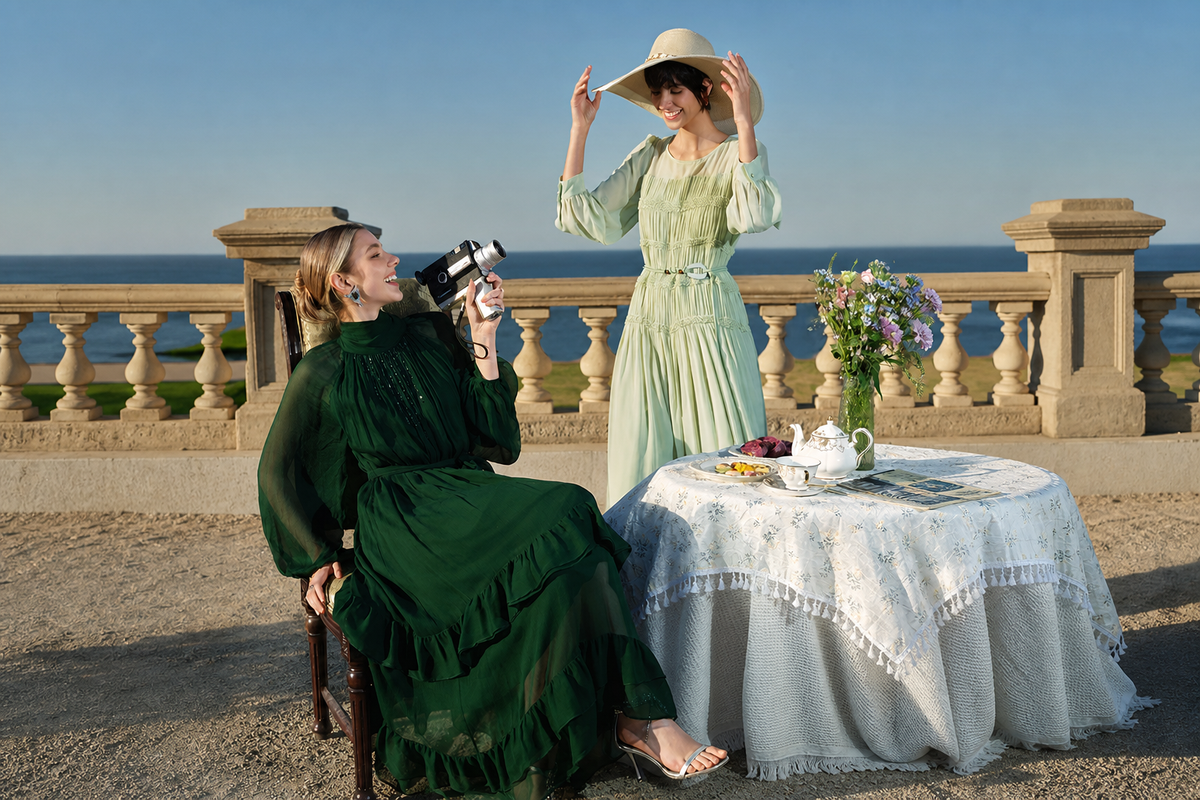
How to Dress for a Tea Party: Women’s Outfit and Etiquette Guide
For most tea parties, women should wear polished daytime clothing such as a midi dress, tea-length dress, skirt and blouse, or tailored jumpsuit. Floral prints, soft colors, dressy flats, and low heels often suit the atmosphere, but they are not mandatory.
The correct outfit depends on the invitation and venue. A casual tea at a friend’s home may require little more than an elevated daytime look, while afternoon tea at a luxury hotel may have an enforced dress code. A bridal shower tea, garden party, and themed event also create different expectations.
Read the invitation first, then confirm the venue’s rules before choosing your clothing.
Read the Tea Party Invitation Before Choosing an Outfit
Identify Whether the Event Is Casual, Dressy, or Themed
“Tea party” describes the format of an event, not one universal dress code.
A casual gathering at home may allow a polished sundress, simple midi dress, or blouse with trousers. A hotel afternoon tea commonly calls for smart-casual or smart-elegant clothing. A private celebration may request garden-party attire, vintage dress, or a particular color.
Look for words such as:
- Casual
- Smart casual
- Garden party
- Afternoon tea attire
- Semi-formal
- Vintage
- Royal-inspired
- Fascinators encouraged
Treat “encouraged” differently from “required.” A decorative theme may be optional even when the venue’s basic dress code is compulsory.
Consider the Venue and Time of Day
The venue is one of the strongest indicators of what to wear.
Luxury hotels may publish specific rules. For example, The Langham London lists smart casual as the dress code for Palm Court, while The Ritz London applies stricter requirements and does not permit jeans or sportswear at afternoon tea.
A local tearoom, private home, garden, or community event may be more relaxed. Do not assume that the requirements of one famous hotel apply everywhere.
Traditional tea parties normally take place during the day, so polished daytime clothing is usually more natural than an evening gown. If the event continues into dinner or includes another celebration, the invitation may call for a dressier outfit.
Look for Bridal Shower, Baby Shower, or Birthday Clues
The purpose of the tea party affects the outfit.
A bridal shower tea usually calls for celebratory guest attire that does not appear bridal. A baby shower may be more relaxed, while a milestone birthday at a hotel could require a dressier look.
Notice whether the invitation includes a color palette, floral imagery, a vintage theme, or special accessories. These details can guide the outfit without requiring you to reproduce the invitation design exactly.
For a wedding-related event, the RichRadiqs guide to bridal shower guest dresses provides more specific advice about formality and guest-appropriate colors.
Confirm Any Cultural or Host-Specific Expectations
Tea gatherings can reflect different cultural traditions, communities, and family customs. General fashion rules cannot account for every event.
The host may request covered shoulders, a particular color, traditional clothing, or a themed accessory. Follow direct instructions rather than assuming that floral dresses and fascinators are always expected.
When an instruction is unclear, ask the host. This is especially important if the tea takes place at a religious venue or forms part of a cultural celebration.
Choose the Right Outfit for Different Types of Tea Parties
Afternoon Tea at a Hotel or Formal Tearoom
For hotel afternoon tea, begin with the venue’s published dress code. Smart casual is common, but standards vary substantially.
A midi dress, tailored day dress, skirt with a polished blouse, elegant trousers, or a refined jumpsuit can all work when permitted. The outfit should appear considered without necessarily becoming formal eveningwear.
Avoid sportswear, beachwear, and heavily distressed clothing unless the venue clearly allows them. Some locations may permit clean jeans or sneakers at lunchtime, while others prohibit them entirely.
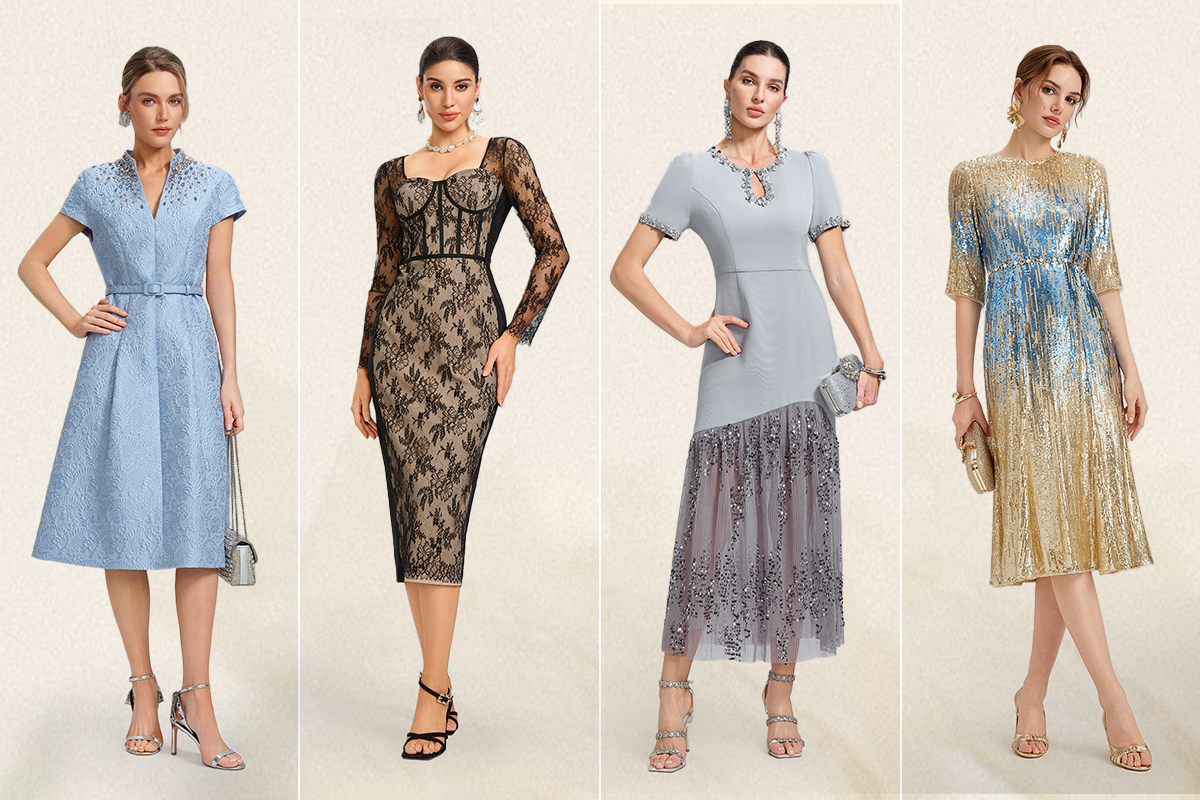
If the venue has no detailed policy, a polished midi dress with dressy flats or low heels is a reliable starting point. Explore RichRadiqs midi dresses for suitable lengths and silhouettes, then verify the individual garment’s measurements and details.
Garden and Outdoor Tea Parties

Garden tea parties often support floral prints, botanical patterns, soft colors, and gently structured silhouettes. However, the outfit must also work on grass, gravel, or uneven paving.
A midi or tea-length dress keeps the hem away from the ground while retaining a polished daytime appearance. A flowing maxi can work, but its hem may be harder to manage outdoors.
Choose stable footwear such as block heels, wedges, or dressy flats. Narrow heels can sink into soft ground, while open shoes may be uncomfortable if the event involves extensive walking.
Bring a light layer when the weather may change, but make sure it coordinates with the outfit instead of looking like an emergency addition.
Casual Tea Parties at Home
A tea party at someone’s home may not require a special dress. A polished everyday outfit is often sufficient unless the invitation says otherwise.
Options include:
- A simple day dress
- A midi skirt with a blouse
- Tailored trousers with a refined top
- A relaxed jumpsuit
- A cardigan worn over a dress or coordinated separates
Avoid arriving in clothing that is noticeably more formal than the host requested. A dramatic gown, elaborate fascinator, and ceremonial accessories can feel out of place at a small casual gathering.
Bridal Shower and Baby Shower Tea Parties
A bridal shower tea commonly calls for cheerful, polished daytime attire. Floral dresses, pastel colors, elegant prints, and soft midi silhouettes often fit the setting.
Wedding guests should generally avoid white, ivory, and distinctly bridal-looking designs unless the host has requested those colors. The bride may choose white for the shower even when the wedding itself is still weeks away.
At a baby shower, use the venue and invitation to judge the formality. Do not assume that guests must dress in pastel colors or follow traditional gender-based color themes.
Vintage, Royal, and Other Themed Tea Parties
A themed tea party may invite more decorative clothing, but participation can range from one accessory to a complete period-inspired outfit.
Read the wording carefully. “Vintage-inspired attire welcome” usually provides flexibility, while a costume event may expect stronger participation.
You can acknowledge a theme through:
- A patterned midi dress
- A structured handbag
- A brooch or gloves
- A vintage-style hat
- A hairstyle or small jewelry detail
Avoid wearing historically inaccurate or culturally significant clothing as a costume when it is unrelated to your own background or the event’s stated theme.
Select an Appropriate Tea Party Dress or Alternative

Wear a Midi or Tea-Length Dress for a Polished Look
Midi and tea-length dresses are natural choices because they provide daytime coverage without the ceremony of a floor-length gown.
A midi dress generally falls below the knee and above the ankle. Tea length often refers to a lower-calf or above-the-ankle hem, although the categories overlap.
The label is less important than the actual hem position. Review the garment length and compare it with your height instead of assuming every midi dress will fall at mid-calf.
Choose an A-Line, Fit-and-Flare, or Wrap Silhouette
Several silhouettes can suit a tea party:
- An A-line dress gradually widens toward the hem.
- A fit-and-flare dress combines a closer bodice with a fuller skirt.
- A wrap dress crosses at the front and may offer some waist adjustment.
- A shirt dress provides a tailored daytime direction.
- A column midi creates a straighter, more minimal line.
Choose according to the venue, fit, and amount of movement required. No single silhouette is universally correct for tea-party attire.
Wear a Refined Maxi Dress for a Dressier Garden Event
A maxi dress can work for a garden, resort, destination, or more elaborate outdoor tea. Select one with a finished silhouette rather than a beach-cover-up appearance.
The longer hem requires practical attention. Confirm that it will not drag on grass or become difficult on stairs. If the dress is close to floor length, test it with the intended shoes.
For help deciding whether a longer hem is appropriate, compare the differences between midi and maxi dresses.
Consider a Skirt and Blouse or Tailored Jumpsuit
Dresses are traditional but not required.
A midi skirt and blouse can look polished without feeling overly formal. Tailored trousers with a refined top may work for smart-casual venues, and a structured jumpsuit can provide a modern one-piece alternative.
The full outfit should match the occasion. Ordinary office separates may feel too plain for a celebratory hotel tea, while highly embellished evening separates may be excessive for a daytime gathering.
Review the Neckline, Sleeves, and Coverage
Tea parties involve sitting at a table, leaning slightly forward, reaching, and handling cups and plates. Test the outfit in these positions.
A neckline that appears secure while standing may shift while seated. Very wide sleeves can approach food or tableware, and a tight skirt may become uncomfortable during a longer service.
Coverage should also respect the venue. A private hotel dining room, religious setting, and casual garden create different boundaries.
Choose Tea Party Colors, Prints, and Fabrics
Use Florals and Botanical Prints for Daytime Events
Florals are popular for tea parties because they suit daytime, garden, and celebratory settings. They are an option rather than a requirement.
Consider the scale and contrast of the print. A delicate botanical pattern creates a softer effect, while a large high-contrast floral makes a stronger statement. Match the print’s visual weight to the venue and occasion.
A printed dress can carry most of the outfit, allowing the shoes, bag, and jewelry to remain simple.
Select Pastels, Soft Neutrals, or Refined Bright Colors
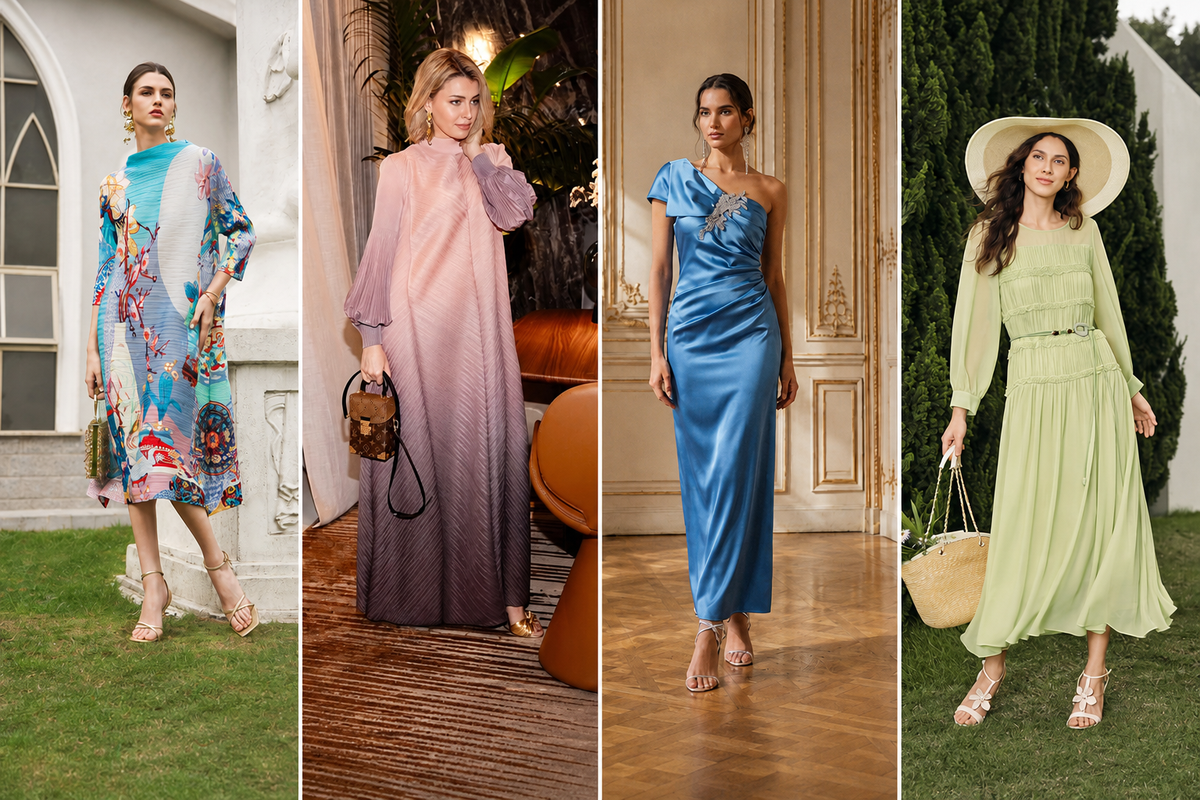
Pastels and soft neutrals can work beautifully for daytime tea, but they are not the only appropriate colors. Refined blue, green, pink, yellow, coral, and other brighter shades may also fit the event.
Check pale garments in natural light. White, cream, and very light colors can become transparent or may look bridal at a shower.
When choosing from the broader RichRadiqs women’s dress collection, evaluate the individual design and product information rather than choosing by color alone.
Adapt Darker Colors for Indoor or Cool-Weather Tea Parties
Black, navy, burgundy, forest green, chocolate, and other darker colors are acceptable for many tea parties.
For an indoor hotel tea or cold-weather event, darker shades may feel particularly natural. A lighter print, textured material, or daytime accessories can prevent the outfit from reading as formal eveningwear when that is not the goal.
The venue’s dress code matters more than the belief that tea-party clothing must always be pastel.
Evaluate Fabric Weight, Lining, and Transparency
The product description or garment label should be used to confirm fiber content, lining, stretch, and care requirements. These properties cannot be established reliably from photographs.
For warm outdoor events, consider the actual fabric and lining rather than relying on words such as “flowing” or “lightweight.” For indoor winter tea, a more substantial material may be comfortable.
Inspect pale fabric, lace, mesh, and openwork areas under bright light. Make sure the outfit provides the coverage you expect while seated.
Coordinate Decorative Details Without Overstyling the Outfit
Pleats, embroidery, lace, beading, bows, ruffles, and appliqué can all suit a tea party. The goal is not to use every decorative element at once.
If the dress already has a prominent neckline or detailed surface, quieter jewelry and accessories can maintain clarity. A simple dress can accommodate one stronger accessory, such as a brooch, hat, or statement earring.
Let the actual garment determine the balance.
Complete Your Tea Party Outfit With Accessories

Select Dressy Flats, Low Heels, or Block Heels
Dressy flats, slingbacks, low heels, and block heels all work for tea parties. Select the shoe according to the surface and level of formality.
A polished flat may be more practical than a high heel when the event includes walking, standing, or a garden setting. Sneakers may be acceptable at some casual venues, but luxury hotels can have stricter policies.
Check the venue’s rules before assuming that any particular footwear is permitted.
Carry a Small Structured Bag
A compact shoulder bag, top-handle bag, or small structured handbag complements daytime occasionwear.
A large tote may be practical for travel, but it can be awkward beside a small tea table. If you need to carry additional items, ask whether the venue offers a coatroom or secure storage.
The bag does not need to match the shoes exactly. It should simply belong to the same level of formality.
Coordinate Jewelry With the Dress Details
Jewelry should support the outfit without interfering with the table setting.
A simple pendant, stud or drop earrings, a brooch, or one bracelet may be sufficient. Large bracelets can strike cups or saucers, while long necklaces may shift forward when leaning over the table.
If the dress is already embellished, minimal jewelry may provide the clearest finish.
Add a Cardigan, Jacket, or Light Wrap
A cardigan, cropped jacket, tailored blazer, or light wrap can help with outdoor weather and indoor air conditioning.
The layer should fit comfortably over the sleeves and shoulders. Check that it does not catch on lace, beads, or dimensional decoration.
For a formal hotel tea, choose a layer that maintains the polish of the outfit rather than an oversized casual sweatshirt or utility jacket.
Wear a Hat or Fascinator Only When It Suits the Event
A hat or fascinator is not automatically required at afternoon tea. Wear one when the invitation requests it, the event has a garden or royal-inspired theme, or you genuinely want to include it.
Make sure the accessory does not block another guest’s view or become difficult at the table. Some venues may have guidance about headwear, so review their policy.
When the event is casual or minimal, skipping the hat is entirely appropriate.
Dress Practically for the Tea Party Setting
Choose Shoes That Work on Grass or Indoor Floors
Match the shoe to the ground. Block heels, wedges, and flats are generally more stable on grass than stilettos. Smooth indoor floors require secure footwear that will not slip.
Test new shoes before the event. A tea party may involve less walking than a wedding, but arriving, socializing, taking photographs, and moving around the venue still require comfort.
Make Sure the Outfit Is Comfortable While Seated
Try the outfit while sitting at a table.
Check whether the skirt becomes restrictive, the waistband presses uncomfortably, or the neckline changes position. Confirm that closures remain secure and that you can reach forward naturally.
A tea service may last well over an hour, so seated comfort is central to the outfit—not a secondary concern.
Keep Sleeves and Accessories Clear of the Table Setting
Wide cuffs, flowing sleeves, stacked bracelets, and long necklaces can come close to cups, plates, candles, or serving stands.
You do not have to avoid decorative clothing entirely. Test the outfit at home by sitting at a table and reaching as you would during tea.
Secure loose accessories or select a different piece if the outfit repeatedly contacts the table.
Prepare for Sun, Wind, or Air Conditioning
For an outdoor event, consider sun protection, wind, humidity, and temperature changes. A hat may offer shade when it fits the dress code, while a light layer can help when the event continues into the evening.
For indoor hotel tea, air conditioning may make sleeveless clothing feel cold. Bring a polished layer that can be removed easily.
Test the Complete Outfit Before the Event
Wear the dress, shoes, undergarments, bag, jewelry, and outer layer together.
Sit, walk, reach forward, and raise your arms. Confirm that the hem and neckline stay in place and that accessories do not interfere with movement.
This short test often identifies problems that are not visible when each item is considered separately.
Avoid Common Tea Party Outfit Mistakes
Do Not Assume Every Tea Party Requires Vintage Clothing
Modern afternoon tea does not require a Victorian or 1950s-inspired outfit. Vintage styling is appropriate when requested or personally preferred, but a contemporary smart-casual outfit may be equally suitable.
Avoid Dressing Too Casually for a Formal Tearoom
Sportswear, beachwear, distressed clothing, and flip-flops may violate the policies of formal hotels and tearooms.
Check the venue’s current dress code before attending. Standards can vary even among luxury hotels.
Do Not Wear an Evening Gown Unless the Invitation Requests It
A floor-length evening gown may look excessive at a daytime smart-casual tea. A refined maxi can work in some settings, but the design should still feel appropriate for the time and venue.
If the invitation specifies a formal gala tea or another ceremonial event, follow that instruction.
Avoid Impractical Shoes and Oversized Accessories
Very high heels, unstable footwear, wide-brimmed hats, and oversized bags can become inconvenient in gardens or around closely arranged tables.
An accessory should enhance the outfit without creating a problem for you or the other guests.
Do Not Ignore Bridal or Cultural Color Expectations
At a bridal shower tea, avoid bridal-looking white or ivory unless the host has requested it. For cultural or religious celebrations, color expectations may differ.
Direct information from the host is more reliable than a universal online color rule.
Conclusion
For most tea parties, a polished daytime outfit is the safest choice. A midi or tea-length dress, skirt and blouse, tailored trousers, or a refined jumpsuit can all work.
The venue determines how dressy the outfit should be. Luxury hotels may enforce smart-casual or stricter standards, while tea at home may be relaxed. Garden parties require practical shoes, and themed events may invite hats, fascinators, or vintage-inspired details without making them universal requirements.
Once you understand the invitation and venue, explore the RichRadiqs Dress Edit and review each garment’s measurements, lining, closure, and material details before selecting your tea-party outfit.


Leave a comment
This site is protected by hCaptcha and the hCaptcha Privacy Policy and Terms of Service apply.