


What Is the Length of a Midi Dress?
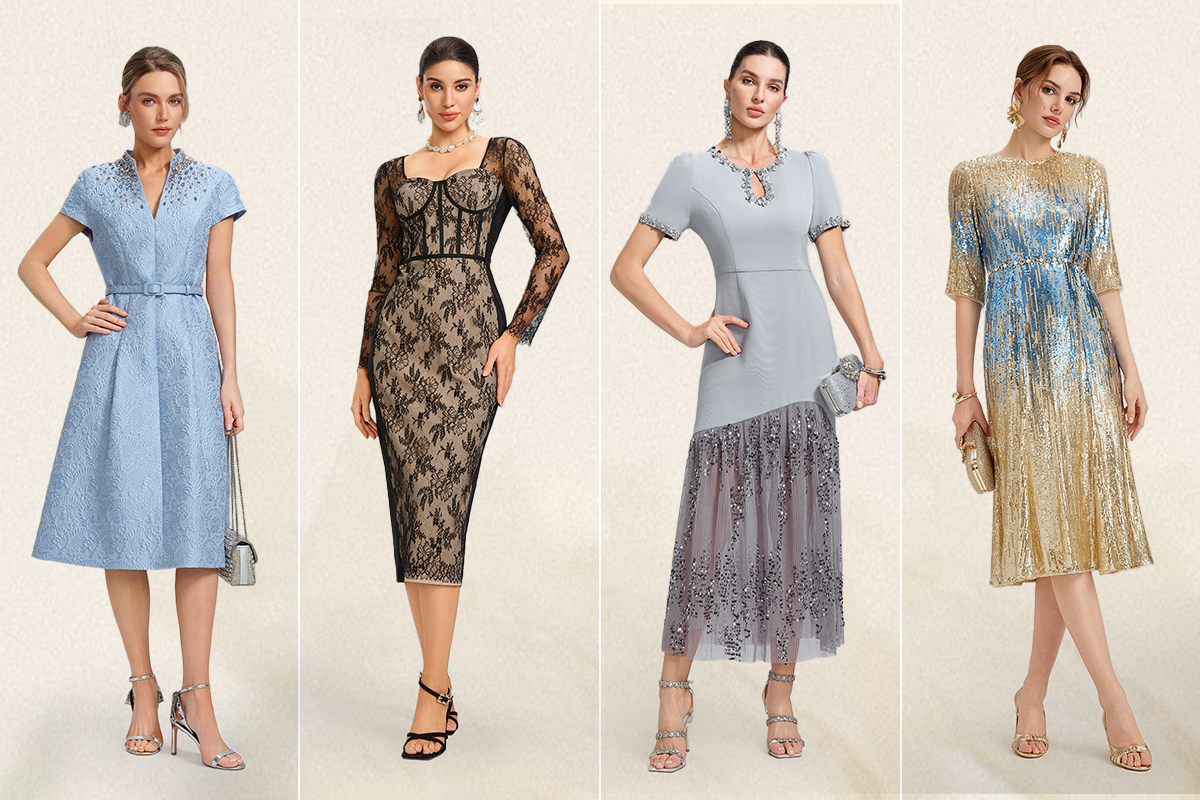
A midi dress falls below the knee and above the ankle, usually ending around the middle of the calf. However, midi is a length category rather than a fixed number of inches. The same dress can appear shorter or longer depending on the wearer’s height, proportions, dress size, waist placement, and the brand’s measurement method.
Before buying a midi dress, compare its listed garment length with a dress you already own. This is more reliable than judging the hem solely from the word “midi” or from photographs of the model.
Understand the Standard Length of a Midi Dress

A Midi Dress Falls Below the Knee and Above the Ankle
The defining feature of a midi dress is its hemline. It covers the knee but stops before reaching the ankle, leaving at least part of the lower leg visible.
Merriam-Webster defines a midi as a dress, skirt, or coat that usually extends to the mid-calf. TheCambridge Dictionary describes it more broadly as covering the knees and part of the lower leg.
These definitions explain why several different hem positions may all be sold as midi length. A dress ending immediately below the knee and one finishing near the lower calf may appear in the same retail category.
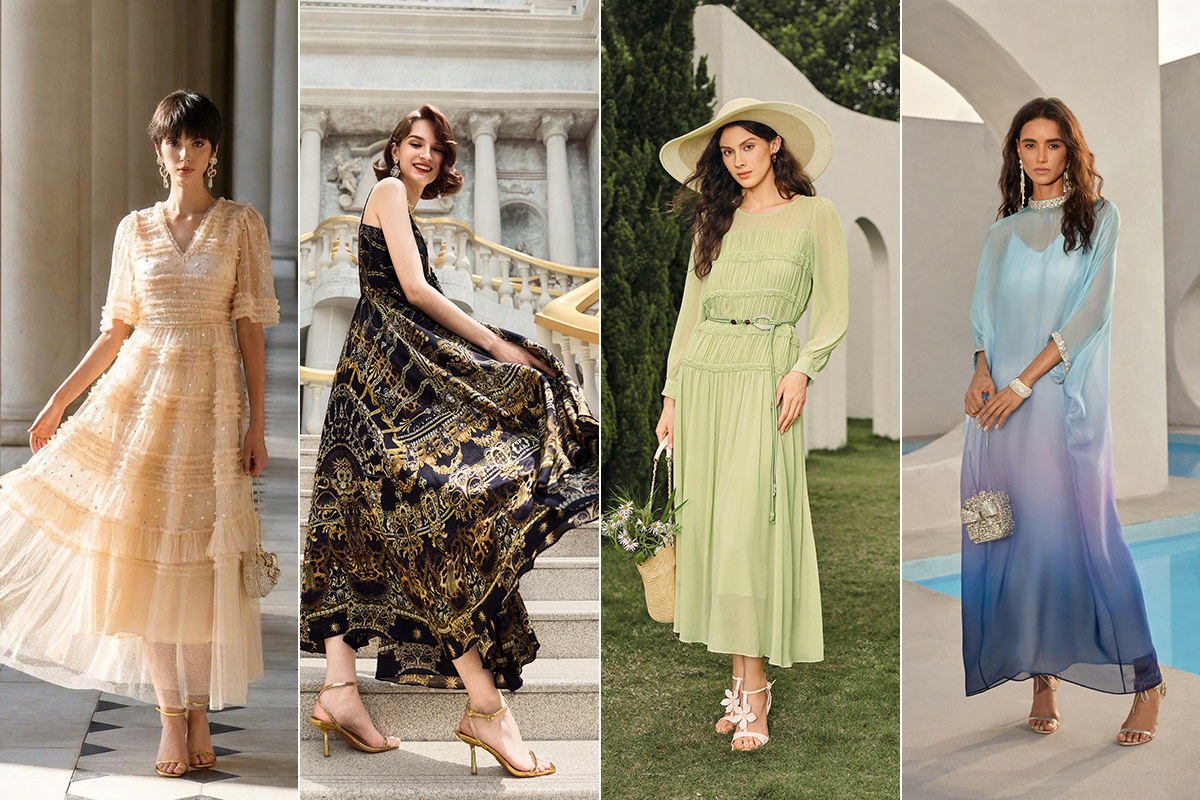
You can see how this range appears across different silhouettes by browsing the current RichRadiqsmidi dress collection.
Why Mid-Calf Is a Reference Point Rather Than a Fixed Rule
Mid-calf is the traditional reference point for midi length, but it is not a universal measurement that every brand follows.
Garment manufacturers may use “midi” for a broader below-the-knee range. Individual dresses also vary in size, silhouette, waist placement, and measurement method. An asymmetric dress may not have one consistent hem position at all.
For these reasons, the product label should be treated as an approximate category. The listed garment length provides a more useful starting point when deciding where the hem will fall.
How Midi Length Differs From Knee-Length and Maxi Length
A knee-length dress ends at or near the knee. A midi dress continues onto the lower leg, while a maxi dress usually reaches the ankle, foot, or floor.
The boundaries can become less obvious on people of different heights. A dress designed as midi length may approach the ankle on a shorter wearer. A dress labeled maxi may sit higher on someone taller.
When comparing the two longer categories, use the RichRadiqs guide tomidi versus maxi dresses. It explains how their different hemlines affect coverage, footwear visibility, and daily practicality.
Why Midi and Tea-Length Dresses Sometimes Overlap
Midi and tea length both describe dresses that fall between the knee and ankle, so retailers do not always use the terms consistently.
Midi is commonly used as a broad contemporary retail category. Tea length often refers to a dress ending around the lower calf or above the ankle, sometimes with a fuller skirt and a more occasion-oriented design. However, this is not a universal standard.
If two dresses have similar measurements, their different category names may reflect branding or design context rather than a significant difference in actual length.
Measure the Length of a Midi Dress Correctly
Identify the Starting Point Used by the Brand
A dress-length number is only useful when you know where the measurement begins.
Many brands measure from the highest point of the shoulder down to the hem. Others may measure from the back neckline, center back, waist seam, or another garment point. Product measurements taken from different starting points cannot be compared directly.
Look for a diagram or measurement note on the product page. If the starting point is not stated, ask the retailer before using the number to make a sizing decision.
Measure From the Highest Shoulder Point to the Hem
To measure a complete dress, lay it flat on a smooth surface without stretching it. Find the highest point where the shoulder meets the neckline.
Run a flexible measuring tape from that point down the front of the dress to the hem. Follow the garment’s natural line without pulling the fabric or allowing the tape to bend around decorative elements.
Record the measurement in both inches and centimeters when comparing products from different markets. If the retailer uses a different starting point, repeat the measurement according to its stated method.
Measure a Midi Skirt From the Waistline to the Hem
A separate midi skirt is generally measured from the top of the waistband to the bottom of the hem.
Lay the skirt flat and align the waistband without stretching elastic. Measure vertically to the hem. For a curved or uneven design, record the relevant points rather than producing one misleading number.
Remember that the skirt’s position on the body affects the result. A high-waisted skirt begins higher and may have a longer measurement while still ending at the same part of the calf as a lower-rise design.
Record Both Ends of an Asymmetric Hemline
A high-low or asymmetric dress does not have one uniform length. Record the shortest and longest portions of the hem.
For example, the front may finish below the knee while the back reaches the ankle. Calling the dress simply “midi” does not communicate this variation.
Product descriptions should ideally include both measurements. If they do not, request clarification before ordering—particularly when the longest point may affect walking or footwear.
Compare the Measurement With a Dress You Already Own
The most practical way to predict the length is to compare the product with a dress that already fits the way you prefer.
Place your reference dress flat and measure it from the same starting point used by the retailer. Note where that dress falls when worn.
If the new dress is two inches longer, you can expect its hem to sit approximately two inches lower, provided the garments have similar fit and waist placement. Differences in bust, hip, stretch, and skirt shape can still alter the final position.
Understand Why Midi Length Falls Differently on Each Person

Account for Height and Leg Proportions
Height affects where a fixed garment length ends, but total height is not the only consideration. Two people of the same height may have different torso and leg proportions.
A standard midi dress might reach mid-calf on one wearer and the lower calf on another. Model photographs can provide a rough visual reference, but they cannot guarantee the same result on a different body.
Use the model’s height together with the actual garment measurement. Neither piece of information is sufficient by itself.
Consider How Bust, Waist, and Hip Fit Affect the Hem
The way a dress fits through the upper body can change its apparent length.
If a dress needs additional room across the bust or hips, the fabric may sit differently from the way it does on the product model. A close-fitting skirt can also rise slightly during walking or sitting.
This does not mean you should automatically choose a larger size to gain length. Size selection should account for all relevant body and garment measurements, along with the dress’s documented stretch and closure.
Understand How Waist Placement Changes the Final Length
Natural-waist, empire-waist, dropped-waist, and shift dresses distribute their length differently.
A raised waistline can make the skirt portion appear longer, while a dropped waist extends the bodice before the skirt begins. Two dresses with the same shoulder-to-hem measurement can therefore create different proportions.
If waist placement matters to the fit, review the bodice measurement and waist position as well as the total length.
Allow for Pleats, Stretch, and Skirt Volume
Pleats, gathers, and tiered sections can influence how a dress hangs and moves. Stretch may also affect the garment’s vertical position when worn, but the result depends on the material and pattern.
Do not estimate these properties from photographs. Confirm the product’s documented construction and stretch information.
When measuring a pleated dress, allow the pleats to rest naturally. Pulling them open can produce a measurement that does not represent how the garment will hang.
Evaluate the Dress With the Shoes You Plan to Wear
Shoes do not physically change a dress’s garment length, but they change posture, proportions, and the relationship between the hem and the floor.
Try the dress with the shoes intended for the event. This is particularly important when deciding whether a lower-calf midi looks distinct from an ankle-length style.
Footwear also matters when pinning a dress for alterations. Marking the hem while barefoot and then wearing heels may create a different visual result from the one you expected.
Decide Where a Midi Dress Should Fall on Your Leg
Choose a Below-the-Knee Hem for a Shorter Midi Look
A shorter midi ends a few inches below the knee. It offers more coverage than a knee-length dress while revealing more of the lower leg than a traditional mid-calf style.
This length may be convenient for walking, stairs, and everyday wear. Confirm that the skirt remains at a comfortable position when sitting because the hem will rise as the knees bend.
Choose a Mid-Calf Hem for a Traditional Midi Length
Mid-calf is the most recognizable midi position. It creates a clear distinction from both knee-length and ankle-length clothing.
The exact visual effect depends on the skirt shape and footwear. A full pleated skirt creates a different line from a narrow column dress, even when both end at the same point.
There is no requirement that the hem must land on one supposedly ideal part of the calf. Personal preference and practical comfort are valid considerations.
Choose a Lower-Calf Hem for Additional Coverage
A lower-calf midi approaches the ankle while leaving a visible gap above the shoe.
This position can provide additional coverage without becoming a floor-length dress. However, it may be listed as tea length, long midi, or even maxi by different retailers.
Use the actual measurement to identify the dress rather than relying on the category label.
Test the Hem While Standing, Sitting, and Walking
A hem that looks suitable while standing may behave differently during normal activity.
Walk at a natural pace, sit in a chair, climb a step, and turn around. Observe whether the skirt rises, restricts your stride, catches against footwear, or shifts unevenly.
A narrow midi may need a vent, slit, pleat, or verified stretch for comfortable movement. A full skirt may provide more room but require greater awareness outdoors in windy conditions.
Base the Final Position on Comfort and Personal Preference
Midi dresses do not need to end at exactly the same point on every wearer.
Some people prefer a shorter below-the-knee hem, while others want lower-calf coverage. The appropriate position also changes with the occasion, silhouette, shoes, and activities.
Rather than following a universal rule, select a length that remains comfortable and gives you the appearance you want.
Read Product Measurements Before Buying a Midi Dress

Do Not Rely Only on the “Midi” Product Label
The word “midi” provides a general length category, not a precise measurement.
Before ordering, review the full product description and measurement chart. If the page lists only a size label and does not provide the garment length, request more information.
When exploring RichRadiqswomen’s dresses, open the individual product page to review the details for that specific design. Do not assume that every dress in the same category has an identical length or fit.
Confirm Whether the Chart Lists Body or Garment Measurements
Body measurements describe the wearer. Garment measurements describe the finished clothing.
Confusing the two can lead to an incorrect size or length estimate. A garment’s bust measurement, for example, usually needs to include the intended wearing ease; it should not necessarily equal the wearer’s body measurement.
Look for chart labels and measurement instructions. If the chart is unclear, contact customer support before purchasing.
Compare the Model’s Height and Dress Length With Your Own
A model image is most useful when accompanied by the model’s height, worn size, and the garment’s length.
If only the model’s height is provided, the photograph still cannot reveal how the same dress will fit a different bust, waist, hip, or torso proportion.
Treat model information as a reference rather than a promise. Combine it with the product measurements and your own comparison dress.
Review the Lining and Sheer Overlay Separately
Some dresses use a shorter opaque lining beneath a longer sheer skirt. In that case, the outer layer may qualify as midi length while the effective coverage ends closer to the knee.
Review photographs and written product information for both layers. If their lengths are important and not listed, ask for separate measurements.
Do not assume opacity or lining length from the product image alone.
Request Missing Length Information Before Ordering
If a dress’s length could determine whether it works for your height or occasion, obtain the measurement before purchasing.
Ask the retailer:
- Where does the measurement begin?
- What is the length for the size you intend to order?
- Does the length change between sizes?
- Are the lining and outer layer different lengths?
- What are the shortest and longest points of an asymmetric hem?
Clear measurements reduce the need to rely on labels that may vary between products.
Alter a Midi Dress When the Hem Is Too Long
Determine Whether a Straight Hem Can Be Shortened
A simple straight hem is often easier to shorten than a dress with complex decoration or shaping.
Before cutting any fabric, pin the proposed hem and try on the dress. Confirm that the new length works while standing, sitting, and walking.
Also check how shortening affects the overall proportions. Removing several inches may change the relationship between the skirt, waistline, and decorative details.
Account for Pleats, Lace, Embroidery, and Border Details
Pleats may need to be reset after shortening. Lace, scalloped edges, embroidery, appliqué, and printed borders can be damaged or lost if fabric is removed from the bottom.
In some cases, a tailor may be able to shorten the dress from another seam or detach and reposition a decorative border. Whether this is possible depends on the garment’s actual construction.
Have the dress inspected before assuming that a detailed hem can be altered safely.
Preserve the Shape of High-Low and Asymmetric Hems
High-low and asymmetric hems depend on their original curves and differences in length. Shortening them evenly from every point may alter the intended shape.
Mark the desired front, side, and back positions separately. A professional may need to recreate the original transition instead of making one straight cut.
Pin the New Hem While Wearing the Intended Shoes
Wear the shoes and undergarments planned for the dress when setting the alteration length.
Stand naturally while another person marks the hem. Avoid bending forward to pin it yourself because this can shift the dress and produce an uneven result.
After pinning, walk and sit before approving the final alteration.
Use a Professional Tailor for Complex Construction
Professional alteration is advisable when a dress has pleats, multiple layers, a sheer overlay, an asymmetric hem, heavy embellishment, or a border design.
A tailor can assess whether the hem can be shortened without compromising the dress. Ask what details will be removed, repositioned, or reconstructed before authorizing the work.
Conclusion
A midi dress usually ends below the knee and above the ankle, with mid-calf serving as the traditional reference point. It does not have one universal length in inches because brands use different measurement methods and wearers have different heights and proportions.
The most reliable process is to identify the brand’s measurement starting point, compare the listed length with a dress you already own, and test the hem with the shoes and activities planned for the outfit.
Once you know the measurement range you need, compare the current RichRadiqsmidi dress selection and review each product individually.



Leave a comment
This site is protected by hCaptcha and the hCaptcha Privacy Policy and Terms of Service apply.