


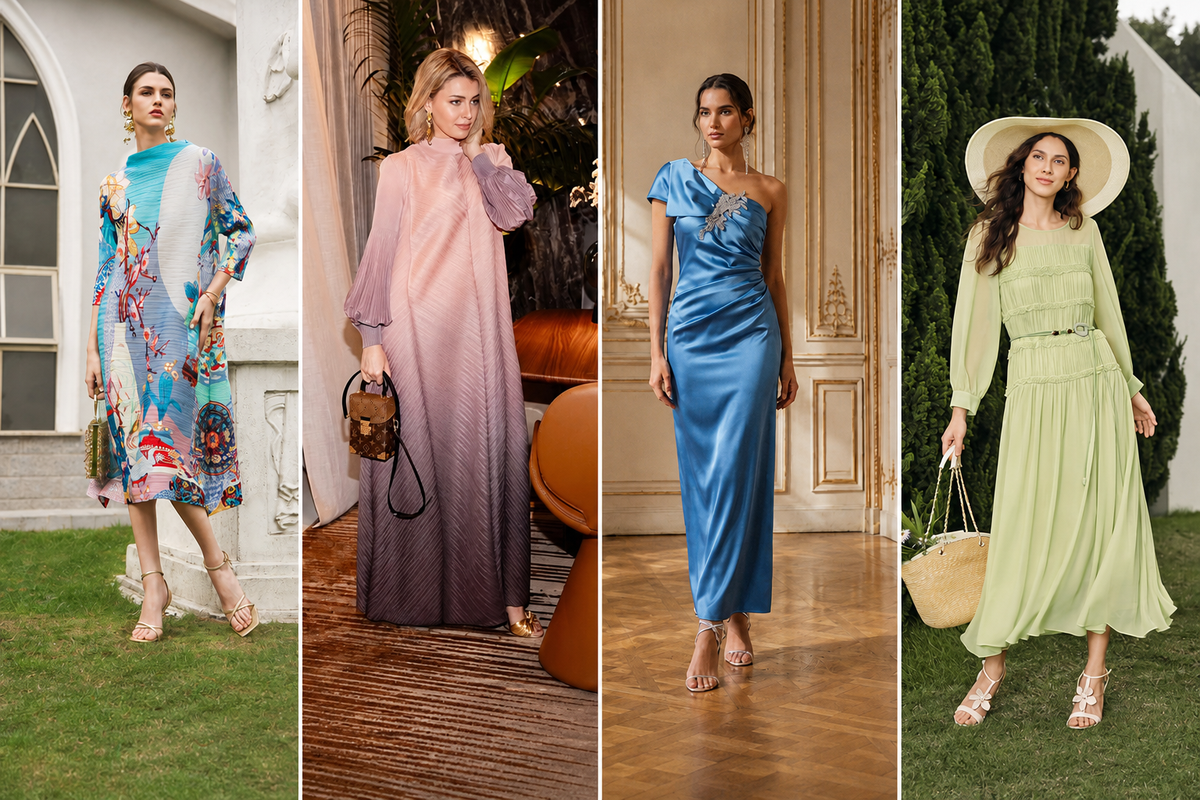
What Is Semi-Formal Dress? A Guide to Semi-Formal Attire for Women
Semi-formal attire for women is polished occasionwear that sits between casual clothing and formal eveningwear. Appropriate choices commonly include knee-length, midi, or tea-length dresses, dressy jumpsuits, and tailored separates. A floor-length gown is usually unnecessary, while jeans, sportswear, and ordinary daytime basics are generally too casual.
The exact outfit depends on the invitation, venue, time, season, and type of event. A daytime semi-formal wedding may suit a softly colored midi dress, while an evening dinner may call for deeper colors, sharper tailoring, or restrained embellishment.
Understand What Semi-Formal Attire Means
Semi-Formal Sits Between Casual and Formal Attire
A semi-formal outfit should look intentional and appropriate for a special occasion without reaching the ceremony and drama associated with black tie.
For women, this often means:
- A knee-length, midi, or tea-length dress
- A polished jumpsuit
- A dressy skirt and blouse
- A tailored pantsuit
- Coordinated evening separates
The category allows more refinement than smart casual but generally requires less formality than a floor-length gown. However, the name alone does not determine the outfit. A semi-formal garden wedding and a semi-formal corporate dinner may need different colors, coverage, and accessories.
Recognize the Main Features of a Semi-Formal Outfit
A successful semi-formal outfit usually combines a clear silhouette, polished footwear, occasion-appropriate material, and coordinated accessories.
The garment should appear more elevated than everyday clothing. That difference might come from tailoring, drape, pleating, lace, embroidery, or another refined detail. It does not need to rely on heavy sparkle or an elaborate design.
Semi-formal clothing should also remain functional. You should be able to sit, walk, eat, and socialize without repeatedly adjusting the neckline, skirt, or sleeves.
Understand Why Semi-Formal Does Not Mean the Same Outfit Everywhere
Dress codes provide a level of formality, but the event determines how that level should be expressed.
At a wedding, guest etiquette and the couple’s instructions matter. At a company reception, professional coverage may be more important. At a birthday dinner, there may be greater freedom for color and decorative detail.
Cultural and religious settings may also establish requirements that general fashion advice cannot predict. Follow direct instructions from the host or venue whenever they are available.
Use the Invitation, Venue, and Time to Interpret the Dress Code
Begin with the exact language on the invitation. If it says semi-formal, do not silently reinterpret it as casual, cocktail, formal, or black tie.
Then consider:
- Whether the event takes place during the day or evening
- Whether the venue is a garden, restaurant, hotel, office, or religious building
- Whether the event is primarily social, professional, or ceremonial
- How much walking, standing, or dancing is involved
- Whether the host has provided a color palette or coverage request
Evening events tend to support deeper colors and more decorative surfaces, while daytime occasions often work with softer colors and lighter visual weight. These are useful tendencies, not fixed rules.
Compare Semi-Formal Attire With Other Dress Codes
Semi-Formal vs. Smart-Casual Attire
Smart casual is polished everyday clothing. It may include a simple dress, tailored trousers, a blouse, loafers, or clean minimal footwear.
Semi-formal attire goes one level further. The garment, shoes, and accessories should communicate that you are attending a special event rather than an ordinary lunch or workday.
A casual knit dress may satisfy smart casual. A more structured or refined midi dress is usually a better semi-formal choice. Jeans may be accepted in some smart-casual settings but are generally not appropriate when an invitation explicitly says semi-formal.
Semi-Formal vs. Cocktail Attire
Semi-formal and cocktail attire overlap, but cocktail clothing usually feels more party-oriented. Cocktail events often allow sharper silhouettes, richer surfaces, and stronger accessories.
Semi-formal dressing can be quieter and more adaptable to daytime ceremonies, graduations, and professional celebrations. A polished midi dress might fit both categories, but the styling and event context will change.
For a closer examination of the dressier category, read the RichRadiqs guide tococktail attire for women.
Semi-Formal vs. Formal Attire
Formal attire is more elevated than semi-formal. It may include floor-length gowns, sophisticated evening jumpsuits, and ceremonial clothing suitable for galas or formal weddings.
A semi-formal event generally does not require a gown. Knee-length, midi, and tea-length dresses are more common. A restrained ankle-length dress can work in some cases, but it should not make you appear dressed for black tie when everyone else is wearing shorter occasionwear.
The invitation remains the authority. Do not reduce “formal” to semi-formal simply because a shorter dress is easier to wear.
Semi-Formal vs. Business Formal Attire
Business formal clothing emphasizes professional tailoring and controlled presentation. It may include a suit, tailored dress, structured jacket, or refined separates.
Semi-formal social attire allows more freedom for prints, draping, color, and decorative detail. However, a semi-formal corporate function still requires professional judgment.
For events involving coworkers, executives, or clients, refer to the RichRadiqs guide toformal dresses for company parties and corporate events.
Choose a Semi-Formal Dress or Alternative Outfit
Wear a Knee-Length, Midi, or Tea-Length Dress

Knee-length, midi, and tea-length dresses are all practical semi-formal options.
A knee-length dress can work for daytime events and warmer weather when the cut remains polished. Midi length provides additional coverage and adapts well to weddings, dinners, graduations, and receptions. Tea length often creates a slightly more traditional occasion look, although the category overlaps with midi.
Do not depend entirely on the product label. Review the actual garment measurement because the same dress can fall differently depending on the wearer’s height and proportions.
Browse RichRadiqsmidi dresses to compare different silhouettes, then verify the length and product details for the individual style.
Select an A-Line, Wrap, Sheath, or Fit-and-Flare Silhouette
An A-line dress gradually widens toward the hem and can provide room for walking. A fit-and-flare dress combines a closer bodice with a fuller skirt. A sheath follows a narrower line, while a wrap dress crosses at the front and may provide some waist adjustment.
No silhouette is automatically semi-formal. Its appropriateness depends on the complete design, material, coverage, and occasion.
A simple A-line day dress may be too casual, while a refined version with careful tailoring or decorative detail may be suitable. Similarly, a fitted sheath can look polished or overly revealing depending on its cut.
Consider a Dressy Jumpsuit or Tailored Separates
Semi-formal attire does not require a dress.
A tailored jumpsuit can work when it has a polished neckline, suitable coverage, and a refined finish. An elegant pantsuit, midi skirt with a dressy blouse, or coordinated separates may also be appropriate.
The pieces should create one cohesive outfit. Combining unrelated office basics does not necessarily produce semi-formal attire. Look at the overall silhouette, materials, shoes, and accessories together.
Evaluate the Neckline, Sleeves, Slits, and Coverage
The outfit should remain secure during the activities required by the event.
A neckline that looks appropriate while standing may shift when you sit or lean forward. A slit may rise while walking, and sheer panels may appear more transparent under bright lighting.
Venue expectations matter. A dress suitable for a restaurant birthday dinner may need an additional layer for a religious ceremony or professional reception.
Confirm Fit and Mobility Before the Event
Try on the complete outfit with the shoes and undergarments you intend to wear.
Sit in a chair, walk at a normal pace, climb a step, raise your arms, and turn around. Look for pulling, gaping, restricted movement, or a lining that rises.
If the garment requires constant adjustment during a short fitting, it is unlikely to become easier during a longer event.
Dress Semi-Formally for Different Occasions

Semi-Formal Weddings
For a semi-formal wedding, a polished midi, knee-length, or tea-length dress is usually a dependable option. A dressy jumpsuit may also work.
Use the venue, season, time, and cultural setting to refine the choice. Avoid white, ivory, and bridal-looking designs unless the couple has requested those colors.
Because wedding attire involves additional etiquette, consult the dedicated RichRadiqs guide tosemi-formal wedding attire rather than applying general party rules to every ceremony.
Dinners, Anniversary Parties, and Celebrations
A semi-formal dinner allows more flexibility than many ceremonies.
A refined midi dress, wrap dress, polished jumpsuit, or elegant separates can all work. Evening events may support darker colors, controlled shine, or more prominent jewelry. Daytime celebrations may favor softer color and lighter styling.
The venue determines how far to elevate the look. A private dining room in a luxury hotel will usually call for a sharper outfit than a celebration at a neighborhood restaurant.
Company Events and Professional Receptions
At a company event, the outfit must remain appropriate around colleagues, managers, clients, and business partners.
A structured midi dress, tailored jumpsuit, sheath dress, or polished suit can satisfy semi-formal expectations. Keep necklines, slits, sheer areas, and embellishment controlled enough for a professional environment.
Festive detail can be appropriate, but it should not transform the outfit into clubwear or highly dramatic evening clothing.
Graduations, Ceremonies, and Religious Events
Semi-formal graduation and ceremony attire should be polished without interfering with the practical requirements of the event.
For a graduation, consider whether the outfit needs to fit comfortably beneath a gown. At a religious venue, review expectations for sleeves, shoulders, neckline, hem length, or head coverings.
A removable jacket or wrap may provide flexibility, but it is not always sufficient when the venue requires coverage throughout the ceremony.
Daytime vs. Evening Semi-Formal Events
Daytime semi-formal attire often works with floral prints, soft colors, refined day dresses, and restrained accessories.
Evening semi-formal attire may use deeper colors, smoother surfaces, subtle shine, or more defined tailoring. Shoes and bags can also become slightly dressier.
Time of day should refine the outfit rather than override the dress code. A daytime event still requires polish, and an evening event does not automatically require a floor-length gown.
Choose Appropriate Colors, Fabrics, and Details
Select Colors According to the Event and Time of Day
There is no single required color palette for semi-formal clothing.
Navy, green, burgundy, black, blue, pink, and many other shades can work. Softer colors may suit daytime celebrations, while deeper tones often appear natural in the evening.
Special occasions can have their own restrictions. Wedding guests should consider bridal colors, while cultural ceremonies may assign particular meanings to red, white, black, or other shades.
Use Prints Without Making the Outfit Look Too Casual
Florals, geometric designs, and artistic prints can all work for semi-formal events.
Consider the print’s scale, contrast, and placement. A highly casual novelty print may feel out of place, while a more controlled print on a polished silhouette can remain occasion-ready.
Let a strong print provide the primary visual interest. The bag, shoes, and jewelry can then remain quieter.
Review Fabric, Lining, Stretch, and Transparency
A product photograph cannot reliably establish fiber content, stretch, lining, weight, or opacity.
Read the written product information and garment label. Check whether the dress is fully lined, partially lined, or intended to be worn with a separate slip. Confirm any claimed stretch rather than assuming a fitted style will accommodate movement.
For light colors and openwork materials, inspect the garment under bright light while wearing the intended undergarments.
Add Lace, Pleats, Embroidery, or Subtle Embellishment
Decorative details can help distinguish semi-formal clothing from everyday wear.
Lace, pleating, embroidery, draping, beading, or controlled shine can all contribute. The detail should suit the event and remain practical for sitting, walking, and carrying a bag.
If the garment already has a prominent surface, additional statement accessories may be unnecessary.
Avoid Details That Make the Outfit Look Like Eveningwear or Clubwear
A semi-formal outfit can be stylish without becoming excessively dramatic or revealing.
Very high slits, unstable cutouts, transparent areas, extremely short hems, or dense head-to-toe sparkle may shift the outfit toward clubwear or a more theatrical evening look.
Judge these features in combination. One decorative detail may be appropriate, while several competing elements can change the outfit’s overall message.
Complete a Women’s Semi-Formal Outfit

Wear Heels, Dressy Flats, or Polished Sandals
Heels are optional. Dressy flats, slingbacks, block heels, and polished sandals can all work.
Choose footwear according to the venue. Block heels or wedges may be more stable on grass, while refined flats can be practical for events involving long periods of standing.
Casual athletic shoes and beach flip-flops generally do not meet a semi-formal dress code.
Carry a Clutch or Small Structured Bag
A clutch, small shoulder bag, or structured top-handle bag usually suits semi-formal clothing better than an oversized everyday tote.
The bag does not need to match the shoes exactly. It should coordinate with the outfit’s level of formality and avoid competing with the garment’s main detail.
Coordinate Jewelry With the Dress Details
A simple dress can support a stronger earring, necklace, or brooch. An embellished neckline may need little additional jewelry.
Consider the event as well as the garment. Professional receptions often favor more restrained jewelry, while social celebrations may allow a bolder piece.
Avoid accessories that repeatedly catch on lace, mesh, sequins, or embroidery.
Add a Blazer, Jacket, Wrap, or Formal Coat
Outerwear should maintain the outfit’s polished appearance.
A tailored blazer can support a professional or contemporary direction. A refined wrap may suit a dressier social event, while a structured coat can complete a cold-weather outfit.
Try the layer over the complete garment to ensure it fits around the sleeves and does not damage embellishment.
Match Hair and Makeup to the Event Rather Than a Fixed Rule
Semi-formal attire does not require one hairstyle or makeup level.
A neat natural look can be appropriate, as can more polished evening grooming. Base the decision on the event, time, climate, and your own comfort.
The goal is a cohesive presentation, not compliance with a rigid beauty formula.
Avoid Common Semi-Formal Outfit Mistakes
Do Not Wear Everyday Casual Clothing
Jeans, activewear, beachwear, graphic T-shirts, and heavily distressed clothing are generally too relaxed for a semi-formal event.
Even a casual-looking venue does not erase an explicit dress code. If the host requests semi-formal clothing, respect that instruction.
Avoid Dressing as Formally as a Black-Tie Guest
A dramatic ball gown or highly ceremonial evening outfit may appear overdressed at a semi-formal event.
A restrained ankle-length dress can work in certain settings, but a knee-length, midi, or tea-length garment is usually easier to calibrate.
Do Not Ignore the Venue or Time of Day
The same dress can read differently at a daytime garden event and an evening hotel dinner.
Before deciding, consider lighting, weather, ground surface, seating, cultural context, and the host’s expectations.
Avoid Assuming Every Midi Dress Is Semi-Formal
Midi describes length, not formality.
A casual jersey or beach-style midi may be too relaxed, while a tailored, pleated, embroidered, or otherwise refined midi may work. Review the entire garment rather than choosing by hemline alone.
Test the Complete Outfit While Sitting, Walking, and Standing
Shoes, undergarments, outerwear, and accessories can change how the outfit functions.
Wear everything together before the event. Sit, walk, reach, and raise your arms. Confirm that the outfit remains secure and comfortable without repeated adjustment.
Conclusion
Semi-formal attire for women is polished occasionwear positioned between casual clothing and formal eveningwear. A knee-length, midi, or tea-length dress is often a dependable option, but a tailored jumpsuit, pantsuit, or coordinated separates can work equally well.
The invitation establishes the required level of formality. The venue, time, season, event type, and cultural context then determine how to interpret it.
Once those conditions are clear, explore the RichRadiqsevent and evening dress collection and review the individual garment’s length, measurements, lining, closure, and material details before deciding.


Leave a comment
This site is protected by hCaptcha and the hCaptcha Privacy Policy and Terms of Service apply.