


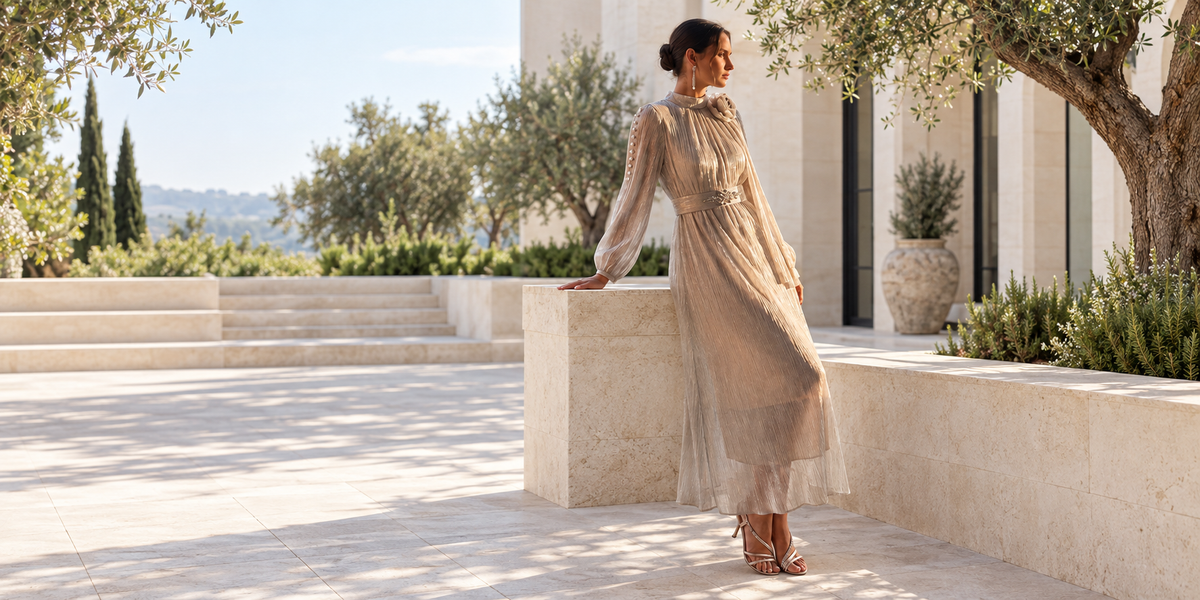
Should Petite Women Wear Maxi Dresses?
Yes, petite women can wear maxi dresses. The right maxi dress can create a long, continuous vertical line that makes a petite frame appear taller and more balanced. Height alone is not a reason to avoid this silhouette.
The key is to choose the correct length, waist placement, skirt volume, print scale, and footwear. A maxi dress becomes overwhelming when it is too long, too loose, or visually divided into several heavy sections—not simply because the wearer is petite.
Petite Women Can Wear Maxi Dresses Successfully
Why Height Does Not Automatically Rule Out Maxi Dresses
A maxi dress is defined mainly by its ankle-to-floor hemline. It is a length category rather than a silhouette, so maxi dresses can be fitted, A-line, empire-waisted, tiered, pleated, or relaxed.
This variety makes the style adaptable to different heights. A petite woman can choose a streamlined design that complements her proportions instead of wearing a heavily layered style that dominates her frame.
The Rich Radiqs guide to maxi dresses explains that “maxi” describes where a dress ends, not how it must be shaped. Therefore, the silhouette and fit are more important than the category name.
How the Right Maxi Dress Can Create a Longer Vertical Line

Because a maxi dress extends from the upper body toward the ankles or floor, it can create an uninterrupted vertical line. This effect may visually lengthen the body, especially when the dress uses a consistent color, controlled print, or continuous fabric treatment.
A defined waist also helps. It separates the bodice and skirt without making the outfit look fragmented. A natural or slightly raised waist can make the skirt section appear longer and keep the body proportions balanced.
Browse the Rich Radiqs maxi dress collection to compare how different waistlines, necklines, and skirt shapes influence the overall vertical effect.
Common Reasons a Maxi Dress May Overwhelm a Petite Frame
A maxi dress may overwhelm a petite wearer when several proportion problems occur together. Common examples include:
- A hem that pools heavily around the feet
- An excessively low or dropped waist
- Too many wide horizontal tiers
- Large prints that dominate the body
- Heavy fabric with uncontrolled volume
- Oversized sleeves combined with a full skirt
- A neckline that closes off the upper body
This does not mean petite women must wear only fitted or plain dresses. Statement details can work beautifully when they are concentrated rather than spread across every part of the garment.
For example, a dramatic neckline can be balanced with a streamlined skirt, while a voluminous skirt can work with a simpler, more fitted bodice.
Choose a Maxi Dress That Flatters a Petite Figure
Look for a Defined or Slightly Raised Waistline
Waist placement can change the perceived proportions of the entire dress.
A natural waist creates a balanced shape, while a slightly raised waist can make the legs appear longer. Empire-waist dresses may also work, particularly when the fabric falls smoothly from beneath the bust rather than expanding into excessive volume.
Avoid a waist seam that sits too low. A dropped waist can lengthen the torso visually while shortening the lower body, which may make a petite frame look less balanced.
A belt can help define the waist, but its width should suit your proportions. A narrow or medium-width belt is generally easier to integrate than an extremely wide, high-contrast design.
Choose a Streamlined Skirt With Controlled Volume
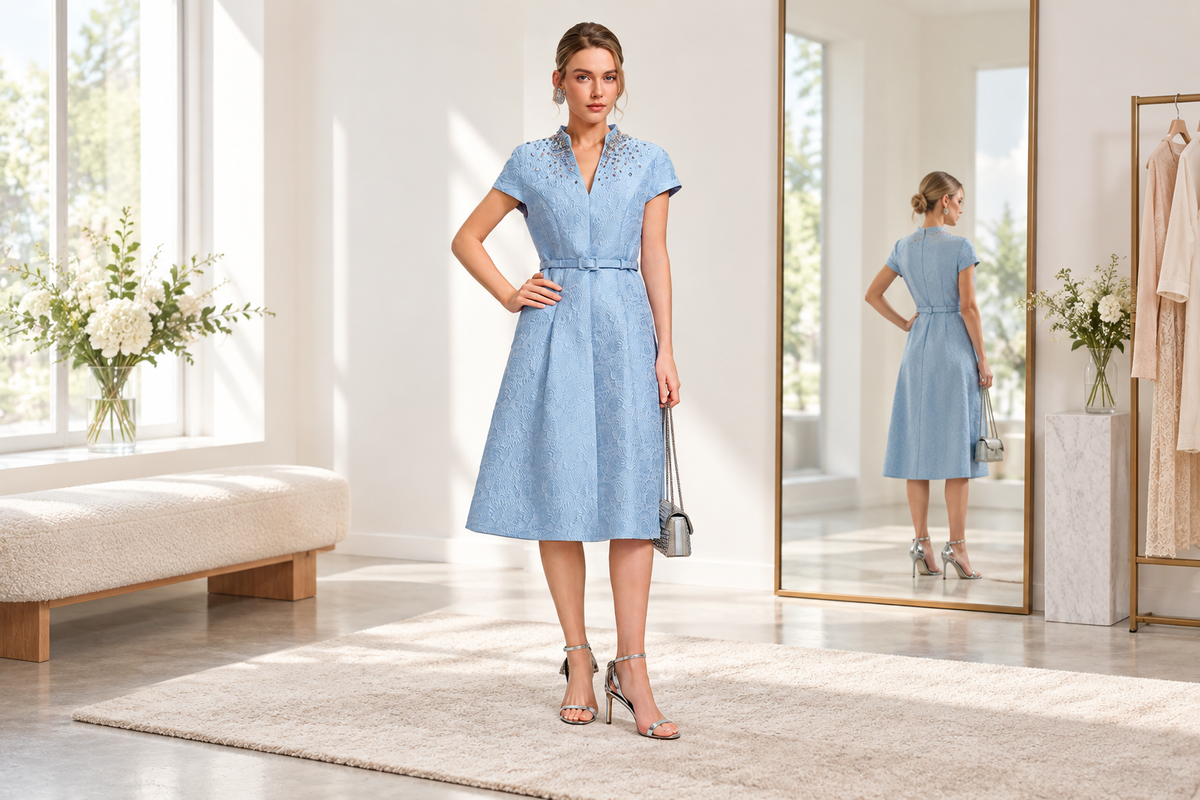
A straight, softly flared, or moderate A-line skirt is a dependable choice for petite women. These shapes provide movement without adding unnecessary width.
Tiered and ruffled maxi dresses can also work, but the details should not create too many strong horizontal divisions. Look for softer transitions, smaller ruffles, or tiers placed lower on the skirt.
If the dress has considerable volume, check how it moves when you walk. Lightweight fabric may fall close to the body, whereas stiff fabric can hold its width and make the dress appear larger.
The broader Rich Radiqs dress collection provides examples of fitted, relaxed, pleated, and flared silhouettes that can help you compare different proportions.
Use V-Necklines and Vertical Details to Elongate the Body
V-necklines, open collars, front buttons, vertical pleats, center seams, and long uninterrupted prints can guide the eye up and down the outfit. This creates a stronger vertical emphasis.
A V-neckline is particularly useful because it opens the upper body and adds visual length around the neck and chest. However, it is not the only flattering option. Scoop necks, square necks, and modest open collars can produce a similar effect when they do not feel overly heavy.
Vertical details should appear integrated into the design. You do not need stripes or an obvious center line for the dress to look elongating.
Select Prints and Embellishments in Proportion to Your Frame
Petite women can wear printed and embellished maxi dresses. The important issue is scale and placement.
Small and medium prints are often easier to balance on a petite frame, but a larger print can still work when it has sufficient open space around it. Dense oversized motifs may visually cover the wearer, whereas a strategically placed large floral design can create a strong focal point.
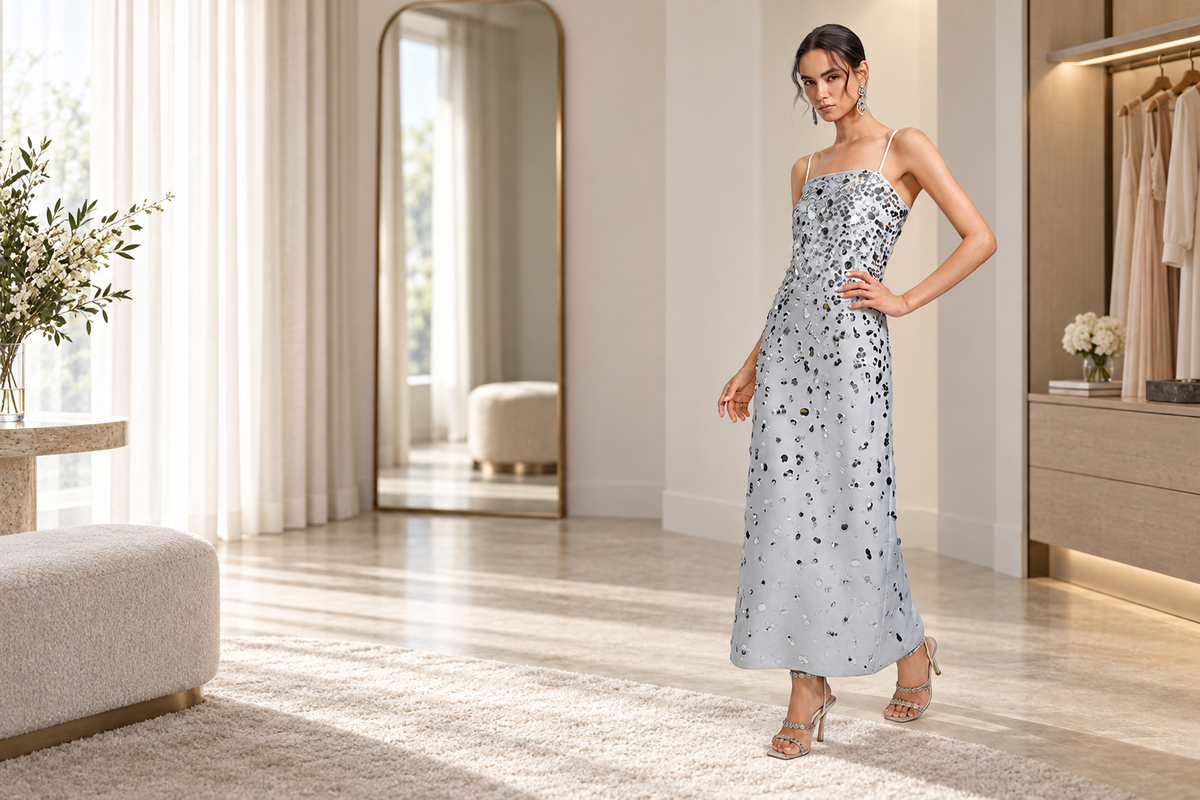
The same principle applies to sequins, beads, embroidery, and ruffles. Concentrating detail around the neckline, waist, cuffs, or one section of the skirt can be more flattering than distributing heavy decoration across the entire garment.
Find the Correct Maxi Dress Length
Let the Hem Fall Near the Top of the Foot
A petite-friendly maxi dress usually ends at the ankle, across the top of the foot, or just above the floor. The correct position depends on the style and occasion.
An ankle-length maxi shows more of the shoes and is practical for daytime events, travel, and outdoor settings. A floor-skimming dress feels more formal and creates a dramatic, uninterrupted line.
The hem does not need to touch the ground to qualify as a maxi dress. The Rich Radiqs article on how long a maxi dress should be explains the differences between ankle-length, top-of-the-foot, and floor-length designs.
Avoid Fabric Pooling Around the Ankles
A maxi dress is too long when you repeatedly step on the hem, need to lift the skirt while walking, or have fabric pooling around your feet.
Excess length does more than create a safety problem. It can also make the dress look borrowed or incorrectly sized, reducing the elongating effect that makes maxi dresses attractive on petite women.
Unless the design intentionally includes a train, the front hem should provide enough clearance for comfortable walking. Check the length while moving, sitting, and climbing stairs.
Check the Dress Length With Your Intended Shoes
Shoes directly affect where a maxi dress falls. A dress altered for heels may drag when worn with flats, while a dress fitted with sandals may appear shorter when combined with higher heels.
Try on the complete outfit before deciding whether the length is correct. Wear the same heel height you expect to use for the event and stand naturally instead of stretching upward.
The Rich Radiqs maxi dress measurement guide provides additional guidance for measuring from the specified starting point to the desired hem position.
Consider Petite Sizing or Professional Alterations

Petite sizing involves more than shortening the hem. Depending on the garment, it may also adjust the bodice length, waist position, rise, sleeves, and placement of design details.
However, not every petite woman has the same proportions. Some have a shorter torso, while others have relatively long legs. Product-specific measurements are therefore more useful than the size label alone.
The Craft Yarn Council’s body-sizing guidance recommends measuring a garment that fits the way you want and using those measurements as a guide. Apply the same approach by comparing a suitable dress with the listed measurements of the maxi dress you plan to purchase.
Professional hemming can correct excess length, but examine the dress first. Lace borders, embroidery, sequins, pleats, ruffles, and graduated prints may make alterations more complicated. In some cases, shortening from the waist or adjusting the straps may preserve the original hem design more effectively.
Style a Maxi Dress to Look Taller
Create an Unbroken Color or Print Line

A single color or continuous print helps the eye move vertically without interruption. Monochromatic styling is especially effective because the dress, shoes, and outer layer do not create multiple contrasting blocks.
Petite women do not need to restrict themselves to black or dark colors. White, pastel, jewel-tone, and brightly printed maxi dresses can all create length when the design remains visually connected.
If you add a belt, jacket, or contrasting accessory, consider where it divides the body. A sharply contrasting belt may define the waist, but it can also interrupt the vertical line. Choose the effect that matters most for the particular dress.
Pair the Dress With Streamlined Shoes
Heels can add physical height, but petite women do not need to wear them with every maxi dress.
Pointed flats, minimal sandals, slingbacks, and low-profile shoes can maintain a clean line. Footwear close to the color of the dress or your skin may also reduce visual interruption.
For formal occasions, heels can help prevent a floor-length hem from dragging. Block heels are a practical option for lawns and uneven surfaces, while slender heels may suit smooth indoor floors.
Avoid shoes that create unnecessary bulk beneath a narrow maxi dress. Heavy boots can still work in cooler weather, but they usually look most intentional with a dress that has sufficient weight or structure.
Choose Cropped Layers That Preserve the Waistline
A cropped jacket, short cardigan, or waist-length structured layer helps maintain the dress’s proportions. It provides warmth without covering the waist or dividing the body at an awkward point.
Long coats can also work when their vertical line coordinates with the dress. The more difficult length is often a jacket that ends at the widest part of the hips, especially when combined with a full skirt.
When choosing outerwear, try it with the complete outfit and check whether the waist definition remains visible.
Keep Bags and Accessories in Proportion
Very large bags can visually compete with a petite frame and conceal a significant portion of the dress. A small or medium shoulder bag, clutch, or compact top-handle bag usually creates better balance.
Accessories should support the strongest feature of the dress. If the garment has a bold print or detailed neckline, choose simpler jewelry. If the maxi dress is streamlined, statement earrings or a sculptural bag can add interest without overwhelming the silhouette.
Conclusion
Petite women should wear maxi dresses if they enjoy the style. A carefully chosen maxi dress can elongate the body and create a graceful, balanced silhouette.
Look for a defined or slightly raised waist, controlled skirt volume, proportionate details, and a hem that reaches the ankle, top of the foot, or just above the floor. Avoid allowing excess fabric to pool around the feet, and always evaluate the dress with the shoes you intend to wear.
The most flattering maxi dress is not determined by height alone. It is the one whose waistline, length, volume, and design details work together with your individual proportions.


Leave a comment
This site is protected by hCaptcha and the hCaptcha Privacy Policy and Terms of Service apply.