


What Length Is a Maxi Dress? A Complete Measurement Guide
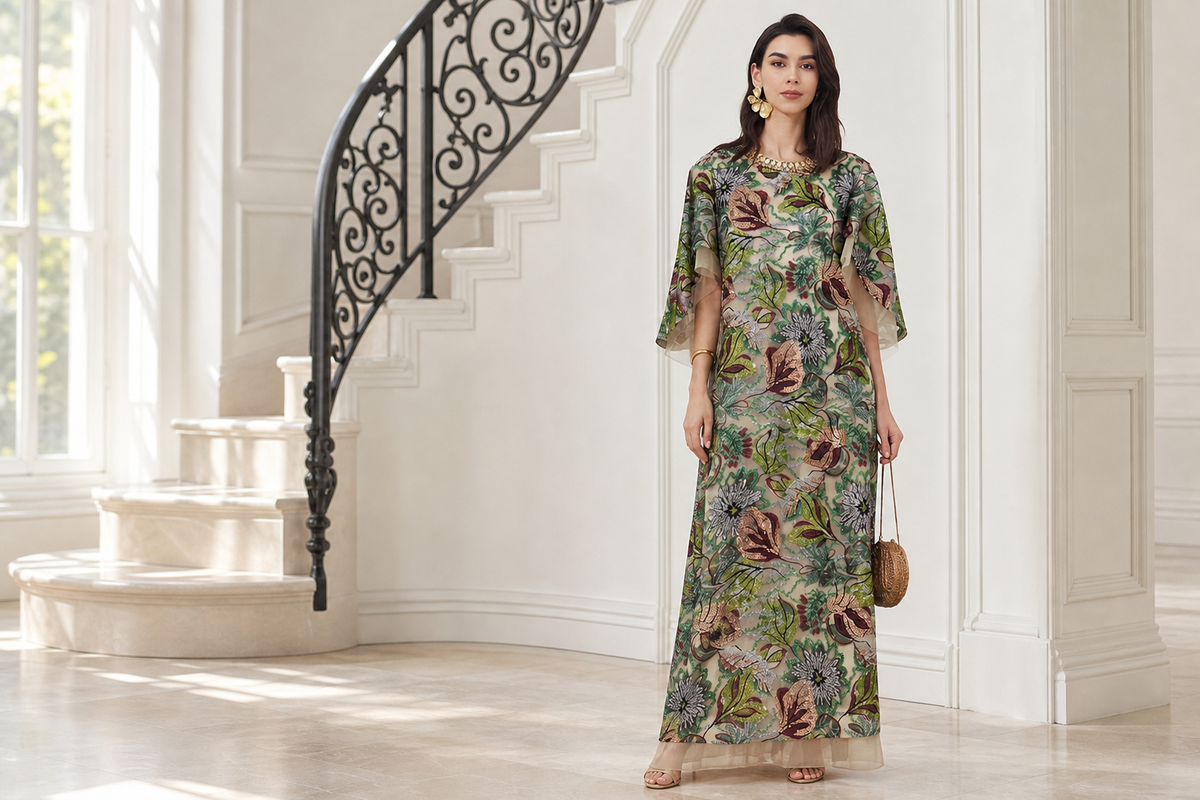
A maxi dress usually reaches the ankles or falls close to the floor. However, there is no single standard length that applies to every maxi dress. The final hem position depends on the dress design, your height, your body proportions, and the shoes you wear.
Understanding these factors can help you choose a maxi dress that looks intentional and allows you to walk comfortably.
What Is the Typical Length of a Maxi Dress?
Maxi Dresses Usually Reach the Ankle or Floor
A maxi dress is generally defined by its long silhouette. Unlike a midi dress, which usually finishes between the knee and ankle, a maxi dress normally ends at the ankle or extends toward the floor.
Many designs in the Rich Radiqs maxi dress collection use this long length to create a dramatic silhouette for vacations, parties, weddings, and evening events.
A maxi dress should not necessarily drag across the ground. Ideally, the hem should provide enough clearance for comfortable walking while maintaining the intended long appearance.
Understand Ankle-Length and Floor-Length Maxi Dresses
Not every maxi dress ends at exactly the same point.
An ankle-length maxi dress finishes around the ankle and leaves most or all of the shoe visible. This length can be practical for daytime events, outdoor occasions, and settings where you need to move frequently.
A floor-length maxi dress extends farther down the body and may cover most of the shoes. It is commonly used for formal silhouettes, evening dresses, and styles designed to create a more dramatic appearance.
Both can be considered maxi dresses. The distinction is based on where the hem falls rather than on a universal measurement in inches.

Dress Length Varies With the Design and Intended Fit
Design details can affect how long a maxi dress appears when worn. For example, a raised waistline may create a longer-looking skirt section, while a fitted natural waist can change how the fabric falls over the hips.
The amount of skirt volume also matters. A straight slip dress may fall differently from a layered, pleated, or flared maxi dress. The Rich Radiqs Embroidered Cutout Floral Maxi Dress, for example, is described as a long dress, but its actual hem placement will still depend on the wearer’s height and proportions.
For this reason, the word “maxi” should be treated as a length category rather than an exact garment measurement.
How to Measure Maxi Dress Length Correctly
Measure From the Shoulder or Specified Starting Point
Garment length is often measured from the high point of the shoulder down to the hem. However, brands may use different starting points depending on the neckline and construction of the dress.
Before measuring, check the product’s measurement instructions. If the listed length begins at the shoulder, measure from the highest shoulder point close to the neckline. Run the measuring tape vertically down the front of the dress to the hem.
Keep the garment flat and avoid stretching the fabric during measurement.
Compare Garment Measurements With a Dress You Own
Your total height alone cannot tell you where a dress will finish. Two women of the same height may have different torso and leg proportions, causing the same dress to fall at different points.
A practical approach is to measure a long dress you already own:
- Lay the dress flat on a smooth surface.
- Identify the same starting point used by the product size chart.
- Measure straight down to the hem.
- Compare that number with the listed garment length.
Rich Radiqs uses product-specific measurements, so consult the relevant chart rather than relying only on a familiar size label. The Rich Radiqs size guide also recommends referring to each product’s individual chart before purchasing.
Account for the Waistline and Skirt Construction
The placement of the waist seam can affect the worn length. An elastic or loose waist may settle differently on the body, while a fitted waist seam is more likely to remain in a fixed position.
Bias-cut fabric can also relax after hanging. Full or curved skirts may require more careful hem preparation than straight skirts. The New Mexico State University Extension hemming guide explains that the appropriate hemming method depends on factors such as the fabric, skirt flare, and garment weight.
If the dress has stretch, gathers, layers, or a heavy skirt, allow it to hang naturally before deciding whether its length needs adjustment.
How Height and Shoes Affect Maxi Dress Length
Petite and Tall Women May Need Different Lengths
A standard maxi dress may fall closer to the floor on a petite wearer and nearer the ankle on a taller wearer. This does not automatically mean the dress is unsuitable, but the final look may differ from the product photograph.
Petite shoppers should check whether the hem creates a tripping risk. Tall shoppers should confirm that the dress still reaches the desired point rather than appearing unexpectedly cropped.
When browsing all Rich Radiqs dresses, review the product photographs, model information, silhouette, and individual measurements together.
Choose Your Shoes Before Evaluating the Hem
Shoes can noticeably change how a maxi dress falls. Heels raise the body and create more space between the hem and the floor, while flats may cause the same dress to sit closer to the ground.
Try on the dress with the shoes you plan to wear before deciding whether to shorten it. This is especially important for wedding guest dresses, formal styles, and other outfits that may be worn with heels.
The University of Kentucky Cooperative Extension hemming guide recommends wearing the intended shoes when marking a garment hem so the finished length is evaluated accurately.

Leave Enough Clearance for Comfortable Movement
A floor-length maxi dress can sit close to the ground, but you should still be able to walk without repeatedly stepping on the fabric.
Test the dress by walking, turning, sitting, and climbing a few steps. If you have to lift the skirt constantly during normal movement, the hem may be too long for the shoes or setting.
Outdoor venues may also require slightly more practical clearance because grass, gravel, and uneven surfaces can catch a low hem.
When Should You Alter a Maxi Dress?
Check the Dress While Standing, Walking, and Using Stairs
Do not judge the length only while standing still in front of a mirror. Walk naturally and observe whether the front of the dress catches beneath your shoes.
Also check the back hem. Depending on the cut and your proportions, the back may sit lower than the front. A deliberately longer back or train should be preserved unless you specifically want to change the design.
If the dress is comfortable when standing but difficult to manage when moving, a small adjustment may improve its wearability.
Consider the Fabric, Lining, and Decorative Hem
Some maxi dresses are relatively easy to shorten. Others require more involved alterations.
Before changing the hem, check for:
- A separate lining
- Pleats or multiple skirt layers
- Lace or scalloped edges
- Beading, sequins, or embroidery
- A high-low hem or train
- A decorative border positioned at the bottom
Shortening a dress with an elaborate border may remove an important design element. In some cases, a tailor may need to adjust the dress from another seam rather than cutting the original hem.
For questions about a particular Rich Radiqs style, fabric, or size, you can also contact Rich Radiqs customer service before purchasing or arranging alterations.

Conclusion
A maxi dress usually reaches the ankle or falls close to the floor, but its length is not defined by one fixed measurement. Your height, body proportions, shoes, waist placement, and the construction of the dress all affect where the hem sits.
For the most reliable fit, check the product-specific measurements and compare them with a similar dress you already own. Try the dress with your intended shoes and test it while moving before deciding whether alterations are necessary.



Leave a comment
This site is protected by hCaptcha and the hCaptcha Privacy Policy and Terms of Service apply.