


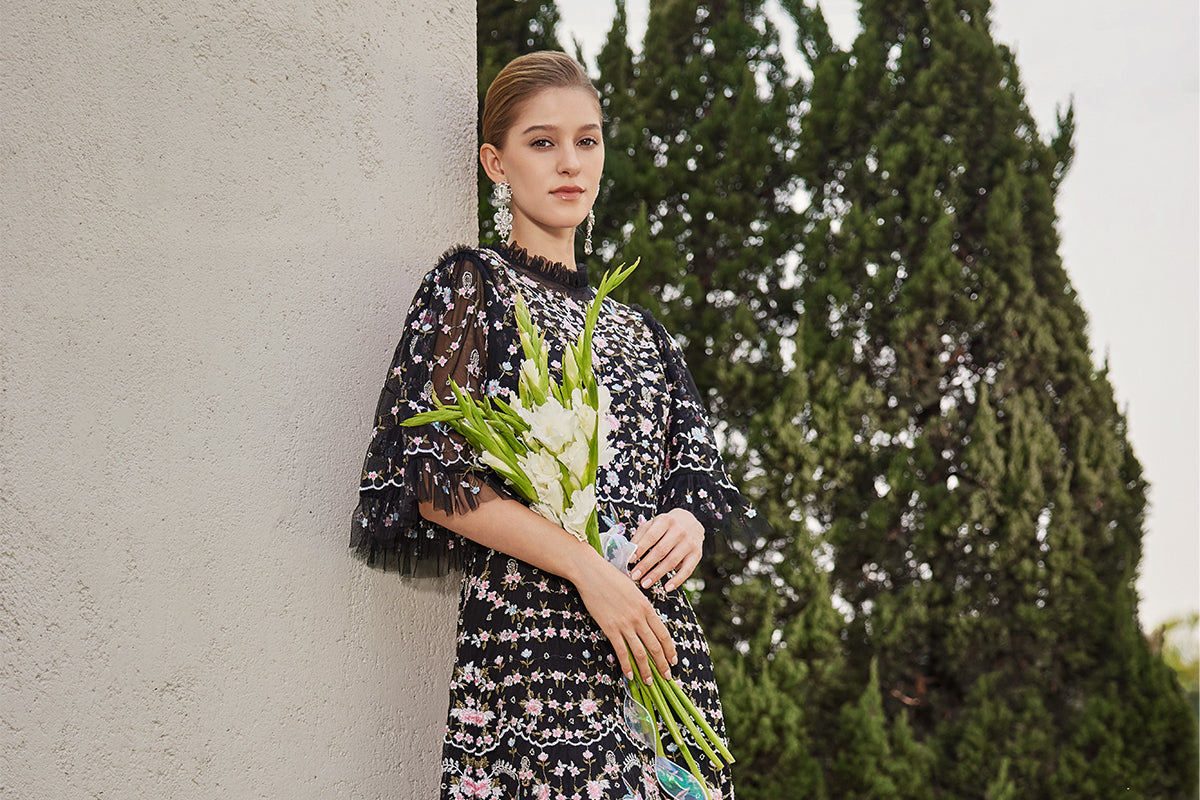
What Does Polyester Feel Like in Occasionwear?
Polyester in occasionwear can feel very different from one piece to another. Some polyester dresses feel smooth, light, and elegant, while others may feel stiff, thin, slippery, warm, or less breathable against the skin. The difference usually comes from the fabric weight, weave, finish, lining, blend, and overall garment construction.
This guide explains what polyester typically feels like in formal dresses and special occasion outfits, how it compares with satin, chiffon, silk, and other dress fabrics, and what to check before buying a polyester occasionwear piece.
What Does Polyester Typically Feel Like in Occasionwear?
Polyester does not have one fixed feel. In occasionwear, it can feel smooth, crisp, lightweight, structured, glossy, matte, or softly flowing. A polyester slip dress may feel sleek and fluid, while a structured polyester gown may feel firmer and more supportive. A chiffon-style polyester dress may feel airy and delicate, while a low-quality polyester piece may feel thin, clingy, or overly synthetic.
How Polyester Feels in Dressier Fabrics
In dressier fabrics, polyester often has a smooth surface with a clean, finished hand feel. It can be made to look glossy like satin, sheer like chiffon, textured like jacquard, or more structured for tailored occasionwear. This flexibility is one reason polyester is so common in formal dresses, bridesmaid dresses, jumpsuits, evening gowns, and partywear.
Compared with delicate natural fibers such as silk, polyester usually feels more consistent and less fragile. It also tends to resist wrinkles and hold its shape well, which can be helpful for long events, travel, photos, sitting, dancing, and repeated wear. However, lower-quality polyester may feel slick, plasticky, scratchy at the seams, or too shiny if the fabric is thin or poorly finished.
How Polyester Feels Against the Skin
Against the skin, polyester can feel smooth and comfortable when the garment is well made and properly lined. A soft lining makes a big difference, especially in fitted dresses, formal jumpsuits, lace styles, embellished pieces, or outfits worn for several hours.
The main drawback is breathability. Polyester does not usually feel as airy as cotton, linen, or silk, so it may feel warmer during outdoor weddings, summer events, or crowded indoor venues. Fit also matters. A loose, lined polyester dress can feel easy to wear, while a tight, unlined piece may feel clingy or less breathable after extended wear.

Why Polyester Occasionwear Can Feel So Different
Two dresses can both be labeled “100 percent polyester” and still feel completely different. One may feel polished and comfortable, while another may feel stiff or cheap. That happens because the fiber content is only one part of the garment.
A polyester occasion dress may feel:
- Soft and fluid when the fabric has a finer weave or smoother finish
- Crisp and structured when the design needs volume or shape
- Light and airy when used in chiffon, georgette, or sheer overlays
- Sleek and glossy when finished like satin
- Stiff, clingy, or thin when the fabric quality is lower
- More comfortable when it has a smooth lining and clean seams
Fabric Weight, Weave, and Finish
Fabric weight has a major effect on how polyester feels. Lightweight polyester is often used for chiffon, georgette, organza-style overlays, pleated skirts, and soft draped dresses. These styles can feel airy, smooth, and easy to move in. However, if the fabric is too thin or poorly lined, it may cling, show static, or feel flimsy instead of graceful.
Midweight and heavier polyester often feels more substantial. It works well for fit-and-flare dresses, tailored jumpsuits, structured gowns, pleated designs, and pieces that need to hold shape. This weight can make a garment feel more secure and polished, but it may also feel warmer or less flexible in fitted styles.

The finish changes the hand feel too. Matte polyester usually looks more subtle and less slippery. Satin-like polyester feels smooth, sleek, and dressier. Brushed finishes can feel softer and warmer, while textured finishes can add visual interest but may need lining for comfort.
|
Polyester Finish |
How It Usually Feels |
Best For |
|
Matte |
Smooth, subtle, less slippery |
Minimal dresses, tailored occasionwear, modern formal looks |
|
Brushed |
Softer, warmer, slightly textured |
Cooler-weather outfits, softer formal styles |
|
Glossy or satin-like |
Sleek, smooth, dressier |
Evening gowns, slip dresses, party dresses |
|
Textured |
Raised, crisp, or decorative |
Jacquard, lace overlays, pleats, statement pieces |
The best finish depends on the style. A glossy polyester dress can look elegant when the fabric has enough weight and drape. A matte polyester dress can feel more refined when the cut is clean. A textured polyester dress can look beautiful, but the inside should feel smooth enough for long wear.
How Blends Change Softness and Stretch
Blended polyester can feel softer, stretchier, or more fluid than basic polyester. This is why some occasionwear pieces feel more comfortable even when polyester is still the main fiber.
Common blend effects include:
- Polyester and spandex: adds stretch and flexibility
- Polyester and rayon or viscose: creates a softer and more fluid feel
- Polyester and nylon: can add strength and a smoother surface
- Polyester and metallic fibers: adds shine, but may feel less soft without good lining
For fitted dresses and formal jumpsuits, polyester with spandex can make movement easier. For softer draped pieces, rayon or viscose blends can make the fabric feel smoother and less stiff. Blends do not automatically make a dress better, but they can improve comfort when they suit the design.
Why Lining Makes a Big Difference
Lining plays a major role in how polyester occasionwear feels. A good lining creates a smoother layer between the outer fabric and your skin. It can reduce scratchiness, prevent cling, improve coverage, and help the garment hang better.
This matters most when the outer fabric is sheer, textured, embellished, or structured. A polyester lace dress, for example, may look delicate from the outside, but the comfort often depends on whether the lining feels soft and sits properly. The same applies to satin-style polyester dresses. Without lining, the fabric may cling more easily or feel slippery in a less refined way.
A good lining can help with:
- Reducing scratchiness from lace, sequins, embroidery, or textured fabric
- Making thin polyester feel less flimsy
- Improving drape and shape
- Preventing the dress from clinging too much
- Making the garment feel more finished and expensive
How Does Polyester Feel Compared With Satin, Chiffon, Silk, and Other Occasionwear Fabrics?
Polyester is often compared with satin, chiffon, and silk, but these terms do not describe the same thing. Polyester is a fiber. Satin and chiffon are fabric types or constructions. Silk is a natural fiber.
That means a dress can be polyester satin, polyester chiffon, silk satin, or silk chiffon. The final feel depends on both the fiber and the fabric construction.
Polyester vs Satin
Polyester and satin are not direct opposites. Many occasion dresses use polyester satin, which means the fabric is made from polyester fibers but woven or finished to create a smooth, glossy satin surface.
Polyester satin often feels sleek, cool at first touch, and slightly slippery in the hand. It can look polished in evening gowns, slip dresses, bridesmaid dresses, and party dresses. Compared with silk satin, polyester satin usually feels more uniform, more durable, and less delicate. It also tends to resist wrinkles better, which makes it practical for long events or travel.
The downside is that polyester satin can feel less breathable or slightly synthetic, especially when it is thin, overly shiny, or unlined. A better polyester satin should have enough weight to fall smoothly without clinging too much.
Polyester vs Chiffon
Chiffon is known for feeling light, sheer, and airy. Polyester chiffon is very common in occasionwear because it creates soft movement without being as delicate or expensive as silk chiffon.
In dresses, polyester chiffon usually feels floaty and slightly crisp. It works well for layered skirts, sleeves, overlays, scarves, and flowing formal styles. It can create a romantic look because it moves easily when you walk.
Compared with silk chiffon, polyester chiffon may feel a little less soft and less breathable. It may also build static or feel slightly scratchy if the fabric quality is low. Since chiffon is often sheer, the comfort of the dress depends heavily on the lining underneath.
Polyester vs Silk
Silk usually feels softer, smoother, and more naturally fluid than polyester. It has a subtle shine rather than a strong surface gloss, and it tends to move with the body in a more delicate way. This is why silk is often associated with luxury occasionwear.
Polyester can still look elegant, but it usually feels more consistent, more durable, and less delicate. It may not have the same natural softness or breathability as silk, but it can hold shape better, resist wrinkles more easily, and cost less. For many formal dresses, that practicality is part of the appeal.
|
Fabric Type |
How It Usually Feels |
Common Use in Occasionwear |
|
Polyester satin |
Smooth, glossy, sleek, more structured |
Evening dresses, slip dresses, party dresses |
|
Polyester chiffon |
Light, sheer, slightly crisp, floaty |
Overlays, sleeves, layered skirts, bridesmaid dresses |
|
Silk satin |
Soft, fluid, luminous, delicate |
Premium gowns, bridalwear, luxury occasionwear |
|
Silk chiffon |
Softer, delicate, very fluid |
Luxury gowns, bridalwear, high-end formal dresses |
In occasionwear, polyester does not automatically feel cheap, and silk does not automatically guarantee the best fit. The better choice depends on the design, lining, finish, and how the fabric feels on your body.
What Are the Pros and Cons of Polyester in Occasionwear?
Polyester is one of the most common fibers in occasionwear because it is practical, versatile, and easier to care for than many delicate fabrics. It can look sleek, sheer, structured, glossy, matte, or textured depending on how it is made.

At the same time, polyester has limits. It may not feel as breathable or naturally soft as silk, cotton, linen, or some rayon-based fabrics. Quality also varies a lot, so shoppers should judge the whole garment instead of relying only on the fiber label.
|
Pros |
Cons |
|
Resists wrinkles better than many delicate fabrics |
Can feel less breathable in warm weather |
|
Holds shape well in structured dresses, pleats, sleeves, and fuller skirts |
May cling or build static when the fabric is too thin |
|
Can be made into satin-like, chiffon-like, crepe, lace, or textured fabrics |
Lower-quality versions may feel shiny, stiff, or plasticky |
|
Usually more affordable than silk or luxury natural fibers |
Comfort depends heavily on lining and finishing |
|
Durable for travel, sitting, dancing, and long events |
Does not usually have silk’s natural softness or fluidity |
|
Holds color well, especially in bright shades, deep tones, and prints |
Poor construction can make it feel cheap even if the surface looks dressy |
Polyester is not a poor choice for occasionwear. It simply needs the right fabric quality, cut, lining, and finishing. A well-made polyester dress can feel smooth, elegant, and comfortable enough for formal events, while a poorly made one may feel hot, stiff, thin, or cheap.
How Can You Tell If Polyester Occasionwear Feels High Quality Before Buying?
You can often tell a lot about polyester occasionwear before trying it on. Product photos, descriptions, reviews, videos, and construction details can help you judge whether a piece is likely to feel smooth, structured, thin, stiff, or comfortable enough for a full event.
The goal is to look beyond the word “polyester” and judge how the whole garment is made.

What to Check in Fabric, Drape, and Lining
Start with the surface. High-quality polyester usually has a more refined finish, whether it is matte, glossy, textured, or sheer. The surface should look smooth and consistent in product photos, without strange shine, uneven texture, or areas that appear too thin under light.
Weight also matters. A dress that needs structure should have enough body to hold its shape. A flowing dress should look soft and easy to move in. If the fabric hangs flat, pulls awkwardly, or looks limp in every photo, it may feel less polished in person.
Pay attention to these signs:
- The fabric falls naturally instead of looking stiff or boxy
- The surface has a controlled sheen rather than a harsh shine
- The skirt, sleeves, or bodice hold the intended shape
- The fabric does not look overly thin around seams or lighter areas
- The garment has movement in model photos or videos
- The lining sits smoothly and does not bunch or twist
- Seams, hems, straps, waistlines, and closures look cleanly finished
Drape is especially important. Satin-style pieces should fall smoothly. Chiffon-style pieces should move lightly. Structured pieces should keep a clean shape without feeling rigid.
How to Spot Fabric That May Feel Too Stiff or Too Thin
Stiff polyester often creates sharp folds, awkward volume, or a shape that stands away from the body in an unnatural way. This may work for intentionally structured designs, but it can feel uncomfortable in fitted dresses or softer formal styles.
Thin polyester has the opposite problem. It may look limp, clingy, or slightly transparent. If the fabric shows every seam, wrinkle, or body line in product photos, it may feel less forgiving in real life.
A few warning signs include:
- The fabric looks papery or flat
- The dress clings heavily around the hips or waist
- The hem does not fall evenly
- The garment looks see-through in lighter colors
- The shape looks unsupported without careful posing
- Reviews often mention words like “scratchy,” “thin,” “cheap,” or “stiff”
Customer reviews can be especially useful. Look for comments about whether the fabric feels “heavy,” “lined,” “soft,” “structured,” “scratchy,” or “thin.” These words often reveal more about real wear than the product description.
What Product Photos and Descriptions Can Reveal
Product photos can reveal more than shoppers often realize. Look at close-up images, side views, back views, and photos where the model is sitting or walking. These images show how the polyester behaves beyond a still front-facing pose.
A useful product description should mention more than just “polyester dress.” It may tell you whether the fabric is satin, chiffon, crepe, jacquard, mesh, lace, or stretch woven polyester. It may also mention lining, stretch, texture, weight, or care instructions.
Before buying, check whether:
- The dress is fully or partially lined
- The fabric has stretch
- The finish is matte, satin, sheer, textured, or brushed
- The product includes close-up fabric photos
- Reviews mention comfort during long wear
- Videos show how the dress moves
- The return policy allows try-ons at home
Videos are especially helpful because they show movement. If the dress flows naturally, keeps its shape, and does not cling awkwardly, the polyester is more likely to feel comfortable and polished. If the garment only looks good in heavily posed photos, it may be harder to judge the real fabric feel.
Conclusion
Polyester in occasionwear can feel smooth, crisp, light, structured, glossy, matte, or slightly synthetic depending on how the fabric is made. A polyester dress with good weight, clean finishing, soft lining, and natural drape can feel polished enough for weddings, formal dinners, parties, and other special events. Instead of judging by the fiber label alone, look at the full garment: surface, weight, lining, seams, movement, and fit all matter.


Leave a comment
This site is protected by hCaptcha and the hCaptcha Privacy Policy and Terms of Service apply.