


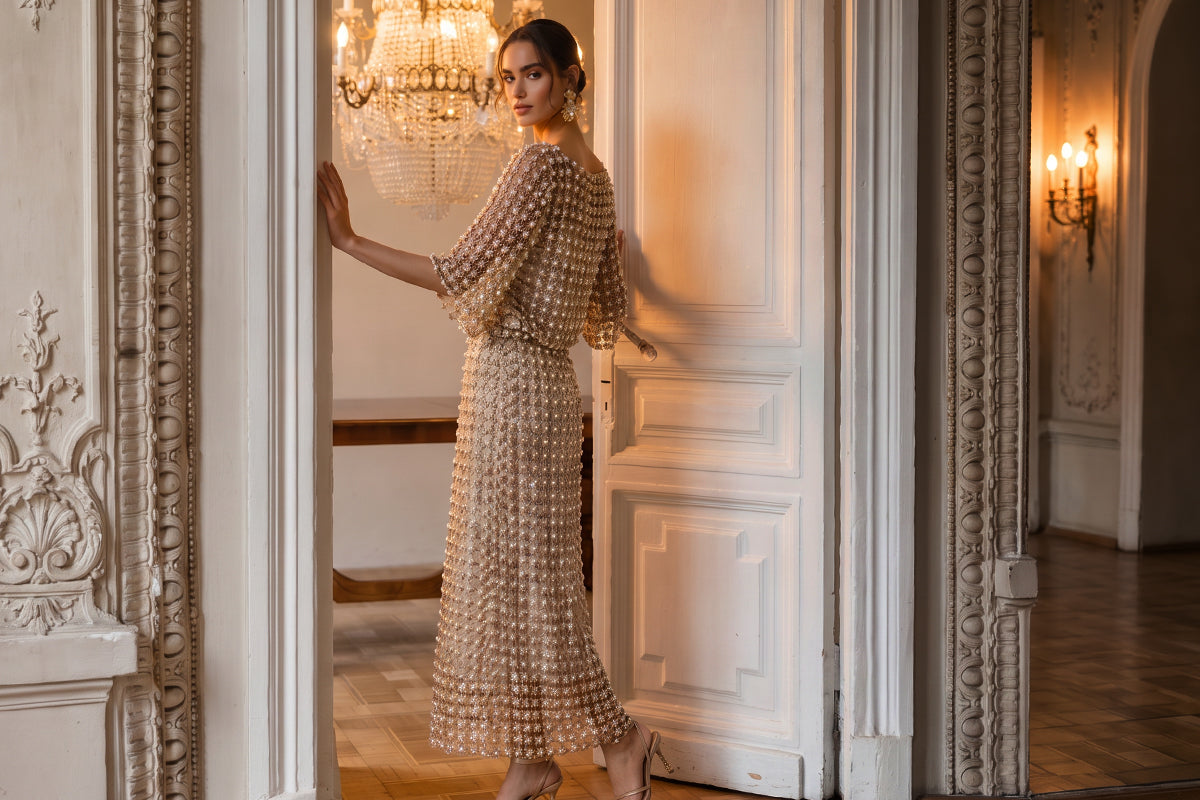
Where to Find Elegant and Affordable Dresses for the Sister of the Bride or Groom
The best places to find elegant and affordable dresses for the sister of the bride or groom are wedding-guest boutiques, department stores, local formalwear shops, seasonal clearance collections, and reputable rental or resale platforms. Begin with the wedding’s dress code and color palette, set a complete outfit budget, and compare dresses by fit, fabric, return terms, and rewear potential—not price alone.
As an immediate starting point, theRich Radiqs Wedding Guest Dresses collection includes midi, maxi, lace, embroidered, and embellished designs for different ceremonies. Choosing a dress from a curated occasionwear collection can be faster than searching through general clothing categories.
The sister of the bride or groom occupies a special position: she is more prominent than an ordinary guest but may not be a bridesmaid. Her outfit should therefore look coordinated, polished, and photograph-ready without appearing bridal or competing with the wedding party.
|
Decision |
Best approach |
|
Dress code |
Match the stated level of formality |
|
Color |
Coordinate with the palette without copying it exactly |
|
Budget |
Include alterations, shoes, accessories, and cleaning |
|
Length |
Choose according to the venue and ceremony time |
|
Style |
Look distinctive but not bridal |
|
Shopping time |
Start three to six months before the wedding |
|
Long-term value |
Choose a dress that can be restyled and reworn |
Understand the Dress Etiquette for the Sister of the Bride or Groom
The sister’s dress does not need to match the bridesmaids unless the couple requests it. However, it should feel visually connected to the wedding through its formality, color family, fabric, or styling.
Before shopping, ask the bride, groom, or wedding planner these direct questions:
- What is the official dress code?
- Are there colors reserved for the bridal party or close family?
- Will the sister appear in formal family photographs?
- Are there any cultural or religious coverage requirements?
- Does the couple prefer a long dress, midi dress, or specific style?
Getting these answers early prevents duplicate colors, inappropriate formality, and unnecessary returns.
Follow the Wedding Dress Code and Level of Formality
The invitation is the first source of guidance. A black-tie wedding generally calls for a floor-length evening gown or an exceptionally formal midi dress. A formal wedding allows a long dress or refined cocktail-length style, while a semi-formal celebration usually suits a polished midi or knee-length dress.
|
Wedding dress code |
Appropriate sister-of-the-bride-or-groom dress |
|
White tie |
Full-length formal evening gown |
|
Black tie |
Floor-length gown or highly elevated formal dress |
|
Formal or black-tie optional |
Long dress or sophisticated midi |
|
Cocktail |
Refined knee-length or midi cocktail dress |
|
Semi-formal |
Polished midi, A-line, or fit-and-flare dress |
|
Garden or destination |
Lightweight midi or maxi with practical footwear |

Being a close family member does not mean ignoring the dress code in favor of a more dramatic outfit. Instead, choose a slightly elevated version of the expected guest attire through better construction, considered accessories, or refined embellishment.
For a broader explanation of guest expectations, consult theRich Radiqs wedding guest outfit guide.
Coordinate With the Wedding Color Palette
The sister’s dress should coordinate with the wedding palette rather than necessarily match the bridesmaids. For example, if the bridesmaids wear dusty blue, the sister might choose navy, slate blue, silver-gray, or a complementary soft floral print.
This approach produces harmonious family photographs while preserving an individual identity. It also reduces the risk that guests will assume the sister is an unofficial bridesmaid.
A simple coordination formula is:
Wedding palette + related shade + different texture or silhouette = a cohesive but individual outfit.
Always ask whether any colors are reserved for the mothers of the couple. The sister should not unexpectedly appear in the same distinctive shade if the families planned separate coordinated looks.
Avoid Competing With the Bride or Bridal Party
The safest rule is to avoid white, ivory, cream, and very pale champagne unless the couple explicitly approves them. A printed dress with a small amount of white may be acceptable, but it should not appear predominantly bridal in person or in photographs.
Also avoid dresses that resemble bridal gowns because of long trains, bridal lace, excessive tulle, or highly ceremonial construction. A statement dress is appropriate when its drama comes from color, artistic embroidery, or controlled beading rather than bridal styling.
If the bridesmaids wear sequins or strong embellishment, choose a related but quieter finish. If their dresses are minimal, the sister can introduce moderate texture while keeping the overall look respectful.
Consider the Venue, Season, and Ceremony Time
A dress must work in the physical setting as well as in photographs. Velvet, structured crepe, and deeper colors suit cooler evening weddings. Chiffon, lace, linen blends, and lighter embroidery work well for daytime, garden, or destination celebrations.
|
Wedding setting |
Suitable choices |
Avoid when possible |
|
Ballroom evening wedding |
Satin, velvet, beading, long gowns |
Casual cotton or beach styles |
|
Garden ceremony |
Floral embroidery, stable midi hems |
Trains and narrow heels |
|
Beach wedding |
Lightweight maxi or flowing midi |
Heavy velvet and excessive layers |
|
Religious ceremony |
Refined coverage or coordinating wrap |
Very low necklines or extreme cutouts |
|
Winter wedding |
Crepe, velvet, long sleeves, deeper colors |
Very light unlined fabric |
|
Summer wedding |
Breathable fabric and lighter colors |
Heavy construction without ventilation |
For warm-weather ceremonies, the guide tosummer wedding guest dresses offers additional advice on fabrics, colors, and accessories.
Set a Realistic Budget for an Elegant Wedding Outfit
A realistic budget covers the complete look—not only the dress. The sister may attend the rehearsal dinner, ceremony, reception, and family photographs, so comfort and reliable fit are worth including in the decision.
Decide How Much to Spend on the Dress
There is no required amount for the sister of the bride or groom to spend. A practical dress budget might range from under $200 for sale styles to $300–$500 for hand-finished or premium occasion dresses. The correct amount is one that does not create financial pressure after adding the remaining outfit costs.
Allocate the budget according to personal priorities:
|
Total outfit budget |
Suggested dress allowance |
Remaining amount |
|
$250 |
$140–$175 |
$75–$110 |
|
$400 |
$240–$300 |
$100–$160 |
|
$600 |
$360–$450 |
$150–$240 |
|
$800 |
$480–$600 |
$200–$320 |
These figures are flexible. Someone who already owns suitable shoes and jewelry can direct more money toward the dress. Someone who expects significant alterations should reserve a larger amount for tailoring.
Include Alterations, Shoes, and Accessories in the Budget
The advertised price is only the starting point. Include potential charges for:
- Hemming or strap adjustments
- Bodice or waist alterations
- Shoes suitable for the venue
- Jewelry, clutch, or hair accessories
- Shapewear or a special bra
- A wrap, jacket, or shawl
- Professional steaming or cleaning
- Shipping and possible return postage
Reserve approximately 10–20% of the total outfit budget for alterations and unexpected costs. A less expensive dress requiring major reconstruction may ultimately cost more than a moderately priced style that fits immediately.
Balance Dress Quality With Long-Term Wearability
A quality dress should have a secure zipper, even seams, a stable hem, appropriate lining, and embellishment that does not pull or distort the fabric. It should also allow the wearer to sit, walk, greet guests, and dance comfortably.
Calculate long-term value using cost per wear:
Cost per wear = total cost of the outfit ÷ expected number of wears
A $339 dress worn to five occasions costs $67.80 per wear before cleaning. A $150 dress worn once costs $150 per wear. For this reason, a versatile color and adaptable silhouette may offer better value than the lowest-priced option.
Find Affordable Dresses Online and in Local Stores

The most effective shopping strategy combines online variety with local fit testing. Use online stores to compare colors and silhouettes, then use local shops when you need immediate sizing guidance or complex alterations.
Browse Online Dress Boutiques and Fashion Retailers
Online boutiques generally offer more occasionwear options than a single local shop. Filters for length, color, size, sleeve style, and price can reduce browsing time.
When evaluating a website, look for:
- Multiple product photographs and close-up details
- Fabric composition and lining information
- Model measurements and garment fit notes
- A clear size chart
- Customer-service contact information
- Published delivery, exchange, and refund terms
- Secure payment options
Do not rely only on a familiar size label. Compare your current bust, waist, and hip measurements with the chart for each dress. Formalwear made from non-stretch fabric often requires more precise sizing than everyday clothing.
Visit Department Stores and Local Formalwear Shops
Department stores and local boutiques allow you to compare silhouettes under consistent lighting and evaluate the actual weight, drape, and color of a garment. They are especially useful when the wedding is close or the wearer is between sizes.
Bring the correct undergarments and a pair of shoes with a similar heel height. Photograph the dress from the front, side, and back—with the shop’s permission—because mirrors do not always reveal how a design will look in family photographs.
Ask whether the shop offers alterations, special orders, price adjustments, or access to additional sizes.
Look for Seasonal Sales and Clearance Collections
Seasonal promotions can make premium fabrics and detailed designs more affordable. Search after major holiday periods, during end-of-season clearances, and several months before peak wedding season.
Sale shopping works best when you already know:
- Your exact measurements.
- Your suitable silhouettes.
- The wedding’s color restrictions.
- Whether the item is returnable.
- How much alteration the design can tolerate.
A reduced price is not good value if the dress is final sale and unsuitable. Review clearance terms separately because they may be stricter than the store’s standard policy.
Consider Designer Dress Rental and Resale Platforms
Rental can be practical for an unusually formal wedding when the sister is unlikely to wear the same gown again. It may also provide access to a higher original price point within a controlled budget.
Before renting, confirm the available backup size, cleaning terms, delivery date, damage policy, and return deadline. Allow enough time to solve a fit problem before the wedding.
Resale can offer better long-term value when the dress may be reworn or altered. Request recent photographs, garment measurements, condition details, and confirmation of any previous tailoring. Luxury pricing that appears unrealistically low deserves additional scrutiny.
Compare Sizing, Delivery Times, and Return Policies
Before placing an online order, compare these five terms:
|
Policy detail |
Question to ask |
|
Sizing |
Are garment measurements or only body measurements provided? |
|
Processing |
How long before the order actually ships? |
|
Delivery |
Will it arrive before the alteration deadline? |
|
Returns |
How many days are allowed, and when does the period begin? |
|
Refund |
Is reimbursement issued to the original payment method or store credit? |
TheFederal Trade Commission’s online-shopping guidance recommends checking the total cost, return deadline, return-shipping responsibility, and any restocking fees before buying. Keep product descriptions, receipts, and order emails until the outfit has been accepted and inspected.
Shop Elegant Dresses for the Sister of the Bride or Groom at Rich Radiqs
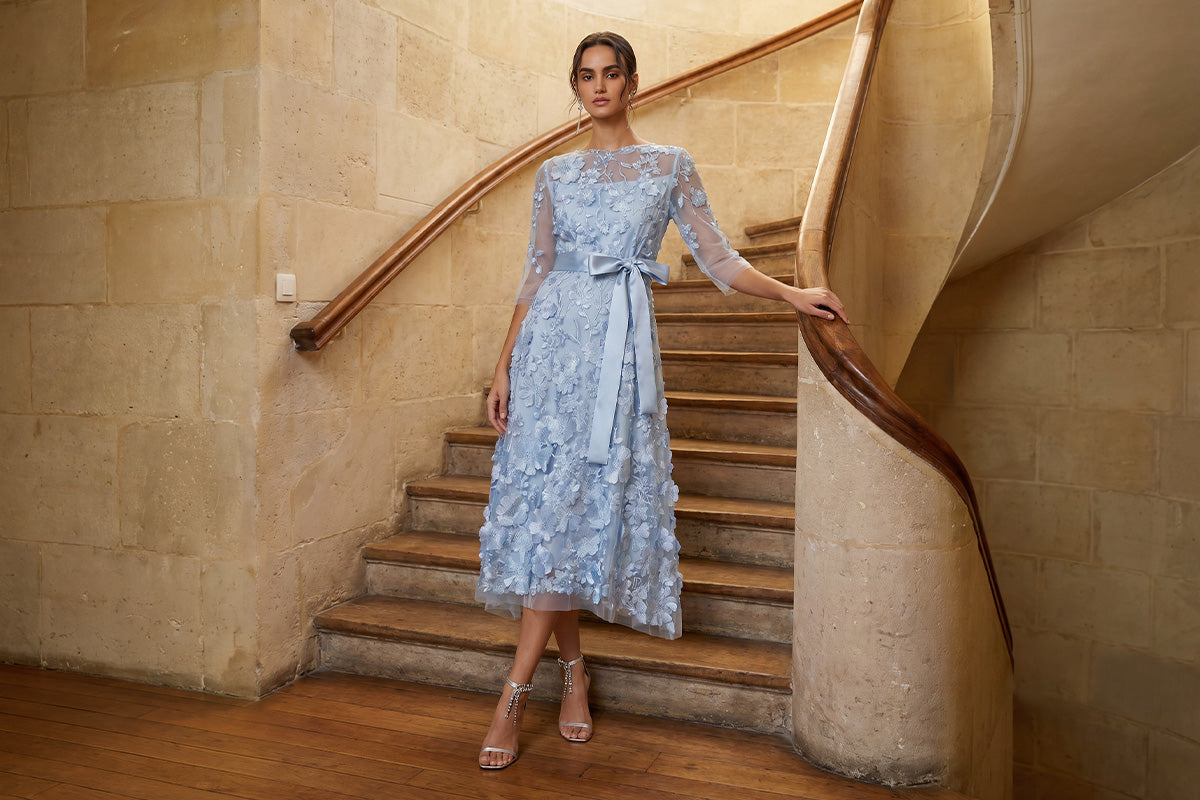
Rich Radiqs offers wedding guest and ceremony dresses with embroidery, lace, sequins, dimensional appliqués, and both relaxed and structured silhouettes. The most focused starting point is theWedding Guest Dresses collection, while the broaderWedding Guest Edit provides additional dresses and occasion separates.
Explore Dresses for Different Wedding Styles
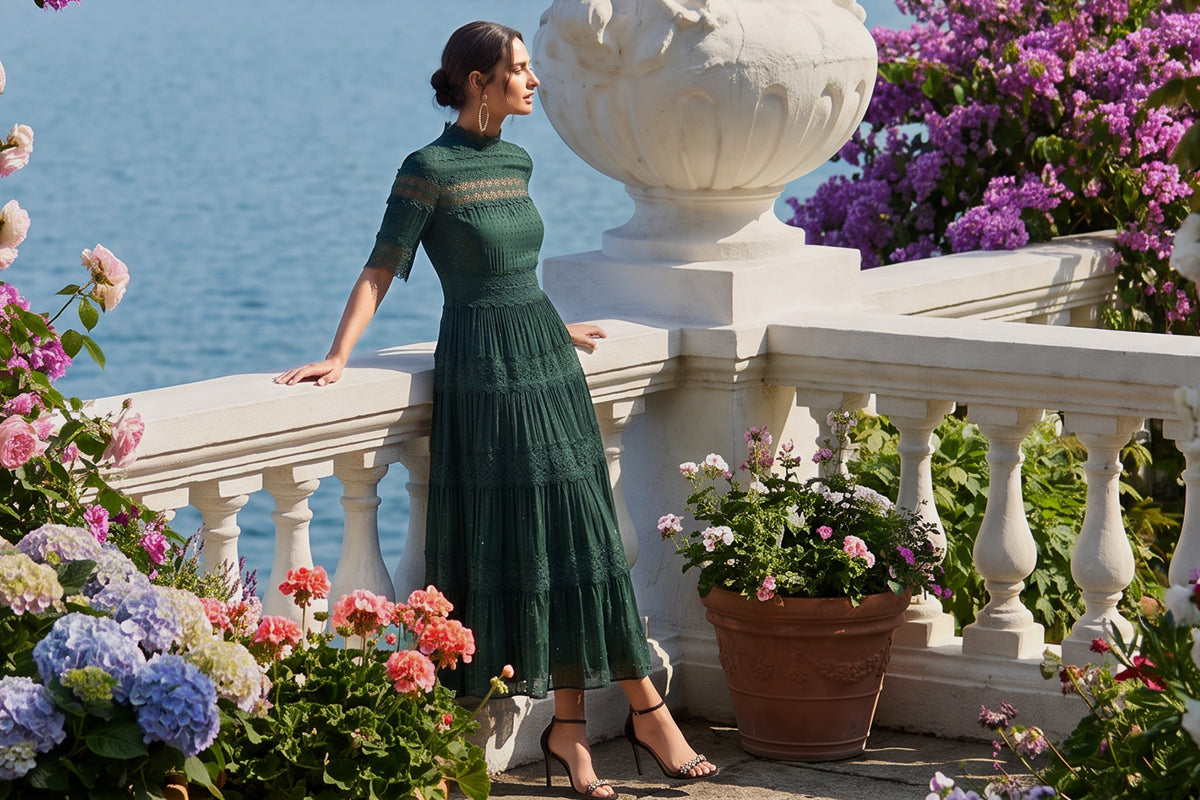
For a formal evening wedding, consider a longer dress with refined beading, satin, or controlled sparkle. For a garden celebration, floral embroidery and softer movement feel connected to the setting. A cocktail reception allows a shorter, more expressive silhouette.
TheHand-Beaded Floral Embroidered Dress, listed at $339 at the time of writing, offers a long fitted silhouette, botanical embroidery, a lined construction, and beaded neckline accents. Its rich color and artistic surface detail make it suitable for a prominent family member without relying on bridal styling.
For a shorter cocktail or evening look, theLimited Handcrafted 3D Beaded Floral Dress uses a black base and dimensional floral decoration. Because the dress already provides a strong focal point, restrained accessories can keep the outfit elegant.
Prices and availability may change, so confirm the current product information before purchasing.
Choose a Silhouette That Complements Your Body Shape
The best silhouette is one that fits securely and requires minimal adjustment:
- A-line: Balances the body and allows comfortable movement.
- Fit-and-flare: Defines the waist while providing skirt volume.
- Sheath: Creates a streamlined shape but requires accurate sizing.
- Empire waist: Skims the waist and midsection.
- Wrap dress: Provides some adjustment through the waist and neckline.
- Relaxed column: Produces an elongated line without a tightly fitted waist.
Prioritize the fit at the shoulders and bust. Hems and side seams are often easier to adjust than embroidered shoulders, structured necklines, or decorated armholes.
Select Fabrics and Colors Suited to the Wedding Season
For spring, consider soft green, blue, lavender, and floral embroidery. Summer favors breathable fabric, lighter linings, and flowing silhouettes. Burgundy, bronze, navy, and forest green work well in autumn, while velvet, satin, and deeper jewel tones suit winter.
If the dress has an elaborate surface, verify its comfort against the skin and check whether the embellishment catches on jewelry or handbags. Medium-weight fabric often provides the most versatile year-round wear.
Complete the Look With Coordinating Accessories
Accessories should support the dress rather than introduce several competing ideas. When wearing embroidery, sequins, or dimensional flowers, choose simple earrings, a clean clutch, and understated shoes.
Repeat one element from the dress—such as a metallic tone or secondary color—in one or two accessories. Do not match every item exactly. A light wrap can provide ceremony coverage and warmth without changing the overall color story.
Most importantly, wear the complete outfit before the wedding. Sit, walk, climb stairs, and take photographs in different lighting to identify comfort or transparency issues.
Conclusion
Elegant and affordable dresses for the sister of the bride or groom can be found through online occasionwear boutiques, department stores, formalwear shops, sale collections, rental services, and resale platforms. The strongest choice is not necessarily the least expensive dress; it is the one that respects the wedding, fits properly, stays within the total outfit budget, and remains useful afterward.
Begin by confirming the dress code and family color plan. Then compare fabric, silhouette, delivery, alterations, and return terms. For an efficient online starting point, explore theRich Radiqs Wedding Guest Dresses andElegance for Every Ceremony collections.


Leave a comment
This site is protected by hCaptcha and the hCaptcha Privacy Policy and Terms of Service apply.