


Are Cocktail Dresses Long or Short? A Dress-Length Guide
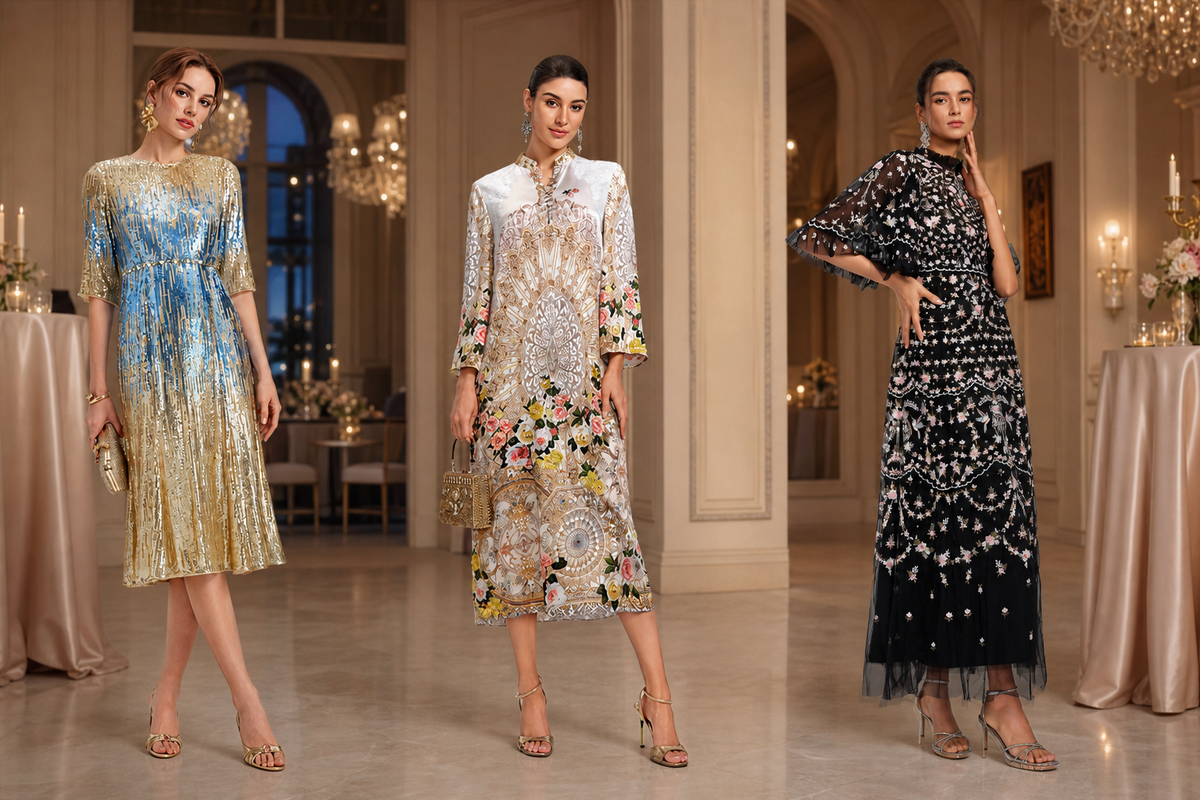
Cocktail dresses are usually short to midi length, with hems ranging from slightly above the knee to mid-calf. However, a cocktail dress does not have to be short. An ankle-length or carefully selected maxi dress can work when its fabric, silhouette, and styling feel polished without resembling a formal evening gown.
The safest option for most cocktail events is a knee-length or midi dress. If you prefer a mini or maxi silhouette, evaluate the dress as a complete outfit rather than judging it by hemline alone.
Understand the Typical Length of a Cocktail Dress
Cocktail attire sits between casual partywear and formal eveningwear. That middle position explains why knee-length and midi dresses are so common: they feel more elevated than an everyday dress without carrying the ceremony of a floor-length gown.
The Emily Post dress-code guide describes cocktail dresses as an option for semi-formal occasions and distinguishes shorter cocktail styles from formal floor-length evening gowns. These are useful conventions rather than an inflexible measurement rule.
Short Cocktail Dresses Usually Finish Near the Knee
A short cocktail dress commonly ends slightly above the knee, at the knee, or just below it. This length works well because it allows easy movement while still looking polished enough for a reception, dinner, gallery event, or evening party.
A mini dress can also fit the dress code, but the overall design should remain balanced. If the hem is noticeably short, a refined neckline, secure fit, and controlled silhouette can keep the outfit from looking like casual nightlife clothing.
When comparing shorter options, browse the RichRadiqs mini dress collection and evaluate each garment’s actual hem placement on your height. A dress shown above the knee on one model may sit differently on another wearer.
Midi Dresses Are a Classic Cocktail Option

Midi dresses are among the most reliable cocktail choices. Their hems generally fall between the knee and ankle, providing enough coverage for conservative venues while remaining less formal than most floor-length gowns.
The most versatile cocktail midi dresses often have a defined or deliberately relaxed silhouette, an occasion-appropriate fabric, and one clear decorative feature. Lace, pleating, embroidery, satin-like surfaces, or restrained embellishment can establish the right level of formality.
The RichRadiqs midi dress collection includes different silhouettes and finishes, so the dress should be assessed according to the invitation, venue, and time rather than length alone.
Floor-Length Dresses Often Look More Formal
A dress that reaches the floor typically reads as formal, black-tie, or evening-gown attire. Length creates visual drama, especially when combined with a full skirt, train, structured bodice, dense embellishment, or highly reflective fabric.
That does not make every long dress inappropriate for a cocktail event. A narrow or fluid maxi dress with restrained details can feel less formal than a heavily embellished knee-length design. The distinction depends on the combined effect of length, volume, fabric, and styling.
When a Short Cocktail Dress Works Best

Choose Knee-Length Styles for Daytime Events
Knee-length dresses are well suited to afternoon receptions, work-related cocktail events, daytime weddings, and celebrations that move between indoor and outdoor settings. They are easy to walk and sit in, and they can be adjusted through shoes, jewelry, and outerwear.
For daytime occasions, consider lighter colors, prints, softly structured fabrics, or modest embellishment. Evening events can support richer colors, stronger texture, and more reflective details.
Always consider the venue. A short dress that works at a rooftop party may feel less suitable for a religious ceremony, conservative private club, or professional reception.
Balance a Short Hemline With a Polished Silhouette
When the skirt finishes well above the knee, review the neckline, fit, and coverage together. A very short hem combined with a plunging neckline, large cutouts, sheer panels, and a body-conscious silhouette may push the outfit away from cocktail attire.
You do not need to follow a rule that only one area of the body can be visible. Instead, ask practical questions:
- Does the dress remain secure when sitting and walking?
- Can you move without repeatedly adjusting the hem?
- Does the fabric look suitable for the venue?
- Does the outfit feel polished from every angle?
- Will any ceremony or cultural setting require additional coverage?
If the answer to one of these questions is no, selecting a slightly longer style is usually more effective than relying on accessories to correct the problem.
Can a Long Dress Be Cocktail Attire?

Yes, a long dress can be cocktail attire when it feels sophisticated but not ceremonial. Maxi length alone does not automatically turn a dress into an evening gown.
Select Lightweight Fabrics and Relaxed Details
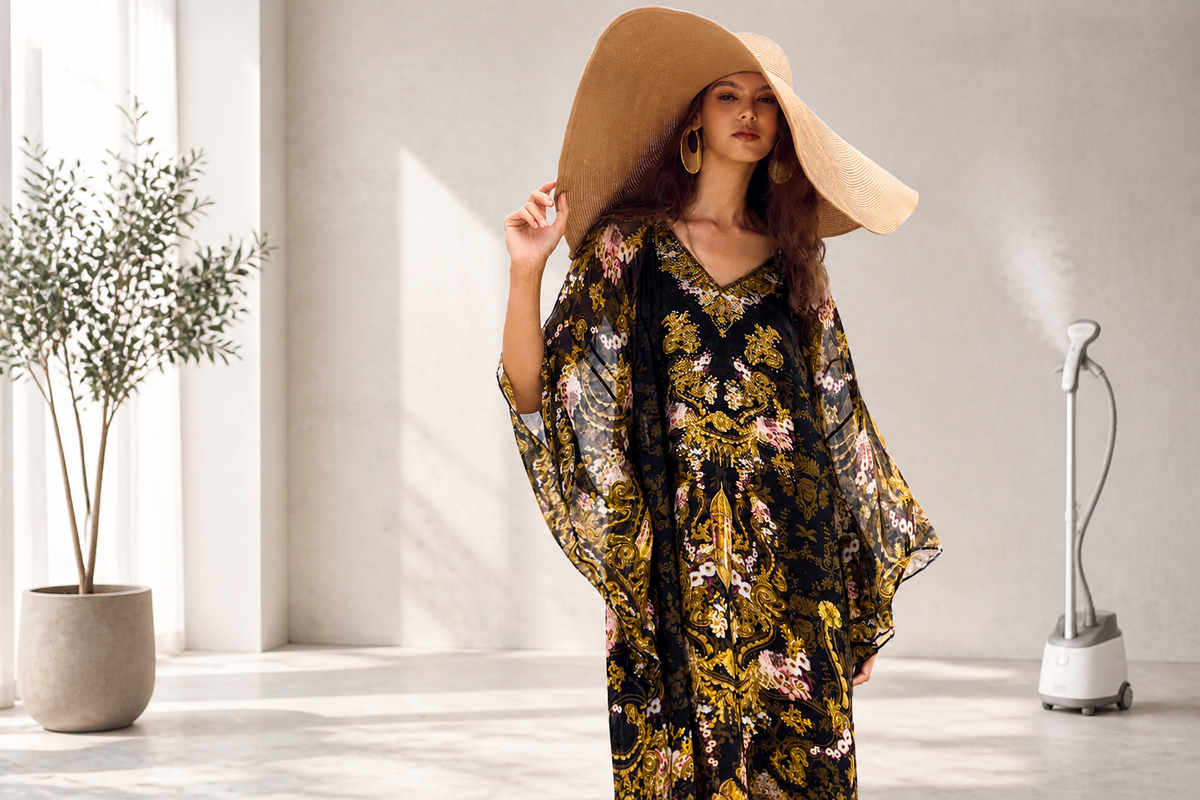
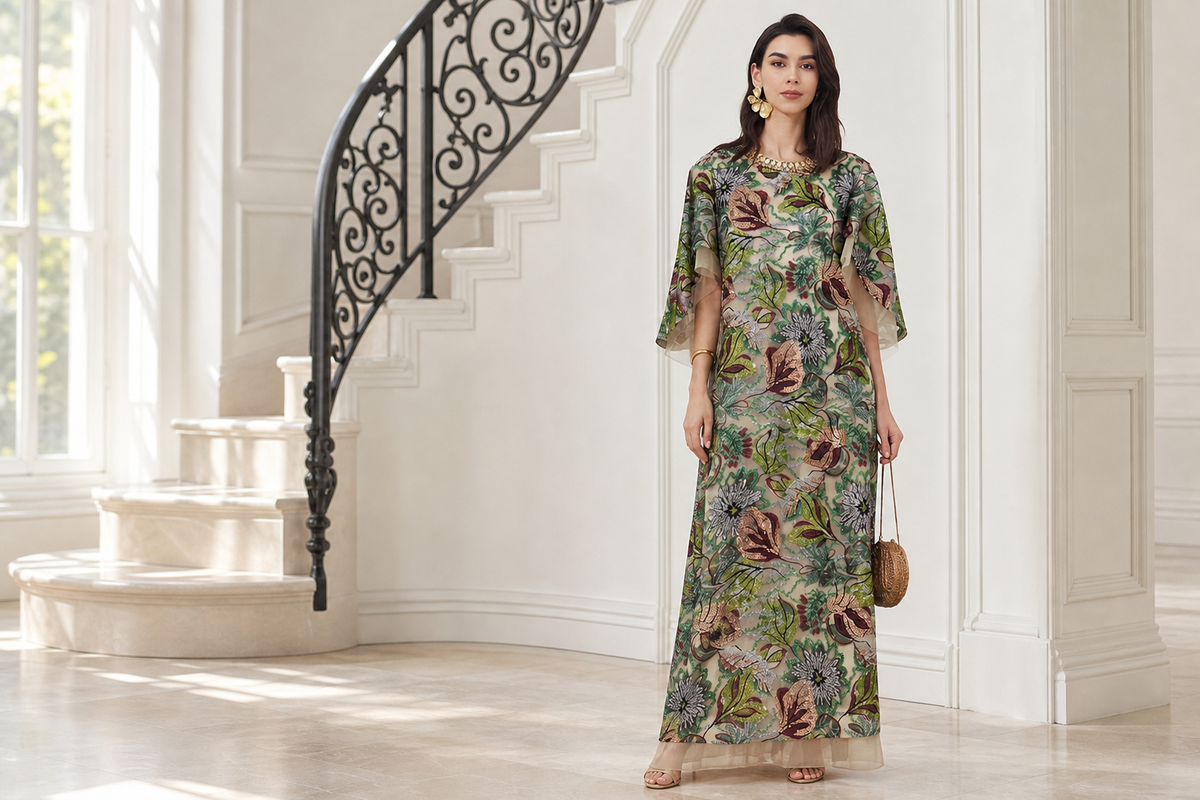
A long cocktail dress is easier to wear when it has a relatively streamlined silhouette, manageable volume, and no train. Printed fabrics, controlled pleating, narrow skirts, subtle embellishment, and less structured designs can reduce the formality associated with floor-length gowns.
You can compare longer silhouettes in the RichRadiqs maxi dress collection. Review the fabric, lining, skirt volume, embellishment, and garment length on the individual product page before deciding that a particular maxi dress suits cocktail attire.
Avoid assuming that every flowing maxi dress works. A casual beach dress may be too relaxed, while an elaborately beaded maxi may feel too formal. The appropriate option occupies the space between those extremes.
Avoid Making a Long Dress Look Like a Formal Gown
Long dresses begin to read as formal gowns when several dramatic elements appear together. These may include:
- A sweeping or trailing hem
- A large ball-gown skirt
- A heavily structured bodice
- Dense all-over beading
- Formal satin combined with dramatic volume
- Opera-length gloves or highly ceremonial accessories
Debretts notes that full-length sequined evening gowns can look excessive for some smart parties, illustrating why the total effect matters more than length alone. Read its guidance on interpreting invitations for a broader explanation of matching an outfit to the event.
If your long dress already has strong visual impact, keep the shoes, jewelry, bag, and hairstyle relatively restrained.
Choose the Right Length for the Occasion
Consider the Dress Code, Venue, and Event Time
Begin with the invitation. If it explicitly states cocktail attire, knee-length and midi dresses are the most dependable choices. If it says formal, black-tie optional, or black tie, a longer dress may be more appropriate.
Next, consider the venue and schedule:
- A daytime garden reception supports lighter fabrics and knee-length or midi silhouettes.
- An upscale restaurant or hotel favors polished midi dresses and refined long styles.
- A rooftop cocktail party may allow a more contemporary mini dress.
- A religious venue may require additional coverage regardless of the reception dress code.
- A late-evening event can support deeper colors, richer textures, and greater embellishment.
When the invitation is vague, ask the host rather than relying only on the event name.
Compare Mini, Knee-Length, Midi, and Maxi Options
Use the following decision framework:
For a wider comparison across different levels of formality, explore the RichRadiqs event dress collection. Filter mentally by the invitation rather than assuming every event dress belongs to the same dress code.
Conclusion
Cocktail dresses can be short or long, but knee-length and midi designs remain the safest and most recognizable choices. Mini dresses work when their fit and coverage remain practical, while ankle-length or maxi dresses work when they avoid the volume and ceremony of a formal gown.
Judge the complete outfit through four factors: hemline, fabric, silhouette, and event setting. If those elements create a polished look that sits between everyday partywear and formal eveningwear, the dress can usually function as cocktail attire.
For a broader explanation of the dress code beyond length, read the RichRadiqs guide to cocktail attire for women.


Leave a comment
This site is protected by hCaptcha and the hCaptcha Privacy Policy and Terms of Service apply.