

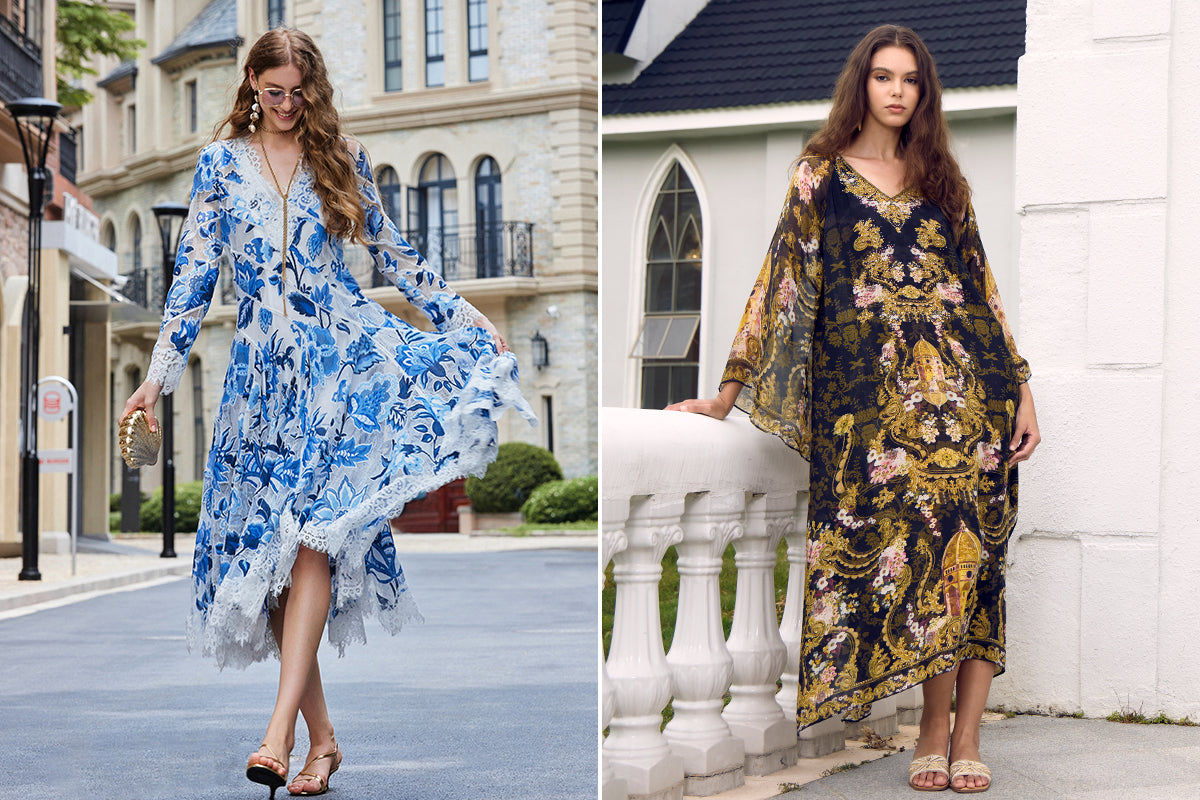
فستان ميدي أم ماكسي: أيهما ترتدين؟
يعتمد الاختيار بين الفستان الميدي والفستان الماكسي على التناسق والراحة والمكان الذي تخططين لارتدائه فيه. قد يبدو النمطان متشابهين في البداية، لكن طول الحافة يمكن أن يغير مدى أناقة مظهرك أو مدى استرخائه أو رسمياته أو سهولة الحركة فيه.
بشكل عام، اختاري فستانًا ميدي إذا كنتِ ترغبين في إطلالة يومية أنيقة تناسب المكتب، والمناسبات العادية، والفعاليات الأنيقة غير الرسمية. اختاري فستانًا ماكسي إذا كنتِ ترغبين في تغطية أكبر، أو قصة أطول، أو نمط أكثر نعومة وأناقة للعطلات، والعشاء، وحفلات الزفاف، أو الإطلالات الصيفية المريحة.
يقارن هذا الدليل بين الفساتين الميدي والماكسي من حيث المقاس، والمناسبة، ونوع الجسم، واحتياجات التنسيق، حتى تتمكني من تحديد الفستان الأنسب لخزانة ملابسك بسرعة.
ما هو فستان الميدي؟

الفستان الميدي هو فستان عادة ما يكون طوله تحت الركبة وفوق الكاحل، وغالبًا ما يصل إلى منتصف الساق. يوفر تغطية أكبر من الفستان القصير (ميني)، ولكنه لا يزال يظهر جزءًا من أسفل الساق، مما يجعل الإطلالة تبدو أنيقة ومتوازنة وسهلة التنسيق.
تشمل الميزات الشائعة للفستان الميدي ما يلي:
- حافة تنتهي عادة بين الركبة والكاحل
- شكل أنيق للمكتب، والإطلالات الكاجوال، وشبه الرسمية
- رؤية أفضل للأحذية أو الجزمات أو تنسيق أسفل الساق
- سهولة حركة أكبر من العديد من الفساتين الطويلة
- إطلالة عملية يمكن تنسيقها بطرق رسمية أو غير رسمية
الفستان الميدي هو الخيار الأفضل عندما تريدين فستانًا واحدًا يبدو أنيقًا دون أن يكون رسميًا جدًا. وهو يعمل بشكل جيد بشكل خاص مع أحذية اللوفر، أو الكعب العالي، أو جزمات الكاحل، أو الأحذية الرياضية، أو الصنادل. النقطة الأساسية في التنسيق هي طول الحافة: إذا كانت تصل إلى أوسع جزء من الساق، فإن اختيار الكعب العالي أو الأحذية المدببة يمكن أن يساعد في الحفاظ على مظهر الساقين أطول.
ما هو فستان الماكسي؟

الفستان الماكسي هو فستان طويل يصل عادة إلى الكاحل أو أعلى القدم أو الأرض. يخلق خطًا رأسيًا أطول من الفستان الميدي، مما يجعل الإطلالة غالبًا ما تبدو أكثر رشاقة أو راحة أو أناقة.
تشمل الميزات الشائعة للفستان الماكسي ما يلي:
- حافة أطول تصل إلى الكاحل أو الأرض
- تغطية أكبر للساقين
- شكل انسيابي يمكن أن يبدو مريحًا أو رومانسيًا
- قيمة تنسيق قوية للعطلات وحفلات الزفاف والعشاء والفعاليات الصيفية
- يتناسق بشكل طبيعي مع الصنادل أو الأحذية ذات الكعب العالي أو البوتات
الفستان الماكسي هو الخيار الأفضل عندما ترغبين في الراحة والتأثير البصري في نفس الوقت. يمكن أن يبدو مريحًا لرحلات الشاطئ وعطلات نهاية الأسبوع غير الرسمية، ولكنه يمكن أن يبدو رسميًا أيضًا مع القماش وخط العنق والإكسسوارات المناسبة. المفتاح هو المقاس: يمكن أن يمنع الخصر المحدد، أو القماش الأخف، أو الشق الخفي الفستان من الظهور بمظهر ثقيل جدًا.
الاختلافات الرئيسية بين الفساتين الميدي والماكسي
الفرق الرئيسي بين فستان الميدي وفستان الماكسي هو الطول، لكن هذا الطول يؤثر على الإطلالة بأكملها. يبدو الفستان الميدي عادة أكثر حدة وأخف وزنًا وأسهل في الارتداء للمناسبات اليومية. يبدو الفستان الماكسي أطول وأكثر نعومة وأناقة، خاصة عندما تريدين تغطية أكبر أو قصة انسيابية.
|
الميزة |
فستان ميدي |
فستان ماكسي |
|
الطول |
يقع تحت الركبة وفوق الكاحل، وغالبًا ما يكون منتصف الساق |
يصل إلى الكاحل أو القدم أو الأرض |
|
المظهر العام |
أنيق، ذكي، عملي |
أنيق، مريح، رومانسي |
|
الأفضل لـ |
المكتب، النزهات الكاجوال، المناسبات الذكية الكاجوال، الإطلالات شبه الرسمية |
العطلات، حفلات الزفاف، العشاء، أيام الشاطئ، المناسبات الرسمية |
|
الحركة |
أسهل للمشي، التنقل، والارتداء اليومي |
مريح، لكن الأطوال الطويلة قد تحتاج إلى مزيد من العناية |
|
تناسق الجسم |
يظهر أسفل الساقين والأحذية، مما يساعد على توازن الإطلالة |
يخلق خطًا رأسيًا أطول ويوفر تغطية أكبر |
|
تنسيق الأحذية |
يتناسب جيدًا مع الكعب، الأحذية المسطحة، أحذية اللوفر، الأحذية الرياضية، البوتات، والصنادل |
يتناسب جيدًا مع الصنادل، الأحذية ذات الكعب العالي، الكعب، البوتات، والأحذية الرياضية البسيطة |
|
الرسمية |
من كاجوال إلى شبه رسمي، حسب القماش والقصة |
من كاجوال إلى رسمي، حسب القماش، الطول، والتنسيق |
|
الأفضل عندما تريد |
إطلالة يومية أنيقة سهلة التغيير |
إطلالة رشيقة بتغطية أكبر وحضور بصري أقوى |
|
تحذير التنسيق |
يمكن أن تقصر حواف منتصف الساق الساق إذا تم تنسيقها مع أحذية ثقيلة |
يمكن أن تجر الحواف الطويلة الأرض أو تطغى على الجسم إذا كان المقاس فضفاضًا جدًا |
فستان ميدي مقابل فستان ماكسي: أيهما تختارين؟
عند المقارنة بين خيارات فستان ميدي مقابل فستان ماكسي، يعتمد الخيار الأفضل على شكل جسمك، واحتياجاتك للراحة، والمكان الذي تخططين لارتداء الفستان فيه. عادة ما يكون الفستان الميدي هو الخيار الأفضل لإطلالة يومية أنيقة، بينما يعمل الفستان الماكسي بشكل أفضل عندما تريدين تغطية أكبر، أو قصة أطول، أو مظهرًا أكثر نعومة.
طريقة بسيطة لاتخاذ القرار هي طرح ثلاثة أسئلة:
- هل تريدين أن تبدو إطلالتك أنيقة وعملية؟ اختاري فستانًا ميدي.
- هل تريدين تغطية أكبر وشكلًا انسيابيًا؟ اختاري فستانًا ماكسي.
- هل تحتاجين إلى فستان واحد للعمل، والمناسبات العادية، والفعاليات شبه الرسمية؟ عادة ما يكون الفستان الميدي أسهل في التغيير.
أي فستان يبدو أفضل لشكل جسمك
يعتمد الفستان الأكثر جاذبية على التناسق، وموضع الخصر، والقماش، ومكان انتهاء حافة الفستان. يمكن أن يجعل الفستان الميدي الإطلالة تبدو أكثر حدة لأنه يظهر جزءًا من أسفل الساق. غالبًا ما يعمل بشكل جيد عندما يكون الخصر محددًا والحافة تصل إلى جزء أنحف من الساق.
يمكن أن يكون الفستان الماكسي جذابًا أيضًا لأنه يخلق خطًا رأسيًا طويلًا واحدًا. يمكن أن يجعل هذا الجسم يبدو أطول، خاصة عندما يكون الفستان بخصر عالٍ، أو خط عنق على شكل حرف V، أو شق جانبي، أو قصة انسيابية. المفتاح هو تجنب الحجم الزائد، خاصة إذا كنتِ قصيرة القامة.
اختاري فستانًا ميدي إذا كنتِ ترغبين في:
- إطلالة يومية أنيقة
- فستان يظهر جزءًا من ساقيكِ
- تركيز أكبر على الأحذية وتنسيق أسفل الساق
- شكل أنظف للمكتب أو الإطلالات الأنيقة غير الرسمية
- سهولة حركة أكبر دون إدارة حافة طويلة
- إطلالة متوازنة مع الكعب العالي، أو الأحذية المسطحة، أو أحذية اللوفر، أو جزمات الكاحل
اختاري فستانًا ماكسي إذا كنتِ ترغبين في:
- تغطية أكبر من الخصر إلى الكاحل
- قصة أطول وأكثر أناقة
- مظهر أكثر نعومة يبدو أنثويًا أو رومانسيًا
- فستان يمكن أن يطيل الجسم بصريًا
- نمط انسيابي للطقس الدافئ، أو السفر، أو المناسبات الخاصة
- إطلالة أنيقة مع الصنادل، أو الأحذية ذات الكعب العالي، أو الكعب، أو البوتات
بالنسبة للنساء قصيرات القامة، غالبًا ما تكون الفساتين الميدي أسهل في التنسيق لأنها تظهر المزيد من الساقين وتقلل من خطر وجود الكثير من القماش. ومع ذلك، لا يزال الفستان الماكسي ذو المقاس المناسب أو الخصر العالي يبدو مطيلًا للجسم. بالنسبة للنساء الطويلات، يعمل كلا الطولين بشكل جيد، لكن الفساتين الماكسي يمكن أن تبرز الطول بشكل جميل.
بالنسبة لأنواع الجسم الأكثر انحناءات، يمكن أن تجعل أنماط اللف، والخصور بحزام، والقصات على شكل حرف A، والأقمشة الناعمة، كلا الفستانين الميدي والماكسي أكثر جاذبية. إذا كان شكل جسمك مستقيمًا، يمكن أن يضيف فستان الميدي أو الماكسي بحزام تحديدًا أكبر للخصر. إذا كان شكل جسمك على شكل ساعة رملية، فإن فساتين اللف والقصات الملائمة بلطف تعمل عادة بشكل جيد في كلا الطولين.
أي فستان يجب أن ترتديه للمناسبات المختلفة

غالبًا ما تكون المناسبة هي أسهل طريقة للاختيار بين فستان الميدي وفستان الماكسي. يعمل فستان الميدي بشكل أفضل عندما تحتاجين إلى شيء أنيق وعملي وسهل الارتداء في الأماكن اليومية. يعمل فستان الماكسي بشكل أفضل عندما تتطلب المناسبة تغطية أكبر، أو نعومة، أو تأثيرًا بصريًا.
اختاري فستانًا ميدي لـ:
- إطلالات المكتب
- المناسبات الذكية الكاجوال
- مواعيد القهوة أو وجبات الإفطار المتأخرة
- النزهات العادية في المدينة
- عشاء شبه رسمي
- المواسم الانتقالية مع البوتات أو السترات أو السترات الرسمية
اختاري فستانًا ماكسي لـ:
- عطلات الشاطئ
- حفلات الصيف
- حفلات الزفاف في الهواء الطلق
- عشاء رومانسي
- إطلالات المنتجعات أو السفر
- المناسبات الرسمية بأقمشة أكثر أناقة
- أيام الاسترخاء عندما تريدين تغطية وراحة أكبر
بشكل عام، يعتبر الفستان الميدي هو الخيار الأكثر أمانًا عندما تريدين فستانًا واحدًا يمكن أن يتنقل بين الإعدادات الكاجوال والأنيقة. يعتبر الفستان الماكسي هو الخيار الأفضل عندما تريدين أن تبدو الإطلالة أكثر أناقة أو راحة أو جاهزة للمناسبة. للاستخدام اليومي، تكون الفساتين الميدي أسهل في التكرار عادة. بالنسبة للعطلات أو حفلات الزفاف أو المناسبات، غالبًا ما تخلق الفساتين الماكسي انطباعًا أقوى بجهد أقل.
الخلاصة
يستحق كل من الفساتين الميدي والماكسي مكانًا في خزانة الملابس المتنوعة، لكنهما يخدمان احتياجات تنسيق مختلفة. اختاري فستانًا ميدي إذا كنتِ تريدين إطلالة أنيقة وعملية للعمل، أو المناسبات العادية، أو المناسبات الذكية الكاجوال. اختاري فستانًا ماكسي إذا كنتِ تفضلين تغطية أكبر، أو قصة أطول، أو مظهرًا أكثر نعومة وأناقة للعطلات، أو العشاء، أو حفلات الزفاف، أو المناسبات المريحة.
الخيار الأفضل لا يتعلق فقط بالطول. بل يعتمد على تناسق جسمك، والمناسبة، والأحذية التي تريدين ارتداءها، ومقدار الحركة أو التغطية التي تحتاجينها.


اترك تعليقًا
This site is protected by hCaptcha and the hCaptcha Privacy Policy and Terms of Service apply.