


What to Wear to a Spring Wedding as a Guest
The best spring wedding guest outfit follows the dress code while preparing you for changing temperatures, rain, wind, and different venue surfaces. For many spring weddings, a polished midi dress with dressy shoes and a removable layer is a dependable choice. A maxi dress may be better for formal or cooler celebrations, while a knee-length dress can suit certain daytime events.
Do not select an outfit based on the season alone. Begin with the invitation, then account for the venue, time, forecast, cultural expectations, and activities planned for the day.
Once those conditions are clear, explore the RichRadiqs wedding guest dress collection for relevant silhouettes, colors, and lengths.
Start With the Spring Wedding Dress Code
Casual Spring Wedding Attire
A casual spring wedding allows a relaxed outfit, but guests should still look prepared for a celebration.
A polished day dress, printed midi, simple wrap dress, refined jumpsuit, or coordinated separates may work. Select a finished silhouette rather than clothing that resembles ordinary weekend wear.
Avoid sportswear, distressed denim, beach cover-ups, and heavily worn shoes unless the couple explicitly requests a very informal event.
Semi-Formal Spring Wedding Attire
Semi-formal attire sits between casual clothing and formal eveningwear. A refined midi dress, tea-length dress, polished jumpsuit, or elegant separates are common options.
A spring semi-formal outfit can include floral prints, soft colors, pleats, lace, embroidery, or other controlled details. The garment should remain more elevated than an everyday dress without looking like a black-tie gown.
For a fuller explanation of this dress code, read the RichRadiqs guide to semi-formal wedding attire.
Cocktail Attire for a Spring Wedding
Cocktail attire calls for polished party clothing that is more elevated than semi-formal dressing but generally less ceremonial than black tie.
A tailored midi dress, refined knee-length dress, dressy jumpsuit, or streamlined ankle-length design may work. Consider the time of day: evening cocktail weddings can support deeper colors, stronger tailoring, or more decorative detail.
A floor-length dress is not normally required. If you are unsure how cocktail differs from other wedding dress codes, consult the RichRadiqs guide to cocktail attire for women.
Formal and Black-Tie Optional Spring Wedding Attire
A formal spring wedding usually requires a more elevated dress, jumpsuit, or evening outfit. A floor-length gown is a reliable choice for formal evening celebrations, while a highly refined midi may work at certain modern venues.
Black-tie optional remains close to black tie. A gown is fully appropriate, although some sophisticated formal alternatives may be accepted depending on the host and setting.
Spring weather does not lower the dress code. Select a dress that accommodates a formal coat, wrap, or jacket instead of substituting casual clothing for warmth.
What to Wear When the Invitation Does Not List a Dress Code
Use the venue, start time, and wedding website as clues.
A daytime garden ceremony generally allows a softer outfit than an evening reception in a ballroom. A church ceremony may require more coverage, while a country venue may require more practical footwear.
When the details remain unclear, a refined midi dress with a removable layer provides a useful middle ground. Ask the couple or wedding party if you still cannot determine the expected formality.
Plan the Outfit for Changing Spring Weather
Prepare for Warm Afternoons and Cool Evenings
Spring temperatures can change significantly between the ceremony and reception.
Build the outfit around a layer you can remove and carry comfortably. A tailored jacket, formal wrap, cropped cardigan, or polished coat may work depending on the dress code.
Do not rely on a layer that looks suitable only outside. It may remain visible during arrivals, photographs, and transitions between venues.
Choose a Dress That Works With a Removable Layer
Consider the dress’s neckline, sleeves, waist, and surface details before selecting outerwear.
A cropped jacket can preserve a defined waist. A blazer may add structure to a simple dress, while a refined wrap can complement eveningwear. A coat needs enough room for the sleeves without crushing embroidery, beading, or dimensional decoration.
Try the layer with the dress before the wedding. Confirm that it sits correctly when open and closed.
Account for Rain, Wind, and Damp Ground
Spring weddings may involve wet pavement, soft grass, wind, or unexpected showers.
A midi dress can keep the hem away from damp ground. A maxi dress may still work, but its length must be manageable without lifting it constantly.
Choose a neckline and skirt that remain secure in the wind. Bring a compact umbrella if appropriate, and consider how you will move between the ceremony, photographs, and reception.
Review the Fabric, Lining, and Transparency
Product photographs cannot confirm fiber content, weight, stretch, lining, or transparency.
Read the garment description and care label. A light-colored dress or sheer overlay should be checked under bright natural light while worn with the intended undergarments.
A dress may appear suitable for mild weather but include a substantial lining or several layers. Use documented product information rather than guessing from the way the fabric looks in a photograph.
Check the Forecast Again Before the Wedding
Review the forecast while planning and again shortly before the event.
A change in temperature or precipitation may affect the outer layer, shoes, umbrella, or transportation plan. It should not require you to abandon the dress code.
Prepare one compatible alternative layer rather than rebuilding the complete outfit at the last moment.
Choose a Dress for the Spring Wedding Venue
Garden and Botanical Weddings
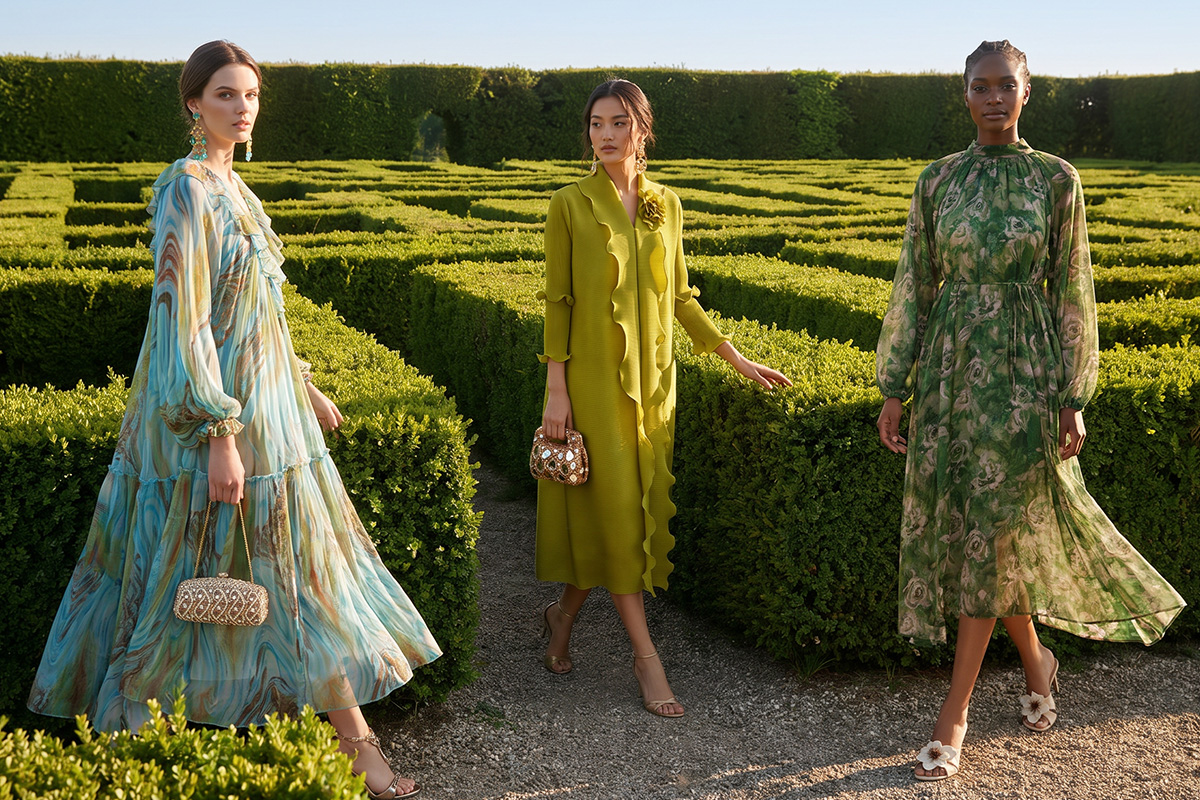
Garden weddings naturally support floral prints, botanical designs, pleats, and softly shaped dresses.
A midi or tea-length hem is practical on grass because it remains clear of the ground. A maxi dress can work for a more formal event when the hem is short enough to avoid mud and moisture.
Choose block heels, wedges, or dressy flats instead of narrow stilettos that may sink into soft ground.
Vineyard, Barn, and Countryside Weddings
Countryside venues often involve gravel paths, wooden floors, grass, and uneven outdoor areas.
The outfit should match the invitation rather than becoming automatically rustic or casual. A printed midi, refined wrap dress, polished jumpsuit, or flowing maxi may work depending on the stated formality.
Stable footwear and a removable layer are especially useful. Test whether the dress and shoes allow you to walk comfortably over the expected surfaces.
Church and Religious Ceremonies
Religious venues may establish requirements for shoulders, neckline, hem length, or head coverings.
A midi or longer dress with controlled coverage is often easier to adapt, but venue standards vary. A removable jacket or wrap may not be sufficient if the ceremony requires guests to remain covered throughout.
Follow guidance from the couple or venue instead of relying on generalized wedding rules.
Hotel, Restaurant, and Ballroom Weddings
Indoor venues make the ground surface easier to manage but can still create temperature challenges.
A hotel or ballroom may be air-conditioned even when the afternoon is warm. Bring a coordinated layer rather than assuming the indoor temperature will match the weather outside.
Evening hotel weddings also tend to support more formal silhouettes and decorative details. For a venue-based comparison, see the RichRadiqs guide to wedding guest dresses for different ceremonies.
Destination and Outdoor Spring Weddings
Spring conditions vary widely by destination. A coastal wedding may be windy, a mountain venue may remain cold, and a southern destination may feel closer to summer.
Review the specific location, not only the month. Consider transportation, outdoor walking, ground conditions, and whether the reception moves indoors after sunset.
A packable layer and appropriate footwear may be more important than following a generic spring color palette.
Select a Spring Wedding Guest Dress or Alternative

Wear a Midi Dress for a Versatile Spring Outfit
Midi length works for many casual, semi-formal, cocktail, garden, and daytime weddings.
It provides coverage while keeping the hem away from wet or uneven ground. It also leaves footwear visible, making the relationship between the dress and shoes more important.
Midi describes length rather than formality. A casual jersey midi may be inappropriate, while a tailored or embellished midi may suit a dressier event.
Choose a Maxi Dress for Formal or Cooler Celebrations
A maxi dress can provide a longer silhouette for formal weddings and additional leg coverage during cooler weather.
Make sure the hem clears the ground in the intended shoes. Long skirts require extra care on damp grass, stairs, and crowded dance floors.
Review the dress’s actual garment length rather than assuming every product labeled “maxi” reaches the same point.
Consider a Knee-Length Dress for Daytime Weddings
A knee-length dress may work for casual, semi-formal, and some daytime cocktail weddings.
The silhouette and material should make it look occasion-ready rather than like ordinary office or weekend clothing. Test the hem while sitting because the skirt will rise as the knees bend.
For formal evening or black-tie optional weddings, a midi or longer dress is normally the safer choice.
Wear a Tailored Jumpsuit or Coordinated Separates
A dress is not mandatory unless the invitation says otherwise.
A tailored jumpsuit, elegant pantsuit, or coordinated skirt and blouse can work when the complete outfit matches the dress code. These options may also accommodate spring layers more easily than certain dresses.
Ordinary work separates do not automatically become wedding attire. The silhouette, finish, shoes, and accessories should create a cohesive occasion look.
Test the Outfit for Sitting, Walking, and Dancing
Wear the complete outfit with the intended shoes, undergarments, bag, and outer layer.
Sit in a chair, walk at a normal pace, climb a step, raise your arms, and turn around. Check whether the neckline shifts, the skirt restricts movement, the lining rises, or the layer catches on the dress.
Spring weather already introduces uncertainty. The outfit itself should not create additional problems.
Choose Spring Wedding Colors, Prints, and Details
Use Floral and Botanical Prints Without Looking Too Casual
Floral and botanical prints suit many spring weddings, especially garden and daytime celebrations.
The print’s scale, contrast, and background color affect how formal it looks. A controlled print on a refined silhouette can work for semi-formal or cocktail attire, while a very casual print on a simple sundress may not.
Avoid floral dresses with a predominantly white or ivory background if the complete garment might appear bridal.
Wear Pastels, Muted Colors, or Refined Bright Shades
Blush, lavender, sage, dusty blue, peach, yellow, and other spring-associated colors can work, but they are not compulsory.
Clearer or brighter colors may suit festive daytime events, while muted shades can create a softer effect. Always consider the couple’s requested palette and the garment’s overall formality.
The RichRadiqs 2026 Spring Collection offers a seasonal reference point, but every product should still be evaluated against the wedding’s dress code and venue.
Adapt Darker Colors for Evening and Early-Spring Weddings
Black, navy, emerald, burgundy, chocolate, and other deeper shades can be entirely appropriate for spring.
They often work well for evening receptions and early-spring events in cooler climates. The idea that every spring wedding guest must wear a pale color is unnecessarily restrictive.
If black has a particular cultural meaning for the couple or ceremony, confirm that it is welcome.
Add Lace, Pleats, Embroidery, or Controlled Embellishment

Decorative details can help a dress look suitable for a celebration.
Lace, pleats, embroidery, beading, draping, or restrained shine can all work. Their suitability depends on the venue, time, and dress code.
When the dress already contains strong decoration, keep jewelry, shoes, and the bag relatively simple.
Avoid White, Ivory, and Bridal-Looking Designs
Unless the couple requests otherwise, avoid white, ivory, cream, and designs likely to be mistaken for bridal clothing.
Very pale champagne, beige, blush, or blue can also appear nearly white under certain lighting. Consider the entire garment, including the background of a print.
Cultural weddings may follow different color conventions, so direct guidance from the couple should take priority.
Complete a Spring Wedding Guest Outfit
Select Shoes for Grass, Gravel, or Indoor Floors
Choose shoes for the surface as well as the dress.
Block heels, wedges, and polished flats are generally more stable on grass. Closed-toe pumps, slingbacks, or refined flats can work for cooler weather and indoor venues.
Thin heels may sink into damp ground. New shoes should also be tested before an event involving several hours of standing and dancing.
Carry a Small Clutch or Structured Bag

A clutch, compact shoulder bag, or small structured top-handle bag usually complements wedding guest attire.
The bag should hold the essentials without becoming visually dominant. Its hardware and texture should not catch on lace, embroidery, sequins, or mesh.
A larger tote may be useful for travel but awkward during the ceremony and reception.
Coordinate Jewelry With the Dress Details
A simple neckline may accommodate a necklace or stronger earrings. An embroidered, beaded, or high neckline may need little additional jewelry.
Avoid combining several unrelated statement pieces. The jewelry should support the dress rather than compete with its pattern or decoration.
Add a Blazer, Jacket, Wrap, or Formal Coat
A blazer works with tailored, smart-casual, and certain cocktail outfits. A cropped jacket can preserve the waist, while a wrap or formal coat may suit an evening celebration.
Choose according to the event rather than the weather alone. A casual outdoor jacket may be practical but still conflict with a formal dress code.
Prepare a Practical Rain Plan Without Making the Outfit Casual
Bring an umbrella and consider how you will travel between locations. If wet weather is likely, select footwear and a hem that can handle the route.
Do not rely on disposable ponchos, outdoor boots, or highly casual rainwear as visible parts of a formal ceremony outfit unless circumstances genuinely require them. Where possible, change or store practical outerwear before entering the event.
Avoid Common Spring Wedding Guest Outfit Mistakes
Do Not Choose the Outfit by Season Before Reading the Dress Code
Florals, pastel colors, and light layers do not automatically satisfy a wedding dress code.
A spring dress can still be too casual for cocktail, formal, or black-tie optional attire. Start with formality, then adapt for the season.
Avoid Shoes That Cannot Handle Soft or Wet Ground
Beautiful shoes are not useful if they sink into grass, slip on wet stone, or make it impossible to reach the ceremony.
Ask about the surface if the venue information is unclear. Select a stable alternative that still matches the outfit.
Do Not Depend on One Heavy Layer for Temperature Changes
A single bulky layer may be too warm during the day and visually unsuitable for the event.
A removable jacket, wrap, or lighter coat provides more flexibility. Test where the layer will be stored or carried when not in use.
Avoid Assuming Every Floral Dress Is Wedding-Appropriate
A floral print may suit spring, but the garment can still be too casual, revealing, transparent, or bridal-looking.
Evaluate its silhouette, material, lining, coverage, and background color. The print is only one part of the decision.
Do Not Ignore Cultural or Venue-Specific Requirements
Religious, cultural, and formal venues may establish expectations that seasonal fashion advice cannot replace.
Follow the couple’s directions and ask when necessary. Respect for the ceremony is more important than matching a generalized spring aesthetic.
Conclusion
A spring wedding guest outfit should follow the dress code and adapt to changing weather, possible rain, and the venue’s ground surface.
A polished midi dress with stable footwear and a removable layer works for many celebrations. Maxi dresses suit formal or cooler events, while knee-length dresses may work for daytime weddings. Floral prints and spring colors are optional rather than required.
After confirming the dress code and venue, explore RichRadiqs wedding guest dresses and review the individual garment’s measurements, lining, closure, and material details.


Leave a comment
This site is protected by hCaptcha and the hCaptcha Privacy Policy and Terms of Service apply.