

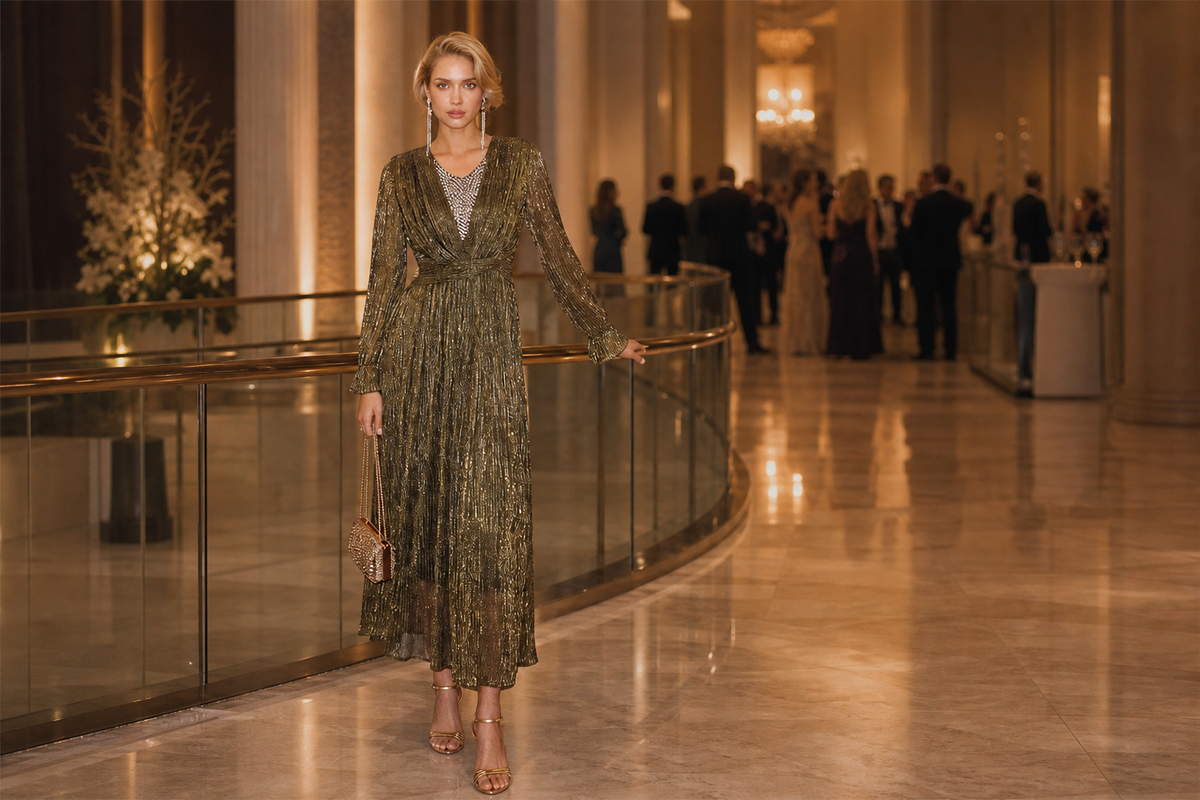
How to Accessorize Evening Dresses for a Balanced Look
The best accessories for an evening dress depend on the dress’s neckline, color, surface details, length, and the formality of the event. A simple dress can support more expressive jewelry, while a sequin, beaded, embroidered, or heavily printed dress usually needs fewer competing details.
Start with the dress rather than choosing jewelry, shoes, and a bag independently. Once you identify the strongest visual feature, select accessories that support it and remain comfortable throughout the evening.
Start With the Dress’s Most Noticeable Detail
Before adding anything, put on the dress and look at the complete silhouette. Identify the feature that attracts attention first. It may be an asymmetric neckline, a saturated color, a fitted waist, a metallic surface, or an embellished bodice.
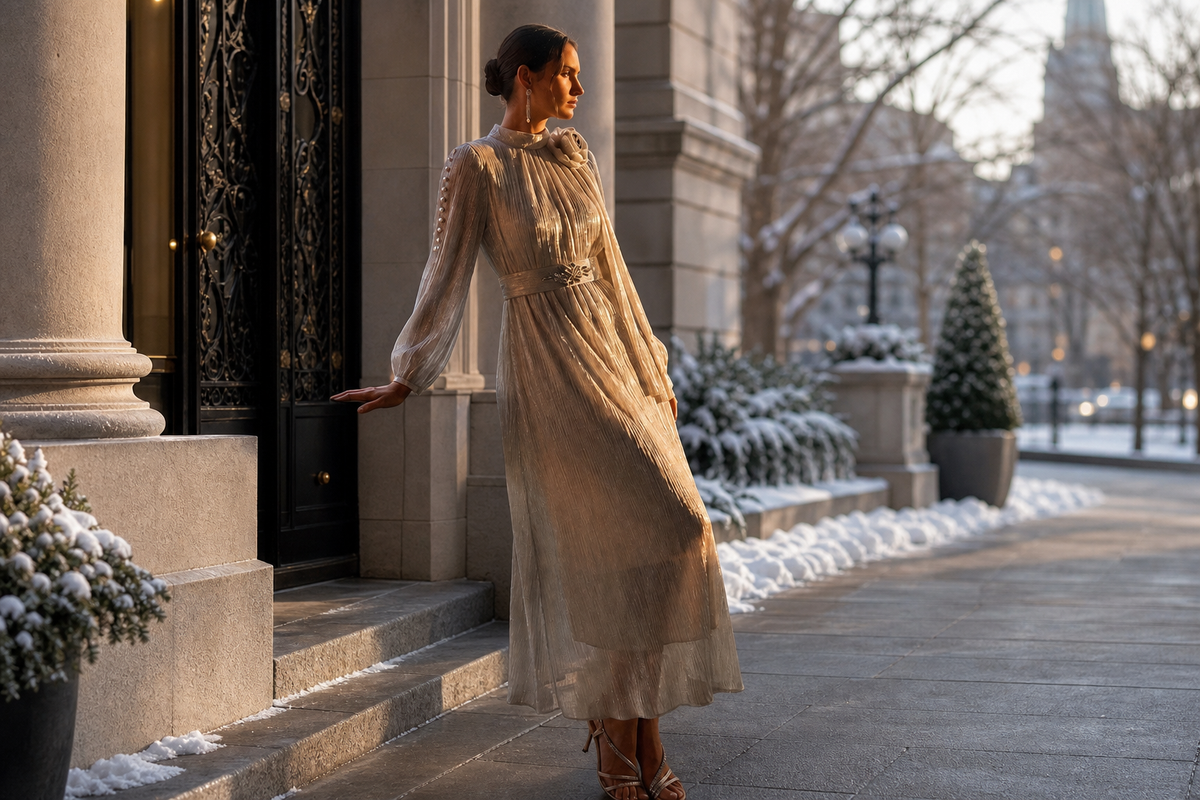
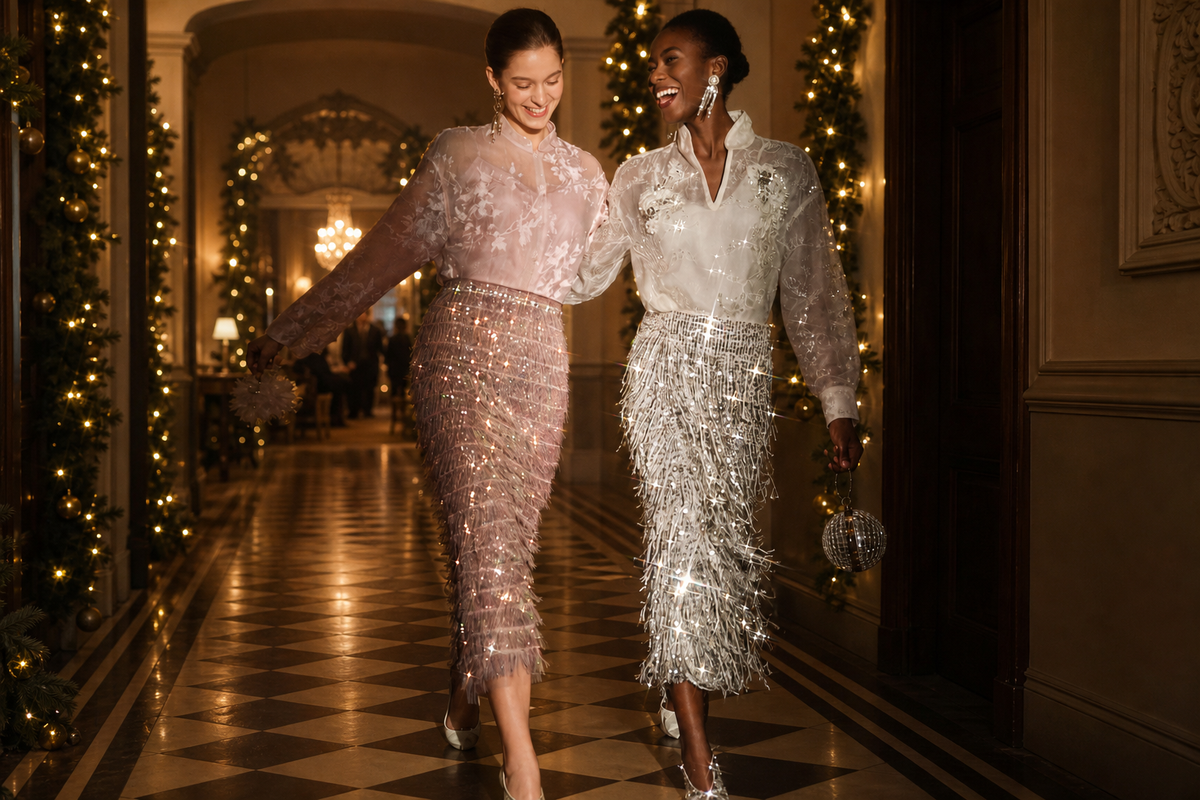
The Rich Radiqs event dress collection includes dresses with sequins, lace, embroidery, beading, and other visible details. Comparing these different finishes can help you see why one accessory formula will not work for every evening dress.
Identify Whether the Neckline, Color, or Embellishment Should Lead
An evening outfit is easier to coordinate when one element establishes the visual direction. If the neckline is sculptural or asymmetric, avoid covering it with a large necklace. If the dress has a bold color but a simple surface, jewelry can provide contrast without competing with decorative fabric.
Also consider where the detail appears. Embellishment concentrated at the shoulders interacts with earrings differently from embellishment placed around the waist or hem.
Keep Accessories Simple With Sequin or Beaded Dresses
Sequins and beads already reflect light, so additional sparkle may have more impact than expected. Begin with one restrained jewelry element, such as small earrings or a simple bracelet.
Check whether the jewelry catches on the dress. Prong settings, rough chains, and sharp bracelet edges can snag mesh, lace, sequins, or embroidery. Run your hand carefully over the accessory and test it near the garment without pulling against the fabric.
A smooth evening bag is often easier to carry with a decorated dress than a heavily jeweled clutch. It reduces visual competition and is less likely to rub against raised embellishments.
Add More Detail to a Minimal Evening Dress
A solid evening dress with a clean neckline and limited decoration offers more room for an expressive accessory. You might introduce long earrings, a sculptural cuff, a metallic bag, or shoes in a contrasting color.
Do not add every statement piece at once. Build the look gradually and pause after each addition. The Rich Radiqs Dress Edit provides examples ranging from relatively streamlined silhouettes to dresses with prominent surface details, making it useful for comparing how much accessory detail different designs can support.
Match Jewelry to the Dress Neckline
The neckline determines how much open space is available for jewelry. A necklace should sit within that space rather than crossing the neckline or resting awkwardly against decorative trim.
Choose Necklaces for Strapless and V-Neck Dresses
A strapless evening dress creates an open area around the neck and upper chest. A short necklace, collar-style piece, or pendant can work if it follows the scale and formality of the dress.
With a V-neck dress, a pendant that echoes the downward line of the neckline can create a clear visual relationship. The pendant should end above the neckline rather than disappearing beneath the fabric.
Always test the necklace while sitting and moving. A pendant that appears correctly positioned while standing may shift into the neckline when you lean forward.
Use Earrings Instead of a Necklace With Detailed Necklines
High necks, embellished collars, asymmetric necklines, and dresses with shoulder details may not need a necklace. Earrings can add interest while leaving the garment’s construction visible.
Long earrings work best when they have enough space around the neck and shoulders. If the dress has large shoulder embellishments, shorter earrings may reduce crowding and lower the risk of snagging.
Rich Radiqs also presents selected jewelry alongside dresses in its evening and special-occasion edit, which can help you compare the scale of an accessory with the surface detail of an evening look.
Coordinate Metals With the Dress Color and Embellishments

Your jewelry does not have to match the dress exactly. Instead, look for a relationship between the metal and the dress’s color, hardware, or embellishments.
Warm gold tones can complement bronze, cream, warm green, orange, and some red shades. Silver-toned metals can coordinate with icy blue, gray, black, cool pink, or silver embellishment. These are starting points rather than fixed rules; the dress’s undertone and the event lighting can change the result.
Mixing metals can work when the combination appears more than once. For example, mixed-metal earrings can connect a silver bag with gold shoe hardware. If the mixed finish appears only once, it may look disconnected from the rest of the outfit.
Pearls require additional care. The Gemological Institute of America’s pearl-care guidance notes that perfume, cosmetics, hair spray, and perspiration can affect pearls. Apply beauty products before putting on pearl jewelry, and avoid pressing pearl strands against rough or heavily embellished dress surfaces.
Select an Evening Bag That Supports the Outfit
An evening bag should be formal enough for the event, practical enough to hold the essentials, and smooth enough to carry beside the dress without causing damage.
Match the Bag’s Formality to the Event
A structured clutch, compact top-handle bag, or small evening pouch can suit many formal occasions. Highly casual materials, oversized totes, and everyday crossbody bags may make an otherwise formal evening outfit feel less cohesive.
The invitation should guide the overall level of formality. The Emily Post Institute’s black-tie guide distinguishes traditional black tie from creative and black-tie-optional dress codes. A creative black-tie event allows more freedom with color, texture, and distinctive accessories, while a traditional black-tie setting generally calls for a more formal result.
Avoid Competing Textures and Decorative Details

When the dress contains sequins, crystals, embroidery, or dimensional flowers, try a bag with a smooth satin-like, leather-like, or minimally textured finish. If the dress is simple, a beaded or metallic clutch can become a deliberate focal point.
Matching the bag directly to the dress color is optional. A related neutral or metallic shade often provides enough connection without making the outfit appear overly coordinated.
Check the bag’s chain, zipper, clasp, and corners before the event. Carry it against the dress for several minutes to determine whether any hardware repeatedly catches or rubs against the fabric.
Choose a Bag Size That Holds the Essentials
Your evening bag should hold the items you genuinely need, such as a phone, identification, payment card, keys, and a small personal-care item. Test these objects inside the bag before finalizing the outfit.
An overfilled clutch can lose its shape or become difficult to close. If the smallest bag is impractical, choose a slightly larger structured design instead of carrying extra items separately.
Coordinate Shoes With the Dress Length and Occasion
Shoes affect both the appearance of an evening dress and the way its hem meets the floor. Always try the dress with the exact shoes you plan to wear.
Pair Floor-Length Dresses With Stable Shoes
With a floor-length gown, shoe stability is more important than showing the entire design. The hem should clear the floor enough for you to walk without stepping on it.
Walk at your normal pace, turn, sit, and climb a few steps. If the dress drags or catches beneath the heel, consider different shoes or professional hemming. Holding the skirt throughout the event is not a dependable solution.
Let Shoes Become More Visible With Midi Evening Dresses

Shoes are a larger part of the outfit when worn with a midi dress because the space between the hem and the floor remains visible. A simple pointed-toe pump can extend the clean lines of a streamlined dress, while a decorative shoe can add interest to a minimal design.
Avoid repeating every dress detail in the shoes. A lace dress does not automatically need lace footwear, and a sequin dress does not require fully embellished heels. The Rich Radiqs midi dress collection can help you evaluate how different hem shapes and skirt volumes change the visibility of the shoes.
Consider Walking, Standing, and Dancing Before Choosing Heel Height
Select heel height according to the venue and the time you expect to spend standing. A lower block heel, stable pump, or polished flat may be more useful than a high narrow heel for an event involving long walks, stairs, or dancing.
Check the floor conditions as well. Grass, gravel, wet pavement, and uneven historic flooring may require a wider heel or a different sole. If you plan to change shoes during the evening, confirm that the second pair does not make the dress drag.
Add a Wrap or Jacket for Extra Coverage
A wrap or jacket can provide coverage between the car and venue, in an air-conditioned room, or during a cooler outdoor portion of the event. It should be considered part of the complete look rather than an item added at the last minute.
Wear a Lightweight Wrap Without Hiding the Neckline
A plain wrap works well when you want removable coverage without changing the shape of the dress. Place it below any raised neckline or shoulder embellishment so those details remain visible.
With a simple dress, the wrap can introduce a secondary color or restrained texture. With an embellished dress, a smooth solid-colored wrap is less likely to compete or catch on the surface.
Choose a Cropped Jacket for a Defined Waistline
A cropped jacket can coordinate with an evening dress that has a visible waist seam or fitted bodice. The jacket should end near the waist rather than cutting across the fullest part of the skirt.
Try closing the jacket over the dress. It should not pull across the shoulders or compress the bodice. If the dress fit becomes tight after adding a layer, compare the garment measurements with the Rich Radiqs size guide rather than relying only on the size label.
Prevent Outer Layers From Catching on Embellishments
Inspect the jacket or wrap lining, closures, buttons, and decorative edges. Rough interiors and exposed fastenings can catch on sequins, beads, lace, or embroidery.
Place and remove the outer layer slowly during the outfit test. If it creates resistance across the shoulders or sleeves, choose a smoother or roomier alternative. Do not assume that a delicate dress surface can withstand repeated friction simply because the damage is not immediately visible.
Review the Complete Evening Look Before the Event
The final accessory decision should be made while wearing the entire outfit, including the intended undergarments, shoes, jewelry, bag, and outer layer.
Check the Outfit From Every Angle
Use both a mirror and a photograph. Look at the front, sides, and back to identify overlapping details, twisted necklaces, uneven straps, or a bag chain crossing an embellished area.
Photographs can also reveal how reflective accessories respond to light. Sequins, crystals, metallic shoes, and jewelry may appear more prominent in flash photography than they do in a softly lit room.
Test the Dress and Accessories While Moving
Walk, sit, raise your arms, turn, and climb several steps. Confirm that earrings do not catch in the hair, bracelets do not snag the sleeves, and the bag remains comfortable to hold.
If the event includes dining, check whether a large bracelet or ring interferes with using utensils. If dancing is expected, make sure the bag can be secured and the shoes remain stable.
Remove Any Accessory That Competes With the Dress
Once the outfit is complete, identify the two or three features that attract attention first. If they all have similar visual weight, remove or simplify one element.
A sequin gown may need only earrings and a smooth clutch. A minimal solid dress might support a necklace, decorative shoes, and a simple bag. Balance does not require a fixed number of accessories; it requires each piece to have a clear relationship with the dress and the event.
Conclusion
Accessorizing an evening dress begins with identifying what the dress already contributes. Let its neckline guide the jewelry, its surface detail guide the bag, and its length guide the shoes. Add a wrap or jacket only after confirming that it does not conceal or damage important garment details.
Before leaving, perform one complete movement check and remove anything that snags, shifts, feels uncomfortable, or competes with the dress. The strongest evening look is not necessarily the one with the most accessories—it is the one in which every item serves a visible or practical purpose.


اترك تعليقًا
This site is protected by hCaptcha and the hCaptcha Privacy Policy and Terms of Service apply.